
BMW M5 Hybrid: How the M5 Went Electric-Assisted
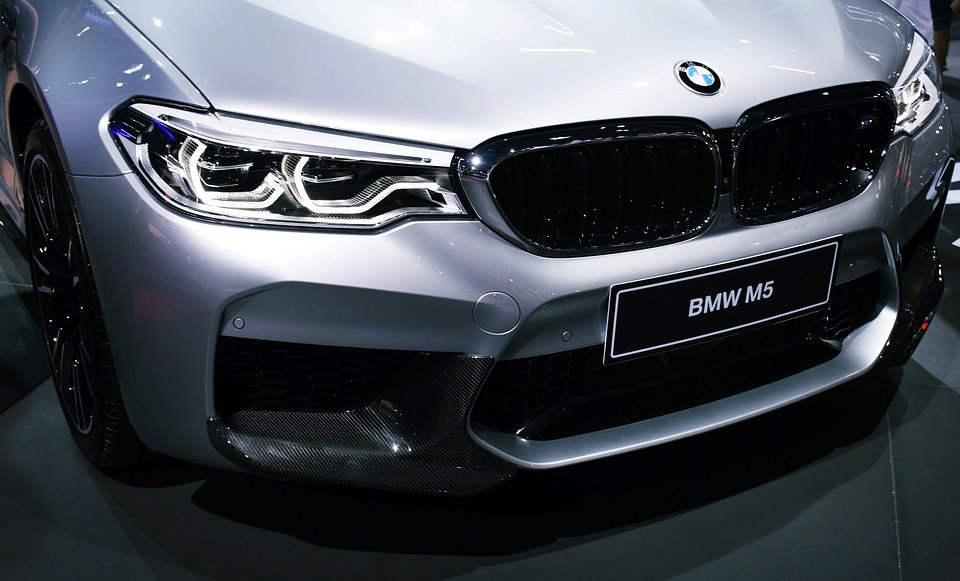
In 2020, the reports about the next BMW M5 all pointed the same way: the super-sedan would plug in. Some accounts went further and predicted a fully electric M5, and M devotees braced for the end of the V8. What BMW actually built, revealed in June 2024, was more careful than either version of the rumour. The G90 M5 keeps a 4.4-litre twin-turbo V8 and adds an electric motor and a battery, producing 717 hp. It is a plug-in hybrid, not an electric car, and the distinction defines everything about it, including its most argued-over figure: its weight.

The F90 it had to follow
The outgoing F90 M5, launched in 2018, set the standard the new car is judged against. Its V8 produced 600 hp in US specification, or 617 hp in the Competition, and it was the first M5 with all-wheel drive. It was also, by the standards of what followed, light and simple: a petrol engine, an eight-speed automatic, and no battery to carry. Any electrified successor was going to be faster in a straight line and heavier everywhere else. BMW’s task was to make the trade worth making, the same calculation that produced the BMW XM, the M division’s first electrified flagship.
What was actually said
The 2020 reporting deserves a footnote, because BMW never quite confirmed an electric M5. M boss Markus Flasch said in 2020 that future M cars would be electrified in some form, without naming the M5, and in September that year he said the first electrified M car would be based on the i4, which duly appeared in 2021. Magazine reports in 2020 predicted a V8 plug-in hybrid for the next M5, with a fully electric version as a halo possibility. The first M5-specific statement from Flasch came in April 2021, when he said that for the cars the large engines are used in, like the M5 and the large X models, hybridisation made the most sense. That is exactly what BMW built. The electric M5 of the 2020 headlines does not exist; the hybrid one does, alongside the M3 and M4, which kept petrol power alone.
| Powertrain | 4.4-litre twin-turbo V8 + electric motor, plug-in hybrid |
|---|---|
| Combined output | 717 hp, 738 lb-ft |
| V8 alone | 577 hp |
| Electric motor | 194 hp |
| 0–60 mph | 3.4 sec (BMW estimate); 3.0 sec (Car and Driver tested) |
| Top speed | 155 mph; 190 mph with M Driver’s Package |
| Curb weight | 5,390 lb (BMW US specification) |
| Electric range | About 25 miles (BMW US projected) |
| US launch price | $119,500 before destination (2025) |
The G90 formula
The V8 contributes 577 hp and the electric motor, integrated into the eight-speed M Steptronic gearbox, adds 194 hp. The combined figures are 717 hp and 738 lb-ft, driving all four wheels through M xDrive. BMW estimated 0 to 60 mph in 3.4 seconds. Car and Driver’s instrumented test recorded 3.0 seconds and a 10.9-second quarter-mile at 130 mph, figures in the same league as the F90 Competition’s despite everything the hybrid carries. The projected electric range of about 25 miles covers short urban trips in silence, which is the part of the brief the F90 could never have met, and the reason the car appears in discussions of our best sports cars alongside machinery that weighs half as much.
The weight argument
The official US curb weight is 5,390 lb, roughly 1,000 lb more than the F90 Competition. That number dominated the car’s reception, and it is not spin to say the test results complicate it: the G90 accelerates about as hard as the car it replaced. What the weight costs is agility and braking stamina, the things instrumented tests measure less easily than acceleration. Both things are true at once. The hybrid M5 is the fastest M5 ever built and the least light-footed, and which of those matters more depends on the roads you drive.
A wagon, in America
The G90 also brought a first: the M5 Touring wagon was offered in the United States for the first time, priced from $121,500 before destination, with the same 717-hp hybrid system, an estimated 3.5 seconds to 60 mph and the same 155 mph top speed, or 190 mph with the M Driver’s Package. American enthusiasts had asked for an M wagon for three decades and been refused every time. That the refusal ended with the heaviest, most electrified M5 in history is an irony the market seems happy to accept.
The M5 did not go electric. It went hybrid, kept its V8, gained 100 hp over the F90 Competition and matched the old car’s tested pace, at the cost of roughly half a ton. Whether that trade defines progress or decline is the argument the G90 was always going to start. On the evidence of the test numbers, BMW’s engineers did their part of the bargain.


