
Chevrolet BrightDrop Electric Van: Prices, Range, Specs & What Happened
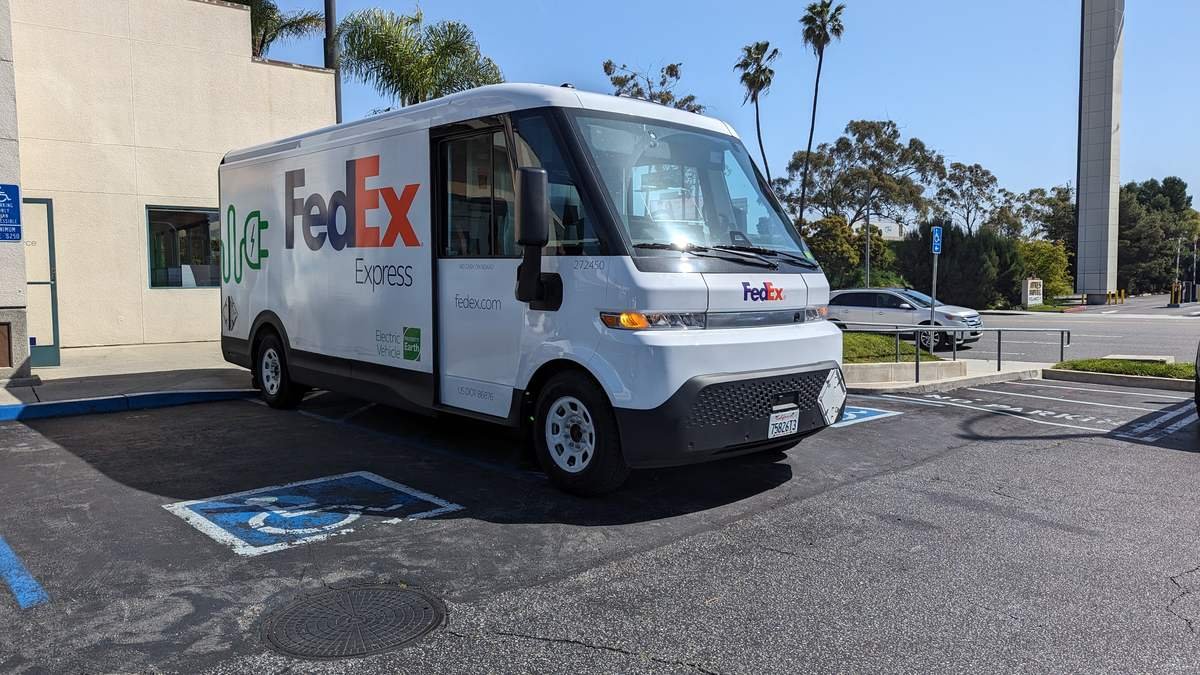
A note on this page’s history
This post was first published in June 2020, when the van did not exist. It reported that GM was developing a Chevrolet electric delivery van, expected by the end of 2021, aimed at the same delivery boom that had Amazon funding Rivian. The timing was nearly right and the badge was wrong: GM launched the van in January 2021 under a new standalone brand, BrightDrop, and the first vans reached FedEx that December. The Chevrolet badge arrived for the 2025 model year, and GM published updated 2026 specifications before ending production. The full timeline is in the history section below; the page has been rewritten around what the van became.
Is the Chevrolet BrightDrop still on sale?
Production has ended, but new vans are still sitting on dealer lots. GM confirmed the end of BrightDrop production on October 21, 2025, after a suspension that began in May 2025, and said production would not move to another plant. The company blamed a commercial EV market that grew more slowly than expected, plus the loss of US tax credits. US sales had reached 3,976 vans through the first three quarters of 2025 — real growth, but far below what the plant was built to build.
GM said dealers would continue selling and servicing remaining inventory. In its October 26, 2026 inventory snapshot, GM Authority counted 209 new BrightDrops listed at U.S. dealers; listings change quickly, so treat that as a dated snapshot, not a live count. In late 2026, you may still find new, unsold 2025 or 2026 model-year vans, but there is no ongoing production. Confirm the model year and build date by VIN, then verify that a local dealer can service that specific van and source its parts.
BrightDrop 400 vs 600: prices and key specs
Both vans share GM’s Ultium platform and walk-in body, but the 2026 lineup has three battery choices. The 400 is the shorter van; the 600 is the long one built for parcel work. Prices below are 2026 MSRP references including the $3,325 destination freight charge (DFC), before taxes, dealer fees, other options and upfits. The Max Range pack is an AWD configuration; payload changes with drivetrain, battery and GVWR.
| BrightDrop 400 | BrightDrop 600 | |
|---|---|---|
| MSRP, 2026 FWD (incl. DFC) | $67,925 | $69,425 |
| MSRP, 2026 AWD standard battery (incl. DFC) | $70,525 | $72,025 |
| GM-est. range, Standard pack | Up to 176 miles | Up to 176 miles |
| GM-est. range, Extended pack (listed option +$4,500) | Up to 204 miles | Up to 204 miles |
| GM-est. range, Max Range pack (AWD) | Up to 285 miles | Up to 285 miles |
| Cargo volume | 412.1 cu ft | 614.7 cu ft |
| Max payload, 11,000-lb GVWR (C7E) | 3,710 lb FWD / 3,480 lb AWD standard; 3,510 / 3,280 lb Extended; 2,780 lb AWD Max Range | 3,350 lb FWD / 3,130 lb AWD standard; 3,160 / 2,930 lb Extended; 2,430 lb AWD Max Range |
| Drivetrain | Front-wheel drive; all-wheel drive available | Front-wheel drive; all-wheel drive available |
| MSRP, AWD with Max Range pack (incl. DFC) | $78,525 | $80,025 |
Payload figures are the maximum listed for the 11,000-lb GVWR configuration before optional equipment; 9,990-lb GVWR vans carry less. Check the specific vehicle’s certification label and build sheet. Public 2026 option-price data lists the Extended pack at $4,500 and the Max Range pack at $8,000; both are additional to the base MSRP, and the Max Range pack is AWD-only. GM’s 2026 catalog estimates up to 285 miles with that pack — the longest range among the vans compared below — while the Standard and Extended packs are rated up to 176 and 204 miles. Actual range varies with temperature, speed, terrain, battery age and load. Leftover vans may be discounted, but offers depend on model year, dealer and buyer eligibility; do not treat an expired incentive as a current price.
BrightDrop 400 — the payload pick
Why buy it? In the 11,000-lb GVWR configuration, the 400 FWD with the Standard battery is listed for up to 3,710 lb of payload; the AWD Standard version is listed at 3,480 lb. Extended Range and Max Range batteries reduce payload, and the Max Range version is AWD. For plumbers, electricians, parts delivery and grocery work — dense loads, modest volume — the shorter body is the better tool.
What to consider. The 412.1 cubic feet fill up fast on parcel routes. If your loads are bulky rather than heavy, you will wish you had bought the 600.
Best for: trades and local delivery fleets whose loads are heavy for their size and whose routes stay under 150 miles a day.
BrightDrop 600 — the parcel van
Why buy it? The 614.7 cubic feet of walk-in cargo space is the reason this van exists. A driver can stand up inside, walk the load, and work through a bulkhead door — the layout FedEx, Walmart and other large fleets bought it for. With the 2026 Max Range battery on an AWD model, it is also the longest-range electric delivery van in this comparison, at up to 285 GM-estimated miles.
What to consider. The 600 costs more than the 400 in comparable configurations, carries less payload than the 400, and at roughly 24 feet long it needs real parking space. The Max Range battery adds $8,000 to the AWD MSRP and reduces the 600’s listed 11,000-lb-GVWR payload to 2,430 lb.
Best for: parcel and courier fleets running high-volume routes, and operators whose daily mileage requires the Extended or Max Range battery — with a route-specific reserve built in.
Powertrain, batteries and charging
Every BrightDrop rides on GM’s Ultium platform. For 2026, the single-motor FWD setup is rated at 233 hp and 300 lb-ft; the dual-motor AWD version makes 300 hp and 390 lb-ft. GM’s 2026 technical catalog lists three battery packs by usable energy: 102.4 kWh Standard, 121 kWh Extended and 173.3 kWh Max Range. Their GM-estimated combined ranges are up to 176, 204 and 285 miles respectively. The Max Range pack is listed for AWD configurations; confirm the pack and drivetrain on the van’s window sticker.
Charging is built around depot life. The 2026 catalog lists DC fast-charging peak power of up to 180 kW for the Standard pack, 210 kW for Extended and 150 kW for Max Range. GM estimates up to 130, 155 and 180 miles added in 60 minutes respectively; the Max Range pack can add the most miles despite its lower peak kW figure. The standard Level 2 onboard charger is 19.2 kW; the optional offboarding-power package uses an 11.5-kW module. With 19.2-kW Level 2 power, GM lists 20–100% charge times of 5.5 hours (Standard), 6.5 hours (Extended, estimated) and 8 hours (Max Range). Actual times depend on the charger, starting charge, temperature and battery condition. Our electric car charging costs guide walks through what depot and home charging cost per mile, and our cheapest electric cars guide shows how the same math works on the passenger-car side.
One caution on range: these are GM estimates, not EPA ratings. GM’s 2026 catalog says EPA estimates were not available. Cold weather, highway speeds, battery age and a full load will all cut into real-world range, as they do with every electric van.
The rivals that outlived it
The BrightDrop’s problem was never range. Price was one major challenge, and the table below shows why. Every rival here is still in production.
| Electric van | Starting price | Range |
|---|---|---|
| Ford E-Transit | $51,095 (2024 MSRP) | Up to 159 miles (Ford est.) |
| Ram ProMaster EV | $56,495 + $1,995 destination ($58,490 incl. destination; 2024 launch price) | Up to 164 miles (manufacturer est.) |
| Rivian Commercial Van 500 | $79,900 (Rivian Fleet list price) | 161 miles (Rivian est.) |
| Chevrolet BrightDrop 600 | $69,425 incl. destination (2026 FWD MSRP) | Up to 285 miles with Max Range battery (GM est.; 600 AWD Max Range: $80,025) |
The Ford E-Transit is a sensible default for fleets prioritizing lower upfront cost and a broad Ford Pro commercial network; its 2024 MSRP and range are shown as historical reference figures. The Ram ProMaster EV also undercuts the 2026 BrightDrop 600 FWD at the listed reference prices by about $11,000 when destination is included on both. Rivian’s Commercial Van 500 starts at $79,900 in the source used here — above the BrightDrop 600 FWD MSRP, but close to a 600 AWD Max Range van — and offers less estimated range than the BrightDrop Max Range pack. Rivian sells its van to fleets only. These are reference MSRPs/launch prices from different source years, not same-day dealer quotes; compare actual quotes, destination charges, incentives and service coverage. The BrightDrop’s counter-argument is the Max Range battery and walk-in body, plus discounts on remaining stock. For the wider electric picture, our best electric cars guide covers the passenger EVs these vans share their technology with.
What a BrightDrop costs to run
Fuel is where an electric van earns its keep, and delivery duty makes the gap bigger, not smaller: high miles, all of them stop-and-go, much of it idling at the curb in a gas van. Here is a worked example, labelled for what it is — an illustration built from published figures and two stated assumptions, not a quote.
The setup. One van, 25,000 miles a year of delivery work.
The gas van. FuelEconomy.gov rates the gasoline Ford Transit T-150 Wagon at 16 mpg combined. (The cargo versions are not EPA-rated; real delivery mpg is often lower, which would widen the gap.) At AAA’s national average of $3.5476 a gallon for regular on November 27, 2026, 25,000 miles takes 1,562.5 gallons and costs $5,543 a year — 22.2 cents a mile.
The BrightDrop. GM publishes estimated range, not a certified delivery-cycle consumption figure, so this example assumes 65 kWh per 100 miles in delivery duty. That is a conservative planning assumption slightly above the 2026 Max Range pack’s 173.3-kWh usable energy divided by its 285-mile GM-estimated range (about 60.8 kWh/100 miles); real delivery consumption can be higher with payload, weather and route. That is 16,250 kWh a year. At the US average residential electricity price of 18.16 cents per kWh (EIA, August 2026), it costs $2,951 a year — 11.8 cents a mile. Fleets on commercial tariffs or off-peak depot rates will often pay less per kWh than the residential average used here.
The gap: about $2,592 a year in fuel alone, or roughly $12,961 over five years — before maintenance. The electric van needs no engine-oil changes and regenerative braking can reduce brake wear, but it still has tires, cabin filters and scheduled inspections; check GM’s maintenance schedule for coolant and drive-unit service rather than assuming maintenance is zero. Our average cost of owning a car guide breaks down the same cost categories for passenger vehicles.
The honest counterweight: fuel savings do not automatically justify a purchase premium. Compare the actual discounted van price, upfit costs, electricity tariff, route consumption and resale value; the economics can change quickly. A discounted leftover van is where the calculation is most likely to work.
Recalls to check before you buy
Two NHTSA recall campaigns verified for this article affect certain earlier Zevo vans; the listed model years are specific to each campaign. This is not an exhaustive list of every campaign that may apply to every BrightDrop/EV600. Repairs for the two listed campaigns are free at a dealer, and the VIN check is essential on any used or leftover purchase:
- 25V-156 (March 2025): certain 2023–2024 Zevo 600 and 2024 Zevo 400 vans — only 10 vehicles — had a steering shaft that could have been damaged during assembly, which could cause the steering to lock up. Dealers replace the lower intermediate shaft.
- 23V-683 (October 2023): certain 2023–2024 Zevo 600 vans with the optional passenger jump seat — 234 vehicles — had an incorrect B-pillar trim panel that could interfere with the roof-rail air bag. Dealers inspect and replace the trim if needed.
Run any van’s VIN through the NHTSA recall lookup before you buy. A specific van may have other open campaigns, and the check takes two minutes.
From rumor to BrightDrop to Chevrolet: the timeline
- June 2020 — This page reports GM is developing a Chevrolet electric delivery van for the end of 2021, chasing the same delivery boom behind Amazon’s Rivian deal.
- January 12, 2021 — GM unveils BrightDrop at CES: a new electric delivery brand, with the EV600 van (250-mile estimate) and FedEx Express as its first customer.
- December 17, 2021 — FedEx takes delivery of the first five EV600s, from an order of 500, at its Inglewood, California facility.
- December 2022 — Volume production of the van, now renamed Zevo 600, begins at GM’s CAMI Assembly plant in Ingersoll, Ontario. The shorter Zevo 400 follows in 2023, and BrightDrop is folded into GM Envolve, the company’s fleet business.
- August 29, 2024 — GM announces the vans will be sold as Chevrolets from the 2025 model year: the Zevo 400 and 600 become the Chevrolet BrightDrop 400 and 600, gaining front-wheel-drive versions and access to Chevrolet’s dealer network.
- May 2025 — Production at CAMI is suspended as unsold vans pile up.
- September 4, 2025 — GM publishes its 2026 BrightDrop 400/600 catalog, adding an Extended Range battery rated up to 204 miles and increasing Max Range to 285 miles.
- October 21, 2025 — GM ends BrightDrop production permanently. The plant’s future is left under assessment, and dealers are left to sell through the remaining stock.
The 2020 rumor, in other words, came true: the van arrived on roughly the predicted schedule and eventually wore a Chevrolet badge. Its final catalogued model year was 2026; production ended in October 2025.
How to choose — and how to buy one now
- Match the van to the route, not the brochure. Choose among the Standard (up to 176 miles), Extended (204 miles) and Max Range (285 miles) packs based on your longest route and a realistic reserve. Cold weather, highway speeds and payload can cut range sharply; Max Range is listed with AWD.
- Pick the body by load type. Heavy and dense: the 400, for its payload. Bulky and light: the 600, for its space. Parcel work with a walking driver: the 600, no contest.
- Price the rivals on the same day. A discounted BrightDrop only makes sense against actual quotes for an E-Transit or ProMaster EV, not against their sticker prices either.
- Check the VIN and the paperwork. Run the recall check above, and get the battery/propulsion warranty status, original in-service date and service history in writing. GM’s 2026 catalog lists a 3-year/36,000-mile bumper-to-bumper limited warranty and an 8-year/100,000-mile electric propulsion limited warranty, whichever comes first; coverage depends on the warranty terms and vehicle history.
- Confirm your service plan. GM says dealers will keep servicing the vans, but confirm that your local Chevrolet dealer is certified for BrightDrop work and ask how parts orders are handled. A delivery van that waits a week for a part is a van losing money.
- Negotiate like the supply is shrinking and the demand is soft — because both are true. Every month, the remaining pool gets smaller, but so does the list of buyers willing to take on an orphaned model. That tension works in your favor.
Frequently Asked Questions
Is the Chevrolet BrightDrop discontinued?
Yes. GM ended production on October 21, 2025, after suspending it in May 2025, and production will not move to another plant. GM had published a 2026 model-year catalog before the shutdown, making 2026 the final catalogued model year. Dealers may still have unsold new vans; confirm the model year and build date by VIN.
How much does a Chevrolet BrightDrop cost?
The 2026 MSRP references including the $3,325 destination charge ran from $67,925 for a 400 FWD to $72,025 for a 600 AWD with the Standard battery. The Max Range pack adds $8,000 to AWD, putting a 600 AWD Max Range at $80,025 before other options and upfits. Remaining-stock offers and used prices vary; get a current quote and check the vehicle’s exact equipment.
What is the range of a BrightDrop van?
For the 2026 model year, GM estimates up to 176 miles with the Standard battery, 204 miles with the Extended battery and 285 miles with the Max Range battery. These are GM estimates, not EPA ratings; GM’s catalog says EPA estimates were not available. Max Range is listed for AWD configurations. Cold weather, highway speeds and full loads reduce real-world range.
How long does a BrightDrop take to charge?
For 2026, GM estimates up to 130 miles in 60 minutes with the Standard pack, 155 with Extended and 180 with Max Range on a suitable 400-V DC fast charger. Level 2 charging is up to 19.2 kW; the Max Range pack takes about 8 hours from 20% to 100% at 19.2 kW (GM estimate). Actual charging depends on equipment and conditions.
BrightDrop 400 or 600 — which one should I buy?
Buy the 400 if your loads are heavy for their size: in the 11,000-lb GVWR Standard-battery configuration it is listed for up to 3,710 lb FWD or 3,480 lb AWD. Extended and Max Range packs reduce payload. Buy the 600 if your loads are bulky: its 614.7 cubic feet of walk-in space is among the largest in the class, and it is the version parcel fleets chose.
Will GM still service the BrightDrop and supply parts?
GM said dealers would continue selling and servicing remaining inventory. The 2026 catalog lists a 3-year/36,000-mile bumper-to-bumper limited warranty and an 8-year/100,000-mile electric propulsion limited warranty, whichever comes first. For a used or leftover van, confirm the original in-service date, remaining coverage, local dealer capability and parts availability in writing.
What recalls should I check on a used BrightDrop?
This article verifies two campaigns affecting specified earlier Zevo vans: 25V-156 (2023–2024 Zevo 600 and 2024 Zevo 400, a steering-shaft fault on a small number of vans) and 23V-683 (2023–2024 Zevo 600 with the optional jump seat, a trim panel that could interfere with an air bag). Both fixes are free. Other campaigns may apply, including to earlier EV600s, so this is not an exhaustive recall history. Enter the van’s VIN at the NHTSA recall lookup to see its vehicle-specific status.
The Bottom Line
The Chevrolet BrightDrop is a capable electric delivery van and a clear lesson in commercial-EV pricing. Its 2026 catalog offered up to 285 miles of GM-estimated range and one of the largest cargo boxes in the class, but its factory production has ended. What remains is a discontinued van with GM-stated dealer support and a used/leftover market where the right price can make the economics work: the worked example above puts electricity at roughly half the gas van’s fuel cost, before maintenance. If your route fits the battery, the payload suits the load, and you confirm the VIN, warranty, recall status and local service before buying, a BrightDrop can still be a smart fleet purchase. Buy it for what it is worth now, not what GM once asked.
Sources & Pricing Note
The 2026 BrightDrop MSRP references in this article are from GM Authority’s September 2026 pricing report and include the $3,325 destination freight charge; the $8,000 Max Range option is additional to the AWD base MSRP; the $4,500 Extended Range option is additional to base MSRP as well. Prices are MSRP references, not dealer quotes, and exclude taxes, dealer fees, upfits and other options. GM’s official 2026 Upfitter catalog is the source for the 2026 battery energy, estimated range, charging, payload and propulsion figures; it states that EPA estimates were not available and that actual range/charge times vary. Historical 2025 launch MSRPs are from GM Authority’s September 2024 report. The $4,500 Extended and $8,000 Max Range option prices are cross-checked against 2026 option pricing and a 2026 dealer window sticker. Rival prices and ranges are manufacturer/reference figures from different source years and should not be treated as same-day quotes: Ford Pro (E-Transit, 2024 MSRP/range), Rivian Fleet (Commercial Van 500), and Ram (2026 ProMaster EV specs; launch price shown for reference). The October 26, 2026 inventory snapshot of 209 new dealer-listed vans is from GM Authority’s inventory report; it is dated and not a live inventory count. Production status and dates are from GM’s August 29, 2024 Chevrolet announcement and October 21, 2025 GM Canada release; the 2026 model-year catalog is documented by GM Upfitter’s V090425 guide. Recall campaign identifiers and remedies were cross-checked against recall records and independent mirrors; buyers should verify open campaigns by VIN through the NHTSA recall lookup. The running-cost example uses FuelEconomy.gov’s 16 mpg combined rating for the gasoline Ford Transit T-150 Wagon, AAA’s national average gasoline price of $3.5476 per gallon on November 27, 2026, and the EIA’s US average residential electricity price of 18.16 cents per kWh (August 2026); 65 kWh/100 miles is a stated planning assumption, not a GM consumption rating.
Last updated: November 2026
About the Author
Written by William, founder and editor of MotorAmaze. William covers car buying, ownership costs and electric vehicles to help American and British drivers and businesses make cheaper, better decisions about their vehicles — with every price checked against a published source before it goes on the page.


