
Volkswagen ID. Buzz: The Production Electric Bus
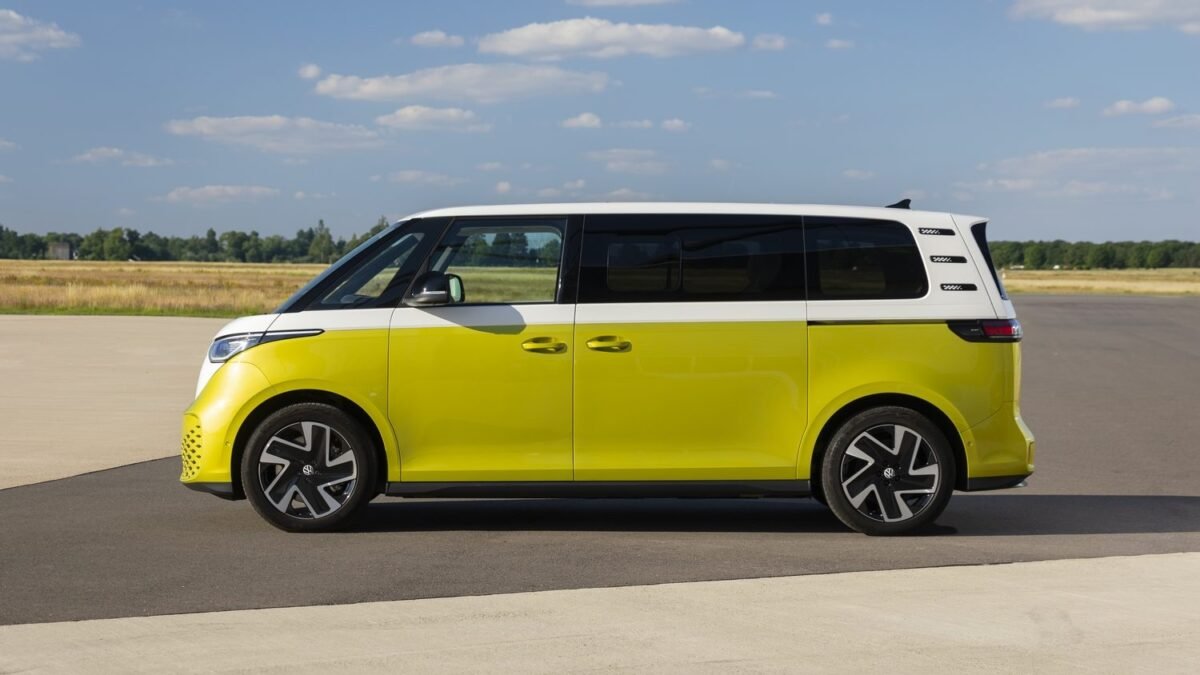
Few concept cars have been willed into production as publicly as the Volkswagen ID. Buzz. Shown at the Detroit auto show in January 2017 as the I.D. Buzz, it was an electric homage to the Type 2 Microbus, and the reaction was so strong that Volkswagen committed to building it within the year. The production car finally arrived on 9 March 2022, five years after the concept, and it kept the promise almost intact: a one-box electric van with a two-tone paint scheme, a short nose and the biggest VW badge in the business. This post was written in 2020, when the Buzz was still a promise. What follows is the car Volkswagen actually built, first in European short-wheelbase form and then in the long-wheelbase version created for North America.
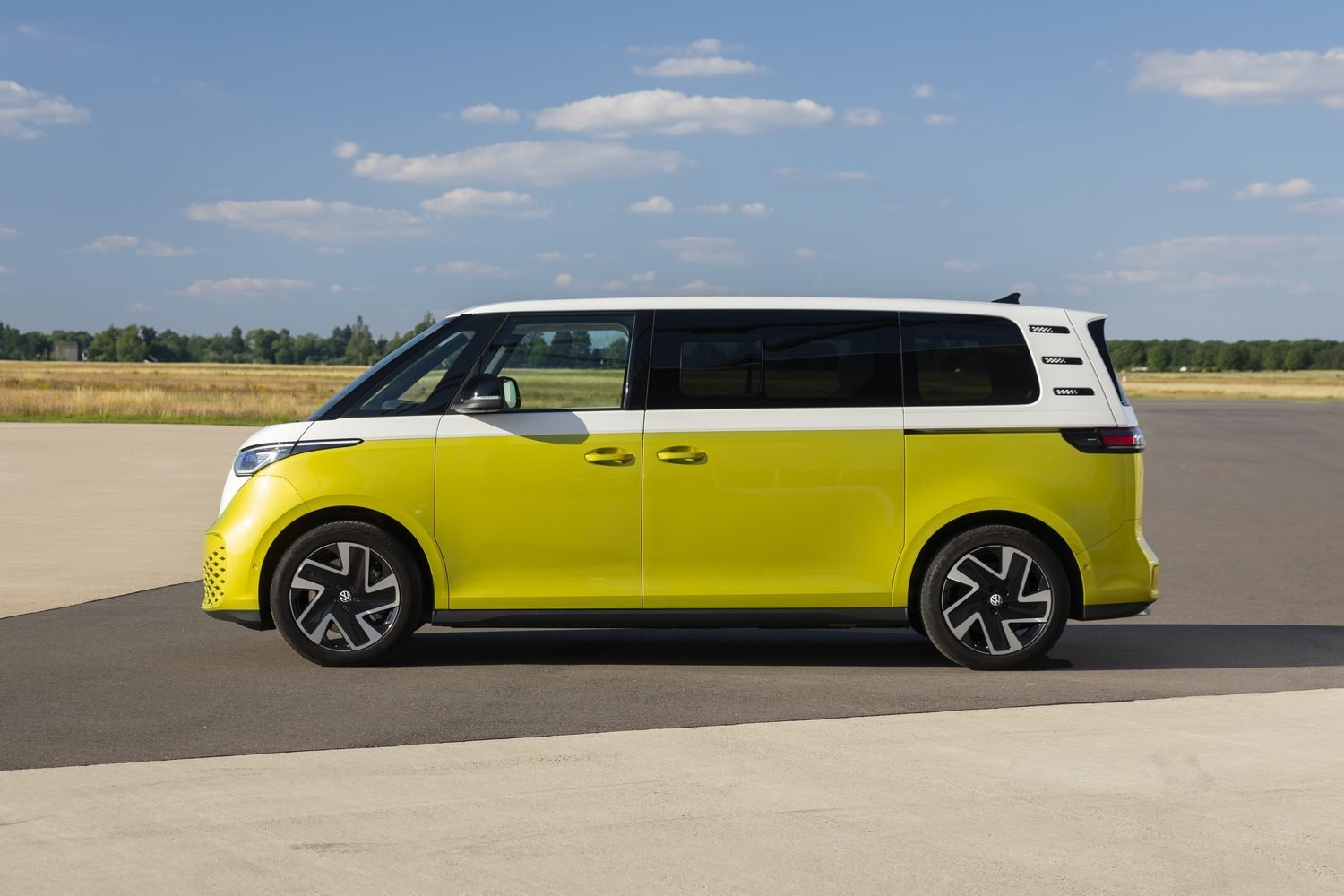
The production car: Hanover-built, rear-driven
The ID. Buzz is built by Volkswagen Commercial Vehicles in Hanover, Germany, on the group’s MEB electric platform. The launch version for Europe was the standard-wheelbase model, 4,712 mm long on a 2,988 mm wheelbase, offered as a five-seat passenger van or as the panel-sided ID. Buzz Cargo. Power comes from a single electric motor driving the rear axle, producing 204 PS (150 kW) and 310 Nm of torque, fed by a battery with 82 kWh of gross capacity and 77 kWh usable. Top speed is limited to 145 km/h, and the homologated WLTP range came in at up to 423 km depending on specification. Even with all five seats in place there is 1,121 litres of luggage space behind them. The layout deliberately echoes the original Bus, engine at the back and a flat floor between the axles, although the motor now sits in the rear axle and the battery lives under the floor. It shares its underpinnings with the rest of the ID. family, the same kit that underpins everything from the ID.3 GTX hatchback to the Cupra Born.
The long wheelbase is the one America gets
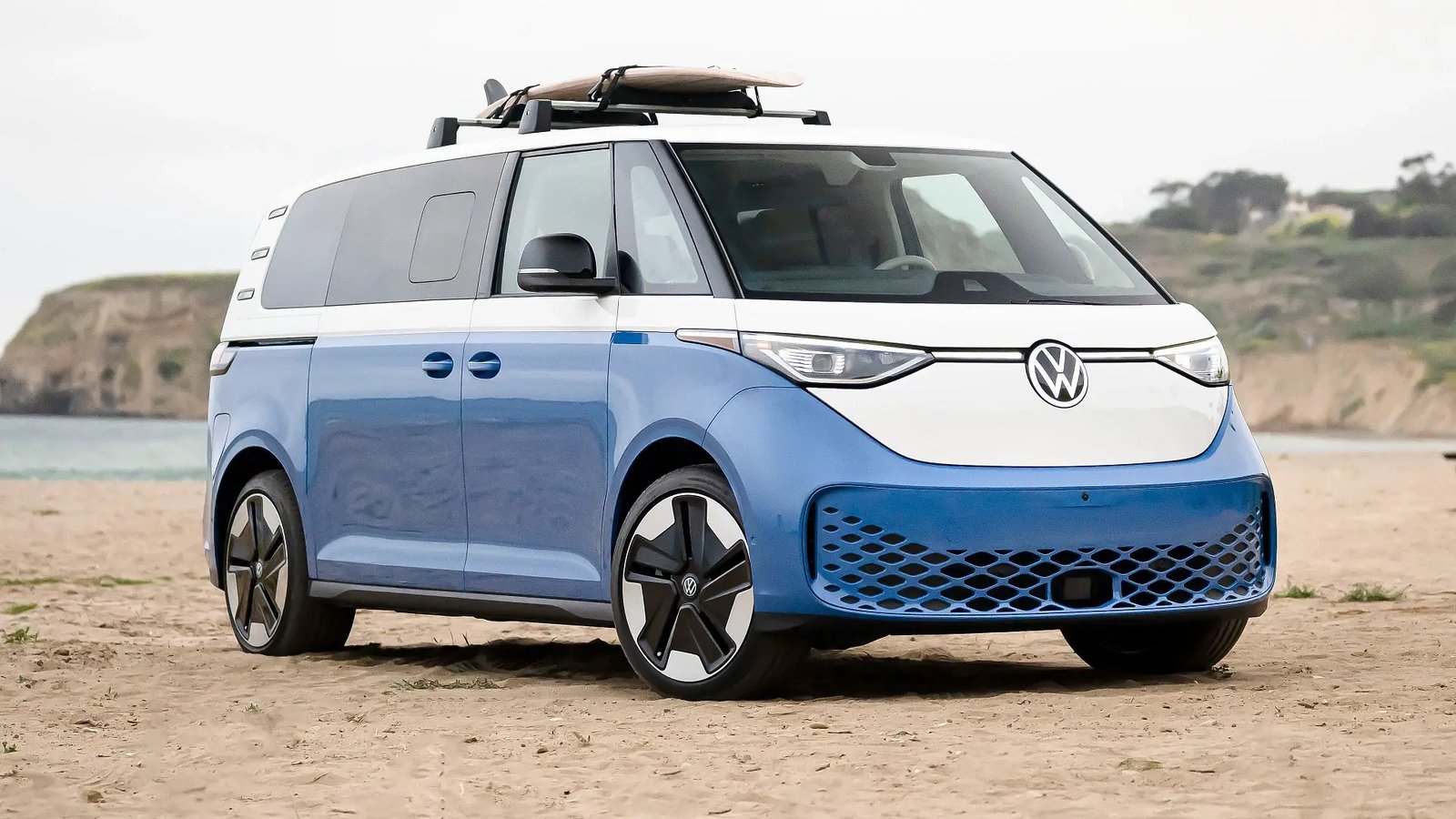
The long-wheelbase ID. Buzz was unveiled on 2 June 2023 at Huntington Beach, California, and it is the only version sold in North America, where it arrived for the 2025 model year. The wheelbase grows by 250 mm to 3,239 mm and overall length to 4,962 mm, which makes room for a third row of seats and up to seven occupants. The battery is bigger too, at 91 kWh gross and 86 kWh usable. American buyers choose between a rear-wheel-drive model with 282 hp and a dual-motor 4Motion version with 335 hp. The EPA rates the rear-drive van at 234 miles of range and the all-wheel-drive version at 231 miles, and DC fast charging at up to 200 kW takes the battery from 10 to 80 per cent in about 26 minutes. In Europe the same long body is rated at up to 487 km on the WLTP cycle. A dual-motor GTX version with 340 PS sits at the top of the European range. Prices in the United States start at $59,995 for the Pro S, before destination.
Seven seats and a very un-van interior
The long wheelbase was designed around people, not pallets. Seven-seat versions pair a three-seat second-row bench with a two-seat third row, while all-wheel-drive models can be ordered with second-row captain’s chairs for six seats in total. There is 18.6 cubic feet of cargo space behind the third row, and the rear rows fold or come out entirely when the van has to work for a living. Twin sliding rear doors are standard, as is a 12.9-inch touchscreen in the American car. It is a different proposition from a conventional minivan such as the Toyota Sienna: less ultimate cargo volume, far more character, and running costs set by electricity prices rather than petrol. Volkswagen’s own conventional range still covers that family brief with cars like the Tiguan, which makes the Buzz the emotional choice rather than the rational one.
| Platform | Volkswagen Group MEB; built in Hanover, Germany |
|---|---|
| Long wheelbase | 4,962 mm long; 3,239 mm wheelbase; up to 7 seats |
| Short wheelbase | 4,712 mm long; 2,988 mm wheelbase; 5 seats; 77 kWh usable, 204 PS, 310 Nm |
| Battery (LWB) | 91 kWh gross, 86 kWh usable |
| Output (US LWB) | 282 hp rear-wheel drive; 335 hp dual-motor 4Motion |
| Range | EPA 234 miles (RWD) / 231 miles (AWD); up to 487 km WLTP (Europe, LWB) |
| Charging | DC up to 200 kW; 10 to 80 per cent in about 26 minutes |
| Prices (US) | From $59,995 (Pro S), before destination |
Nostalgia, at a price
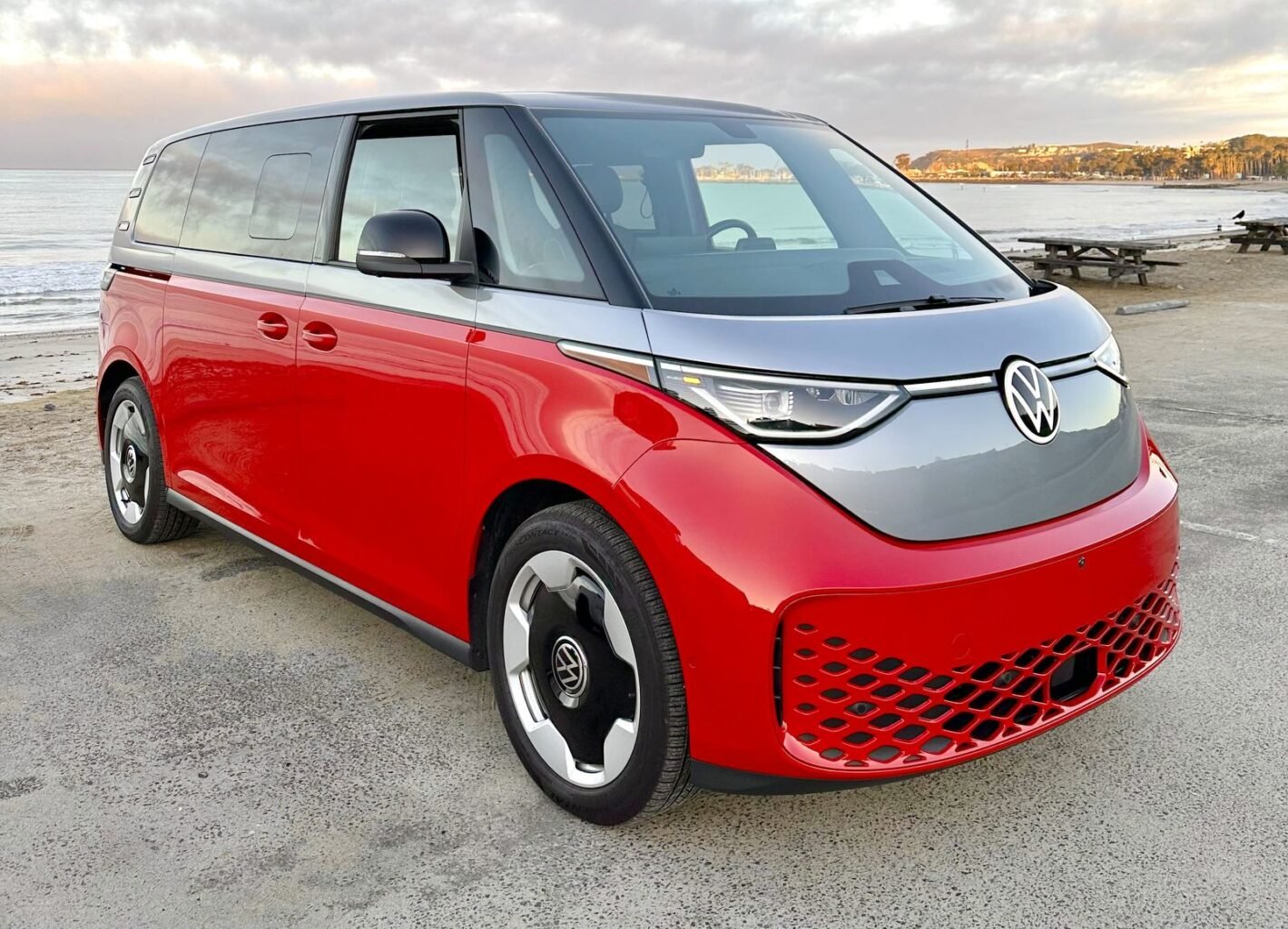
The Buzz’s problem is not the product, it is the bill. At $59,995 to start, the American van costs more than most three-row SUVs and nearly twice what its spiritual ancestor charged, and the European car is similarly premium. Volkswagen is unapologetic: the Buzz is a flagship for the ID. range, built in Germany in modest numbers, and priced like the design object it is. Its MEB relatives make the same point at different sizes, from the ID.3 to the Cupra Born, but none of them trades on sixty years of goodwill the way this one does.
Judged purely as transport, the ID. Buzz is a spacious, quick enough electric van with a 234-mile EPA range and a seven-seat layout that works. Judged as an object, it is one of the very few modern cars that makes strangers smile. The production car kept the concept’s looks, added a genuinely useful long-wheelbase version and lost none of the charm along the way. Whether that charm is worth $60,000 is a personal calculation, but as a demonstration that the electric era does not have to be dull, the Buzz succeeds completely.


