
Opel Mokka 2020: Vizor Face, Pure Panel, Electric First
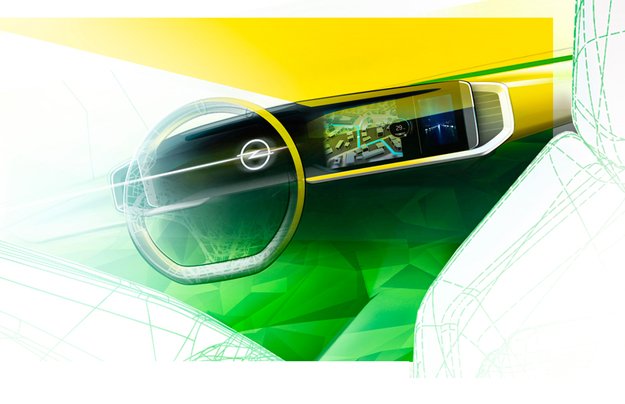
When this site first glimpsed the second-generation Opel Mokka in June 2020, all Opel would show was the cabin, a wide glass panel of screens under the Pure Panel name. Days later, on 24 June 2020, the whole car broke cover, and the interior turned out to be only half the story. The new Mokka was the first Opel to wear the Vizor brand face, the first to offer an electric version from the day it went on sale, and a complete break from the General Motors car it replaced: new platform, new proportions, and a design language previewed by the GT X Experimental concept of 2018.
The Pure Panel cabin
Opel calls its philosophy detox. The Pure Panel sweeps two widescreens under one piece of glass, a digital instrument display of up to 12 inches ahead of the driver and a central touchscreen of up to 10 inches, angled towards the driver’s seat, with the air vents pushed down and out of the eyeline. The idea, first shown on the GT X Experimental, was to strip out the visual noise that had crept into small-car interiors: fewer buttons, fewer reflections, and only the information the driver needs, presented plainly. In a segment where cabins were becoming either fussy or stark to the point of hostility, the Mokka’s neat, horizontal panel struck a balance, and it set the template for every Opel cabin that followed.
Electric first: the Mokka-e
Opel led the launch with the battery car, a first for the brand. The Mokka-e uses the CMP multi-energy platform it shares with its PSA group relatives, with a single front electric motor of 100 kW (136 hp) and 260 Nm of torque, and a 50 kWh battery under the floor. Opel quoted a range of up to 322 kilometres on the WLTP cycle, a preliminary figure at the reveal, and limited the top speed to 150 km/h to protect that range. Charging covers the bases European buyers actually use: three-phase AC at up to 11 kW at home, and 100 kW DC fast charging that takes the battery to 80 per cent in about 30 minutes. Three driving modes, Normal, Eco and Sport, let the driver trade pace for distance.
| Platform | CMP (multi-energy), front-wheel drive |
|---|---|
| Mokka-e | Electric motor, 100 kW (136 hp), 260 Nm; 50 kWh battery |
| Range | Up to 322 km (WLTP, preliminary at reveal); top speed 150 km/h |
| Charging | 11 kW AC three-phase; 100 kW DC, about 30 minutes to 80 per cent |
| Petrol | 1.2-litre turbo three-cylinder, 100 PS (205 Nm) or 130 PS (230 Nm); six-speed manual, eight-speed automatic on the 130 |
| Diesel | 1.5-litre, 110 PS (250 Nm), six-speed manual |
| Size | 4,151 mm long, 125 mm shorter than the old Mokka X; up to 120 kg lighter |
| On sale | Orders from late summer 2020; dealerships from early 2021 |
Petrol and diesel followed
The combustion range, detailed that September, was deliberately conventional. A 1.2-litre turbocharged three-cylinder petrol came with 100 PS and a six-speed manual, or 130 PS with the manual or an eight-speed automatic, while a 1.5-litre diesel with 110 PS served the high-mileage buyers who still wanted one. All versions drive the front wheels only; the old car’s all-wheel-drive option did not survive the platform change. The new Mokka is 125 mm shorter than the Mokka X it replaced, at 4,151 mm, on a wheelbase that grew slightly, and the CMP structure made it up to 120 kg lighter, savings that flatter both the electric range and the petrol economy. Opel opened the order books in late summer 2020, with the first cars reaching dealerships in early 2021.
A new face for the brand
The Mokka was the first production Opel with the Vizor, a single dark panel stretching across the nose that integrates the grille and headlights behind one visor-like surface, with the Opel Blitz emblem at its centre. The GT X Experimental had shown the idea in 2018 as the future face of the brand, and the Mokka carried it into the showroom almost unchanged, flanked by a two-tone roof and short overhangs that made the car look wider and lower than the tall, rounded Mokka X. Opel also fitted the driver-assistance kit buyers in this class had begun to expect, including adaptive cruise control, traffic sign recognition and active lane positioning, technology that would have been unthinkable in the first Mokka of 2012.
A crowded class
The small crossover class the Mokka entered was the most contested in Europe, with buyers cross-shopping everything from its own platform relatives to the Hyundai Tucson a size up and PSA’s own Peugeot 308 hatchback line. Opel’s answer was not to out-spec anyone but to look different: the Vizor’s closed, visor-like panel and the two-tone roof gave the Mokka a face that could be recognised across a car park, and the electric version matched the class standard on range and charging rather than chasing headlines. Buyers wanting the same CMP hardware in a larger, more conventional family shape were pointed up the range, ultimately to cars like the Toyota Highlander class above.
The second-generation Mokka is the car that rebooted Opel. The Pure Panel cabin and Vizor face were genuine firsts that the rest of the range adopted, the Mokka-e matched the segment’s electric benchmarks without drama, and the petrol and diesel versions covered the traditional buyer honestly. It did not need to be the fastest or the cleverest small crossover; it needed to be the one people noticed, and on that measure the 2020 reinvention worked.


