
2020 Toyota Highlander: V6, Hybrid Specs and Price

The fourth-generation Toyota Highlander was revealed at the New York auto show in April 2019 and went on sale that December with a simple brief: keep the formula that had made it America’s default three-row family SUV, and fix the two things buyers complained about, hybrid economy and cabin technology. It moved onto Toyota’s TNGA-K platform, grew slightly, sharpened its styling and split into two clear propositions. There was a V6 for traditionalists and a four-cylinder hybrid that promised economy no rival in the class could match. Between them, they covered almost every family that did not want a minivan.
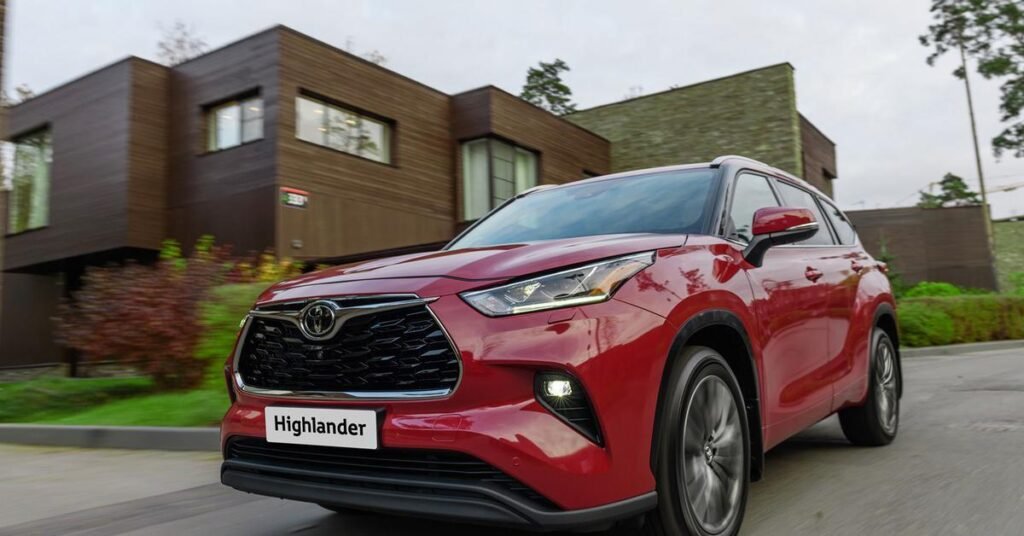
A V6, and a hybrid that sips
The petrol Highlander carried over the familiar 3.5-litre V6, rated at 295 hp and 263 lb-ft of torque and paired with an eight-speed automatic, in front-wheel drive or all-wheel drive. Properly equipped it tows 5,000 lb. The hybrid was the bigger story. Out went the old V6 hybrid, which had made 306 hp but only 28 mpg combined, and in came a 2.5-litre four-cylinder working with two electric motors for 243 hp in total. That looked like a downgrade until the economy figures landed: an EPA-rated 36 mpg combined for the front-drive car, 35 mpg with all-wheel drive, the latter achieved with a separate electric motor driving the rear wheels rather than a propshaft. The hybrid also became available with front-wheel drive for the first time, which cut its price and widened its audience beyond the snow states.
| Petrol | 3.5-litre V6, 295 hp / 263 lb-ft, 8-speed automatic |
|---|---|
| Hybrid | 2.5-litre four + two electric motors, 243 hp combined, e-CVT |
| Drive | Front-wheel drive or all-wheel drive (hybrid AWD via rear electric motor) |
| Fuel economy | Hybrid 36 mpg combined (FWD) / 35 mpg (AWD), EPA |
| Towing | 5,000 lb (V6); 3,500 lb (hybrid) |
| Seats | Up to 8 (bench) or 7 (captain’s chairs) |
| US prices | From $34,600 plus $1,120 destination; hybrid from $38,200 |
| On sale | December 2019 (petrol); February 2020 (hybrid) |

Room for eight, and a cabin that caught up
The TNGA-K platform brought a stiffer body and a longer wheelbase, and Toyota spent the space where families notice it: the third row and the boot. Cargo volume measures 16.0 cubic feet behind the third row and 84.3 cubic feet with everything folded, figures that keep the Highlander honest against the class leaders. The dashboard was the real leap. A 12.3-inch touchscreen crowns the range on the Platinum grade, Toyota Safety Sense 2.0 driver assistance is standard across the board, and the interior materials finally matched the prices Toyota was asking. Five grades, L through Platinum, let buyers choose between cloth-seat value and something approaching Lexus-lite, and the higher all-wheel-drive grades added a torque-vectoring system for better road manners. It remained, deliberately, a car with no interest in being exciting.

The hybrid’s packaging deserves a mention, because it costs the owner nothing. The battery sits beneath the second-row seat rather than under the boot floor, so cargo space and the flat load area are identical to the petrol car’s, and the spare wheel survives. That detail, more than the headline economy figure, explains why the hybrid took such a large share of Highlander sales: it asked for no compromise in space, seating or towing beyond its lower 3,500 lb trailer limit, and it saved fuel every single day.
Safety stopped being an option
Part of the fourth generation’s value case was that Toyota made its full safety suite standard on every grade, including the cheapest. Toyota Safety Sense 2.0 brought a pre-collision system with pedestrian detection, lane departure alert with steering assist, lane tracing assist, automatic high beams, full-speed adaptive cruise control and road sign assist, on the $34,600 base car as much as on the Platinum. Blind-spot monitoring with rear cross-traffic alert was also widely fitted. For a vehicle bought to carry other people’s children, that standardisation mattered as much as the hybrid’s economy, and it matched or beat what rivals charged extra for.
Priced to stay the default
At $34,600 before destination for the petrol L grade, the Highlander undercut most of the class while matching it on standard equipment, and the hybrid’s starting price of $38,200 asked a modest premium for a 12-mpg advantage over its own V6. Buyers who wanted the same hybrid thinking in a sleeker two-row shape were pointed at the Toyota Venza, while those who needed proper space for eight were steered to the Toyota Sienna, which went hybrid-only in the same period. Against rivals such as the Hyundai Tucson at the smaller end and the Kia Carnival at the larger, the Highlander’s pitch was balance: nothing it did was class-leading except its economy in hybrid form, and nothing it did was below par.
The fourth-generation Highlander is a masterclass in knowing your customer. The V6 car is competent and forgettable in the way owners like, and the hybrid is the one to buy: 36 mpg in a three-row family SUV was unmatched when it arrived, and the power sacrifice matters less in school-run service than the fuel saving. It will not stir anyone’s blood, but as a piece of family transport engineering, this is close to the definitive article of its generation.


