
Bentley Flying Spur (2020–2024): Used Prices in 2026, W12 vs V8, What to Check
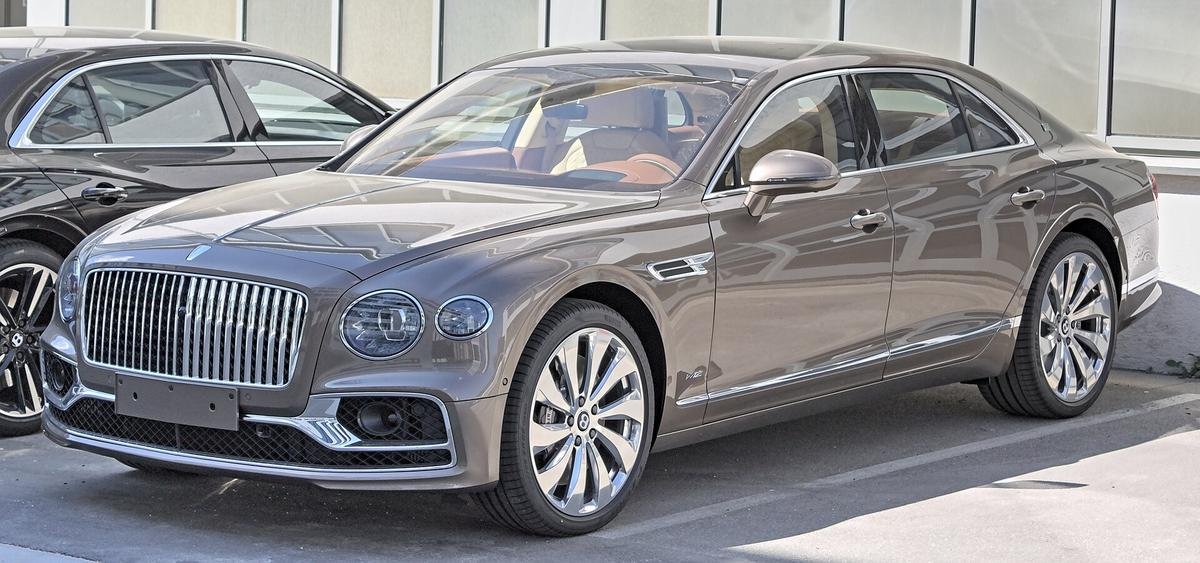
The third-generation Bentley Flying Spur is now a used car, and the math has flipped in the buyer’s favor. A 2020 W12 cost $214,600 new; in November 2026, KBB listings for 2020 cars started at $112,659, while higher-mileage examples on other marketplaces could be listed below $100,000. Clean low-mileage cars ask roughly $130,000 to $190,000 depending on year and trim. The 2024 cars sit at the top of that range. The W12 engine is gone — Bentley built the last one in July 2024 — making W12-powered cars a fixed-supply piece of Bentley history. Running costs are the catch. Whatever you paid, it remains a $200,000-plus luxury sedan to service, fuel and repair.
This guide covers the three engines (W12, V8 and Hybrid), used prices by year in the US and UK, the recall and condition checks that matter, a worked first-year cost example, and the rivals worth cross-shopping. Prices are November 2026 snapshots from the sources listed at the end, and they move — check live listings before you travel to see a car.
Used Bentley Flying Spur prices by year
| Model year | Engines offered | US asking prices start at (KBB.com listings, Nov 2026) | UK typical asking (Vertar, Nov 24, 2026) |
|---|---|---|---|
| 2020 | W12 | $112,659 | £88,995 |
| 2021 | V8, W12 | $107,950 | £99,950 |
| 2022 | V8, W12, Hybrid | $134,779 | £119,989 |
| 2023 | V8, W12, Hybrid | $127,299 | £124,990 |
| 2024 | V8, W12, Hybrid | $181,982 | £164,975 |
The US figures are the cheapest live listings on KBB.com in November 2026, not averages — high-mileage or lightly specced cars set the floor. Most clean, low-mileage examples ask well above it.
How mileage moves the price
Mileage swings the price more than model year does. On CarGurus in November 2026, a 2020 W12 with 106,346 miles was listed at $98,075, a 35,072-mile car at $116,286, and a 12,688-mile car at $154,950. Same year, same engine, a $57,000 spread. Buy on condition and history, not on the badge year.
A short history, because it sets the prices
The third-generation Flying Spur arrived for 2020 on a new platform, with rear-wheel steering, three-chamber air suspension and an available rotating center display. A special First Edition specification was offered during the launch period, with extra standard equipment and distinctive badging; a fully loaded European First Edition listed at €324,000. The US base price for the 2020 W12 was $214,600.
The V8 joined for 2021 at a $196,000 base price, the plug-in Hybrid for 2022, and the range ran until 2024 with Azure, S, Speed and Mulliner trims layered over the three engines. Then the era ended. Bentley hand-built its last W12 engine at Crewe on July 23, 2024. That closed a run of more than 100,000 W12s since 2003. Bentley marked it with a limited Speed Edition 12 run of 120 cars across the range. Instead, the fourth-generation car that replaced it for 2025 uses a 771-hp V8 plug-in hybrid powertrain. There will be no more twelve-cylinder Flying Spurs, which is exactly why the used ones hold a floor under their prices.
The three engines
W12 (2020–2024): the one history will remember
The 6.0-liter twin-turbo W12 makes 626 hp and 664 lb-ft, drives all four wheels through an eight-speed dual-clutch gearbox, and moves a 5,373-lb sedan to 60 mph in a claimed 3.7 seconds, with a 207-mph top speed. The EPA rates it at 15 mpg combined (12 city, 19 highway). It cost $214,600 new in 2020 and $216,700 in 2021.
Why buy it? It is the last of its kind — what Bentley calls the most successful twelve-cylinder engine of the modern era. And it sits in the flagship sedan at roughly half its new price. The power delivery is the point: silent, endless and unlike anything a V8 or an electric motor produces.
What to consider: Thirst and complexity. At 12,000 miles a year it burns about $3,653 of premium fuel, and every engine-out job on a W12 is a major bill. Shop on condition and history, not on price alone: the cheapest W12 is rarely the best one.
Best for: Buyers who want the definitive Flying Spur and can budget for flagship running costs.
V8 (2021–2024): the sensible Bentley
The 4.0-liter twin-turbo V8 makes 542 hp and 568 lb-ft — still enough for a car of this weight to feel fast in any real-world situation. Bentley claims 0–60 mph in 4.0 seconds and a 198-mph top speed. The EPA rates it at 17 mpg combined (15 city, up to 22 highway). It launched at $196,000 for 2021, $20,700 less than that year’s W12.
Why buy it? Less weight over the front axle sharpens the steering, the fuel bill drops by roughly $430 a year against the W12 at 12,000 miles, and the engine is shared with other VW Group performance cars, so specialist knowledge is easier to find. Used, it is usually the cheapest way into this generation.
What to consider: It will never be the collector’s pick, and high-mileage V8s need the same air-suspension and electronics checks as the W12. Options matter more than the engine to most second owners — a well-specced V8 beats a bare W12 as a daily car.
Best for: Drivers who will actually use the car daily and want the lowest sensible running costs.
Hybrid (2022–2024): the efficiency pick
The plug-in hybrid pairs a 2.9-liter V6 with an electric motor and a battery you can charge at home. The EPA rates it at 46 MPGe in combined electric-and-gasoline operation, gives it up to 21 miles of electric range, and rates it at 19 mpg combined when running on gasoline — the best gasoline figure of the three.
Why buy it? For city-based owners it cuts fuel stops and adds near-silent electric running on short trips, and it is the efficiency pick of the three engines.
What to consider: In the November 2026 listings we checked, Hybrid cars were scarce, so choice is thin and resale demand is unproven. Battery health and a working home charger matter more than mileage. Also get the hybrid system checked by a Bentley dealer before you buy.
Best for: City-based buyers who can charge at home and plan to keep the car.
What to check before you buy
Recalls to confirm by VIN
Recalls. Five NHTSA campaigns touch this generation, and the fixes are free at any Bentley dealer — what matters is proof they were done:
- Rear entertainment screens (NHTSA 23V-314) — the big one. On certain 2021–2023 cars, the retention brackets for the rear entertainment screens, mounted in the backs of the front seats, may have been incorrectly installed. A screen could detach in a crash. The campaign covers 1,659 vehicles; dealers inspect and replace the brackets free of charge.
- Top View camera (20V-452) — on certain 2020 cars, moisture can enter the rear camera holder and blur the image. Dealers modify the holder to improve drainage, free of charge.
- Front seat belt (22V-177) — on certain 2021–2022 cars, the front passenger belt may be missing its automatic locking retractor, which secures a child seat. Only 25 vehicles across the Bentley range were affected; dealers inspect and replace the belt free.
- Owner’s manual (21V-975) — certain 2021–2022 cars had a manual that misstated how the airbag warning works. Bentley mailed corrected labels; a paperwork fix, but it should be in the car’s file.
- Fuel tank (21V-104) — exactly one car, built in August 2020, had an improperly welded fuel tank, replaced free. Worth a VIN check, not a worry.
Run the car’s VIN through NHTSA’s recall lookup or any Bentley dealer before you buy, and ask for the printout.
Condition checks that save real money
- Service history. Full Bentley dealer or recognized specialist history, on schedule. A gap is a price cut or a walk-away, because deferred servicing on this car compounds fast.
- Air suspension. The three-chamber air suspension is the known big-ticket wear item on this platform. Check the car sits level after standing overnight, cycles through its ride heights without groaning, and shows no suspension warnings.
- Tires and brakes. Wide, low-profile tires and large brakes are consumables with flagship prices. Measure tread depth and ask when the brakes were last done; a car that needs both is thousands away from its asking price.
- Electrics. Test the rotating display if fitted, the seat massage and ventilation, the rear screens and every door’s soft-close action. Cars that sit for long periods can develop battery-related issues, so check the battery’s condition as part of the test.
- Warranty status. Bentley’s original warranty ran three years with unlimited miles. Most 2020–2022 cars are now out of factory cover; on 2023–2024 cars, check the in-service date, because some cover may remain. A dealer-sold extended warranty changes the math; a private sale with none means you are the warranty.
For that reason, a pre-purchase inspection at a Bentley dealer or marque specialist is not optional at this level. Our used car depreciation guide shows why flagship sedans fall this far — and why the fall slows once the first owner has taken the hit.
What one actually costs to run: a worked example
Take a real listing from November 2026: a 2020 Flying Spur W12 with 35,072 miles, listed on CarGurus at $116,286. Against its $214,600 new price, that is about 54% of the original sticker still standing after six years — and about $98,000 of someone else’s depreciation in your favor.
First-year cash, at 12,000 miles:
- Purchase price: $116,286
- Fuel: 12,000 miles at the EPA’s 15 mpg combined = 800 gallons of premium at AAA’s $4.57 a gallon (November 22, 2026) = $3,653
- Scheduled servicing and consumables budget: $2,500 (published dealer ranges; a specialist costs less, a major service year costs more)
First-year cash outlay: about $122,400, before insurance and any warranty you choose to buy. The fuel line is the honest surprise. It is smaller than the repair risk you take on with a car like this. Therefore, the inspection and the service history matter more than the mpg. Our average cost of owning a car guide puts these numbers against AAA’s $12,863-a-year average for a new car; the Flying Spur plays a different sport, but the same rules — depreciation first, everything else second — still apply.
The rivals worth cross-shopping
Rolls-Royce Ghost (2021–2024). The Ghost is one of the Flying Spur’s closest direct rivals: a V12, a calmer ride brief and a badge a rung above. It cost from $332,500 new in 2021, and the gap survives used. A 2022 Ghost was listed at $226,000 on KBB.com in November 2026. That is about $91,000 more than the cheapest 2022 Flying Spur listing. In the UK, a typical 2021 Ghost asks £174,975 against £99,950 for the same-year Flying Spur (Vertar), about £75,000 more. Whether the extra calm is worth it is a personal call; on value, the Bentley wins easily.
Mercedes-Maybach S-Class (2021–2024). The chauffeur’s choice: a longer rear cabin, a gentler ride and a much bigger production run, so there is far more choice on the used market. Still, it lacks the Bentley’s hand-built feel, and its V8 cars are common enough that condition, not rarity, sets the price.
Porsche Panamera (2021–2024). The driver’s alternative — sharper, lighter on its feet and available as a hatchback or wagon. If you will drive yourself everywhere and value handling over rear-seat ceremony, cross-shop it. However, if the back seat matters, the Bentley and the Ghost are the shortlist.
In practice, negotiating works the same at this level as any other: the levers are condition, history and time on the market, not the sticker. Our how to negotiate a car price guide covers the method.
How to choose
- Pick the engine by use, not by badge. Daily driver: the V8. Weekend and occasion car: the W12, bought as a piece of history. City car with home charging: the Hybrid, if you can find one.
- Buy the history, not the mileage. A 60,000-mile car with full Bentley history beats a 25,000-mile car with gaps, because the expensive failures on this platform follow neglect, not miles.
- Check the recalls by VIN and get the screen-bracket campaign (23V-314) confirmed in writing on 2021–2023 cars.
- Budget the first year honestly. For the W12 example above, allow roughly $6,000 for first-year fuel, scheduled servicing and consumables, before insurance or unexpected repairs — the V8 and Hybrid cost less to fuel. Keep a repair reserve after that.
- Pay for the inspection. A dealer pre-purchase inspection that finds one tired air strut has paid for itself several times over. Our Lincoln Continental guide makes the same point for America’s own retired flagship sedan.
FAQ
Is the Bentley Flying Spur W12 a good buy in 2026?
For the right buyer, yes. It is the last twelve-cylinder Bentley sedan, it has already lost roughly half its new price, and supply is fixed because the engine ended in 2024. It makes sense if you budget for flagship running costs and buy a car with full history; it makes no sense as cheap luxury, because the bills never got the memo about the discount.
How much does a used Flying Spur cost?
In November 2026, US listings on KBB.com started at $112,659 for a 2020 car and $107,950 for a 2021, rising to $181,982 for the cheapest 2024. Clean low-mileage cars ask $130,000 to $190,000 depending on year and trim. Meanwhile, in the UK, typical dealer asking prices run from £88,995 (2020) to £164,975 (2024), per Vertar.
Should I buy the W12 or the V8?
The V8 is the rational buy: nearly as fast in real driving, better on fuel (17 mpg combined against 15), cheaper to buy and likely easier to service. The W12 is the emotional buy and the one history will single out. If the car is a daily driver, take the V8 and spend the saving on the best example you can find.
History, upkeep and fuel
When did Bentley stop making the W12?
The last W12 engine was hand-built at Crewe on July 23, 2024. Bentley had built more than 100,000 W12s since 2003. The Flying Spur’s replacement, the fourth-generation car, uses a 771-hp V8 plug-in hybrid instead.
Is a Flying Spur expensive to maintain?
Yes — budget in a different league from a mainstream luxury sedan. Scheduled servicing at a dealer, tires and brakes for a 5,373-lb car, and the ever-present possibility of an air-suspension or electronics bill mean a sensible planning figure is several thousand dollars a year, plus a repair reserve. An independent specialist cuts labor costs meaningfully once the car is out of warranty.
What is the Flying Spur’s fuel economy?
The EPA rates the W12 at 15 mpg combined (12 city, 19 highway), the V8 at 17 combined and the Hybrid at 19 combined running on gasoline, plus 46 MPGe and up to 21 miles of electric range when it is charged. All three need premium fuel.
How much does a Flying Spur cost to run each year?
Fuel is the predictable part: at 12,000 miles a year, the W12 burns about $3,653 of premium and the V8 about $3,224, at AAA’s November 2026 prices. Budget roughly $2,500 a year for scheduled servicing at published dealer ranges — less at a specialist — and keep a separate reserve for tires, brakes and the repairs these cars eventually need. Insurance varies too much by owner and state to generalize, so get quotes on the actual car.
Bottom line
The 2020–2024 Flying Spur is the rare flagship that depreciation has made almost reasonable: half price, all of the ceremony, and in the W12’s case, an engine that will never be built again. Buy the V8 for daily use or the W12 for keeps. Insist on full history, confirm the recalls by VIN, and walk in with your eyes open about running costs. Do that, and it is one of the great used-car buys at any price — just never mistake the purchase price for the cost.
Sources & Pricing Note
EPA fuel-economy ratings are from the US Department of Energy’s FuelEconomy.gov dataset (November 2026 release): W12 12 city/19 highway/15 combined, V8 15/20–22/17, Hybrid 46 MPGe combined, up to 21 miles of electric range and 19 combined on gasoline. New prices: 2020 W12 base MSRP $214,600, from NHTSA VIN pricing records and period reporting. The 2021 V8 was $196,000 and the W12 $216,700, from CarGurus’ trim pricing.
The V8’s $196,000 is the base MSRP before destination and taxes, verified against an original 2021 V8 window sticker. That sticker adds a $2,725 shipping charge and a $1,000 gas-guzzler tax, for a $199,725 sticker total — the higher figure some publications quote. W12 production end (July 23, 2024), the 100,000-engine total and the Speed Edition 12 run are from Bentley Motors’ July 24, 2024 announcement; the successor’s 771-hp hybrid powertrain and 3.3-second 0–60 mph claim are Bentley’s figures for the fourth-generation Flying Spur.
Recalls and used-price sources
Recall details and campaign numbers are from NHTSA filings: 23V-314, 20V-452, 22V-177, 21V-975 and 21V-104. One paperwork note on 21V-104: NHTSA’s campaign summary lists the single affected car as a 2020 model year and its VIN decodes as a 2020, while Bentley’s letter to the car’s owner called it a 2021; the car itself was built in August 2020.
US used figures are the listing floors on KBB.com’s used Flying Spur listings and the CarGurus listing examples, both checked in November 2026 — the Hybrid scarcity note above reflects those same listings, where Hybrid cars were a small minority of the third-generation cars on sale; UK figures are Vertar’s typical dealer asking prices, checked November 24, 2026.
The Ghost’s 2021 launch price ($332,500) is period pricing, and its used figure is a KBB.com listing from November 2026. Fuel costs use AAA’s national average for premium gasoline, $4.5665 a gallon on November 22, 2026 (AAA Gas Prices). Servicing figures are planning budgets drawn from published dealer and specialist ranges, not a survey — get a quote for the specific car before you buy. Used prices change weekly; confirm live listings and the car’s recall status by VIN before traveling.
Last updated: November 2026
About the Author
Written by William, founder and editor of MotorAmaze. William covers car prices, running costs and buying decisions for US and UK readers, and checks every figure in guides like this one against the manufacturer’s, the EPA’s or NHTSA’s own numbers before publishing. More about the site and how we work: About MotorAmaze.


