
Hyundai i20 N: Specs, 0-100 Time and Rally Roots
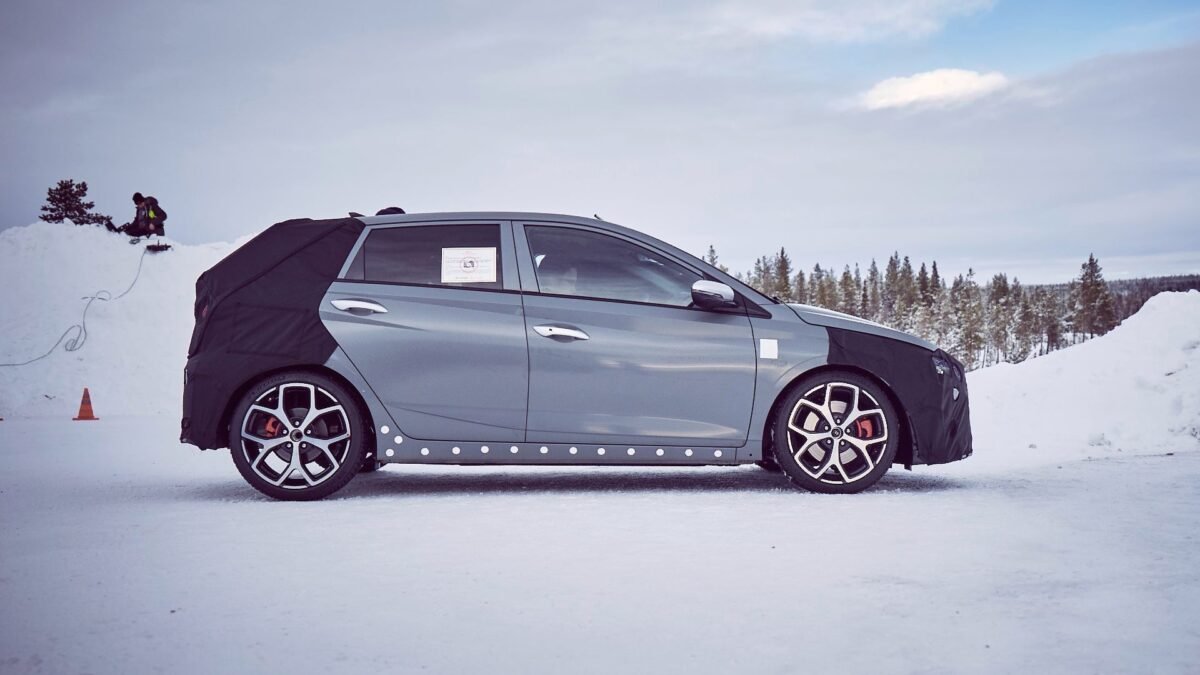
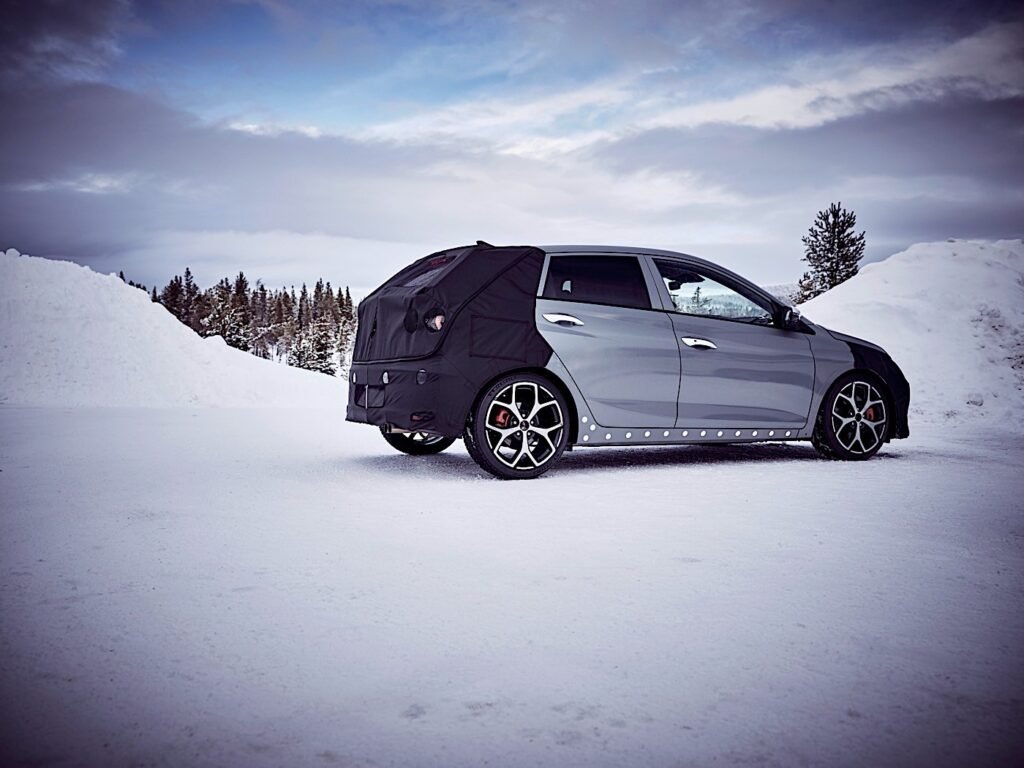
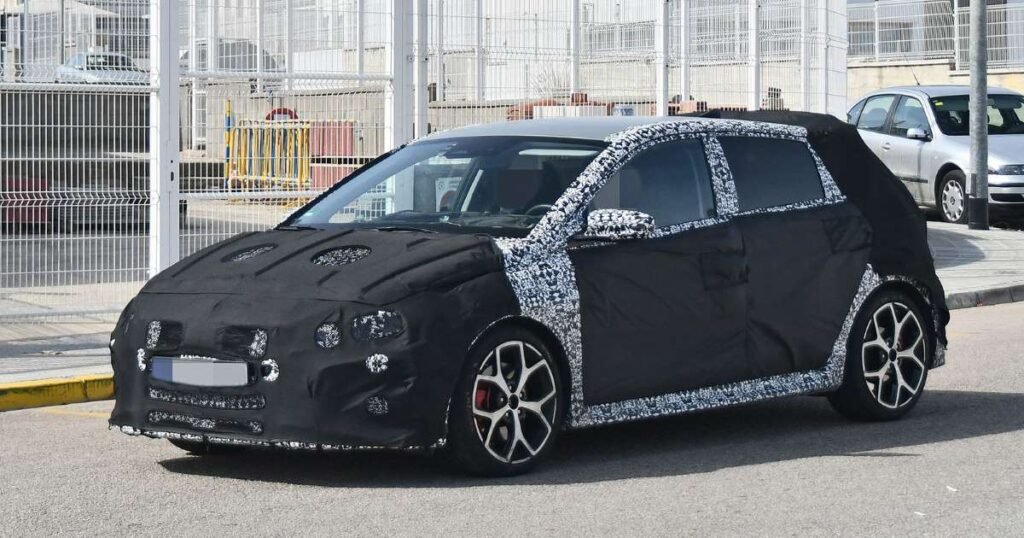
Hyundai’s N division did not do things by halves. After the i30 N and i30 Fastback N came the smallest car to wear the badge: the i20 N, revealed on 21 October 2020 and inspired directly by the i20 Coupe WRC rally car that had won the World Rally Championship manufacturers’ title in 2019 and 2020. Hyundai teased it the way this article’s photographs show, testing in the snow at Arjeplog in Sweden alongside the WRC car and the mid-engined RM19 prototype, and the production car that followed kept the promise: a proper manual gearbox, a limited-slip differential on the options list and one of the best power-to-weight ratios in the class.
204 PS and a proper manual gearbox
The engine is a new-generation 1.6-litre T-GDi turbocharged four, the first European Hyundai unit to feature Continuously Variable Valve Duration technology. It produces 204 PS (201 hp) at 5,500 to 6,000 rpm and 275 Nm of torque spread from 1,750 to 4,500 rpm, with an overboost function lifting torque to 304 Nm between 2,000 and 4,000 rpm. Hyundai tuned the delivery for a flat power curve, so the engine pulls across the rev range rather than in one lump. Drive goes to the front wheels through a reinforced six-speed manual gearbox, the only transmission offered, with launch control and a rev-matching function that can be switched off by drivers who would rather heel-and-toe themselves. Hyundai quotes 0 to 100 km/h in 6.2 seconds and a top speed of 230 km/h, helped by a kerb weight of just 1,190 kg, the same as the WRC car, giving 171 PS per tonne.
| Engine | 1.6-litre T-GDi turbo four, 204 PS (201 hp) / 275 Nm (304 Nm overboost) |
|---|---|
| Gearbox | 6-speed manual, launch control and rev matching |
| 0–100 km/h | 6.2 sec (Hyundai figure) |
| Top speed | 230 km/h |
| Weight | 1,190 kg |
| Drive | Front-wheel drive; optional mechanical limited-slip differential |
Chassis, modes and brakes
The chassis was developed with the Nürburgring in the programme, as with every N car. The i20 N sits lower than the standard car on retuned suspension with reinforced mounting points, and buyers could add a mechanical limited-slip differential, which Hyundai calls the N Corner Carving Differential, to tame the front axle’s workload. The N Drive Mode System offers Eco, Normal, Sport, N and N Custom settings, the last allowing the driver to mix engine response, exhaust note, steering weight and stability-control intervention to taste, while a dedicated N button on the steering wheel and a rev indicator encourage using all of the rev range. The active exhaust gives the car a voice most small hatches lack, and the whole package was aimed at the Ford Fiesta ST, the class benchmark, with the Volkswagen Polo GTI also in its sights.
On sale in 2021, and not for America
The i20 N went on sale across Europe in spring 2021, built in Turkey alongside the standard i20, and it was never offered in the United States, where Hyundai’s N range was headed by larger cars. It broadened the same showroom that offered the Tucson family SUV at one end and, through sister brand Kia, the Stinger performance sedan at the other. Against newer electrified rivals such as the Volkswagen ID.3 GTX, the i20 N makes a different case: no hybrid hardware, no automatic option, just a light body, a willing turbo engine and a gear lever. In a segment that was already shrinking as rivals were discontinued, that purity became its selling point.
Looks the part, inside and out
There is no mistaking the N for a standard i20. It sits on 18-inch wheels wearing Pirelli P Zero tyres developed for the car, with a deeper front bumper and larger air intake, a rear spoiler, a diffuser-style rear bumper with a triangular fog light borrowed from the WRC car’s look, and side skirts trimmed in red, a colour that also edges the front lip. The signature Performance Blue launch colour could be paired with an optional black roof. Inside, there are sports seats with integrated headrests and N logos, a thick-rimmed N steering wheel, metal pedals and a digital instrument cluster whose shift lights and variable red zone change with the drive mode, alongside a 10.25-inch touchscreen with performance readouts. Hyundai’s SmartSense safety suite, including forward collision avoidance and lane-keeping assistance, was standard, so the N could play the sensible daily driver as convincingly as the back-road toy.
The i20 N is the hot hatch formula executed with unusual commitment: 204 PS, 1,190 kg, a standard manual gearbox and chassis tuning signed off at the Nürburgring. It matched the Fiesta ST for pace and beat it for standard equipment and theatre, and it remains the most focused small car Hyundai has built. If the manual hot hatch has a future, it sounds like this; if it does not, the i20 N is a fine way for the breed to bow out.
