
Mercedes-Benz S-Class W223: Inside the Five-Screen Cabin
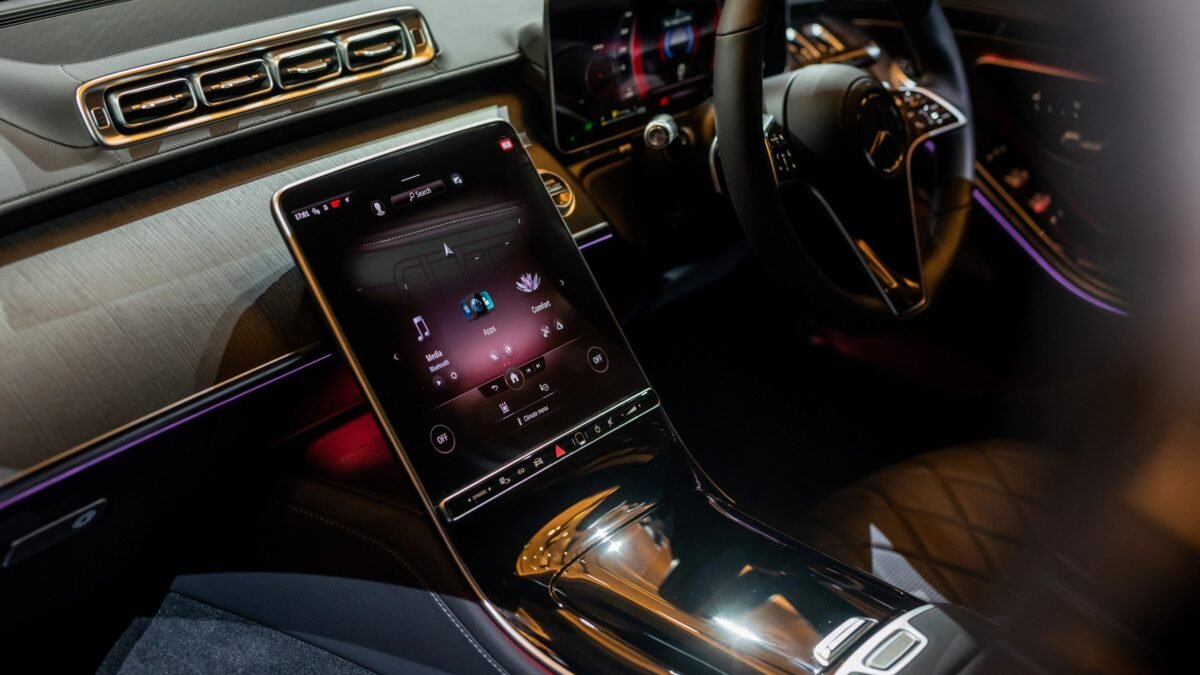
Mercedes-Benz showed the cabin of the seventh-generation S-Class before it showed the car. On 8 July 2020, weeks ahead of the full premiere on 2 September, the first episode of the company’s “Meet the S-Class DIGITAL” series was devoted entirely to the interior and the second generation of its MBUX (Mercedes-Benz User Experience) system. It was a deliberate statement of priorities. The W223 was designed from the back seat forwards, and its cabin replaced almost every convention of the outgoing W222: in place of the wide, button-heavy dashboard came a portrait touchscreen, a floating digital instrument cluster, four slim rectangular air vents and broad sweeps of open-pore wood. The number of mechanical switches fell by 27 compared with the previous model.
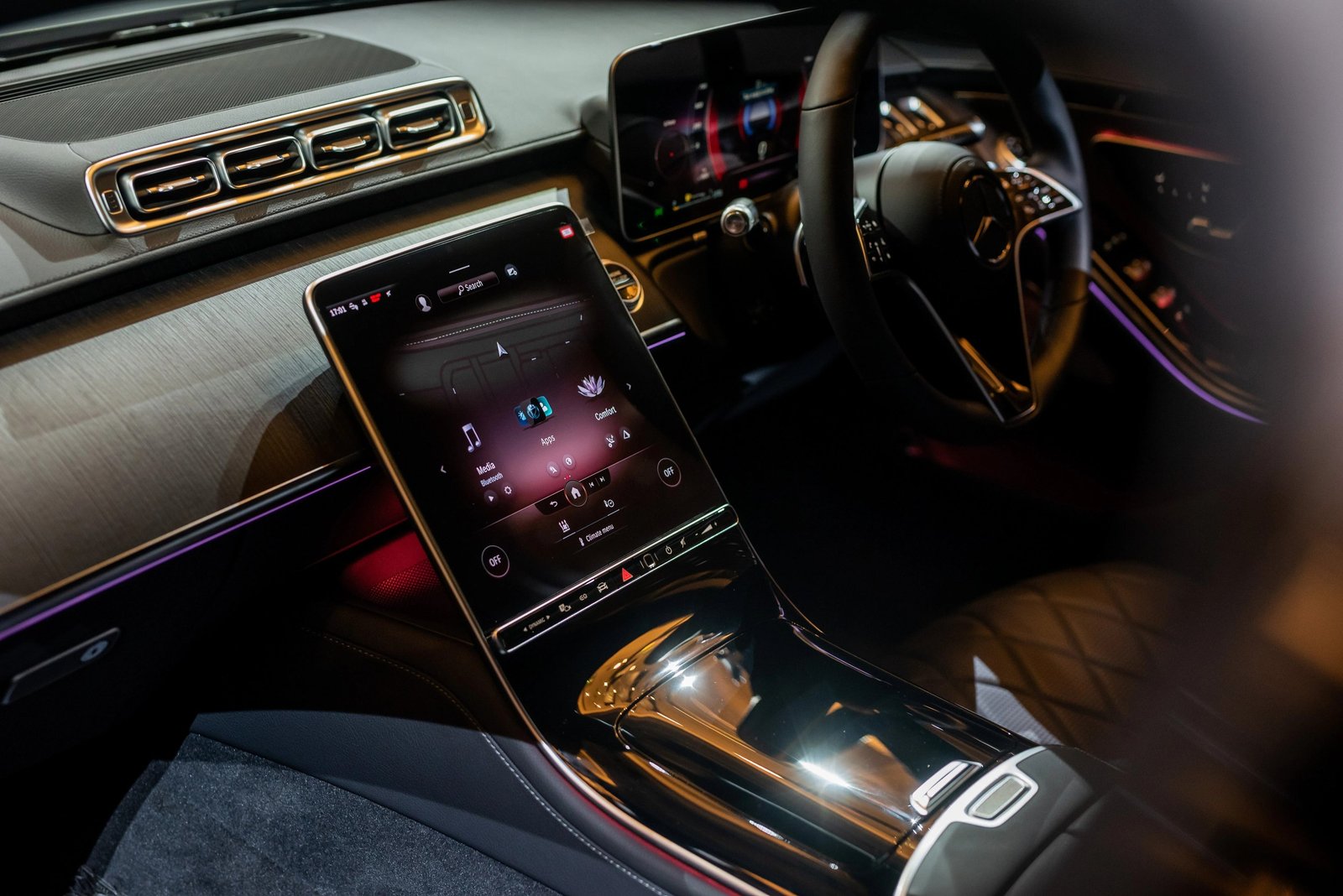
Five screens and a three-dimensional instrument cluster
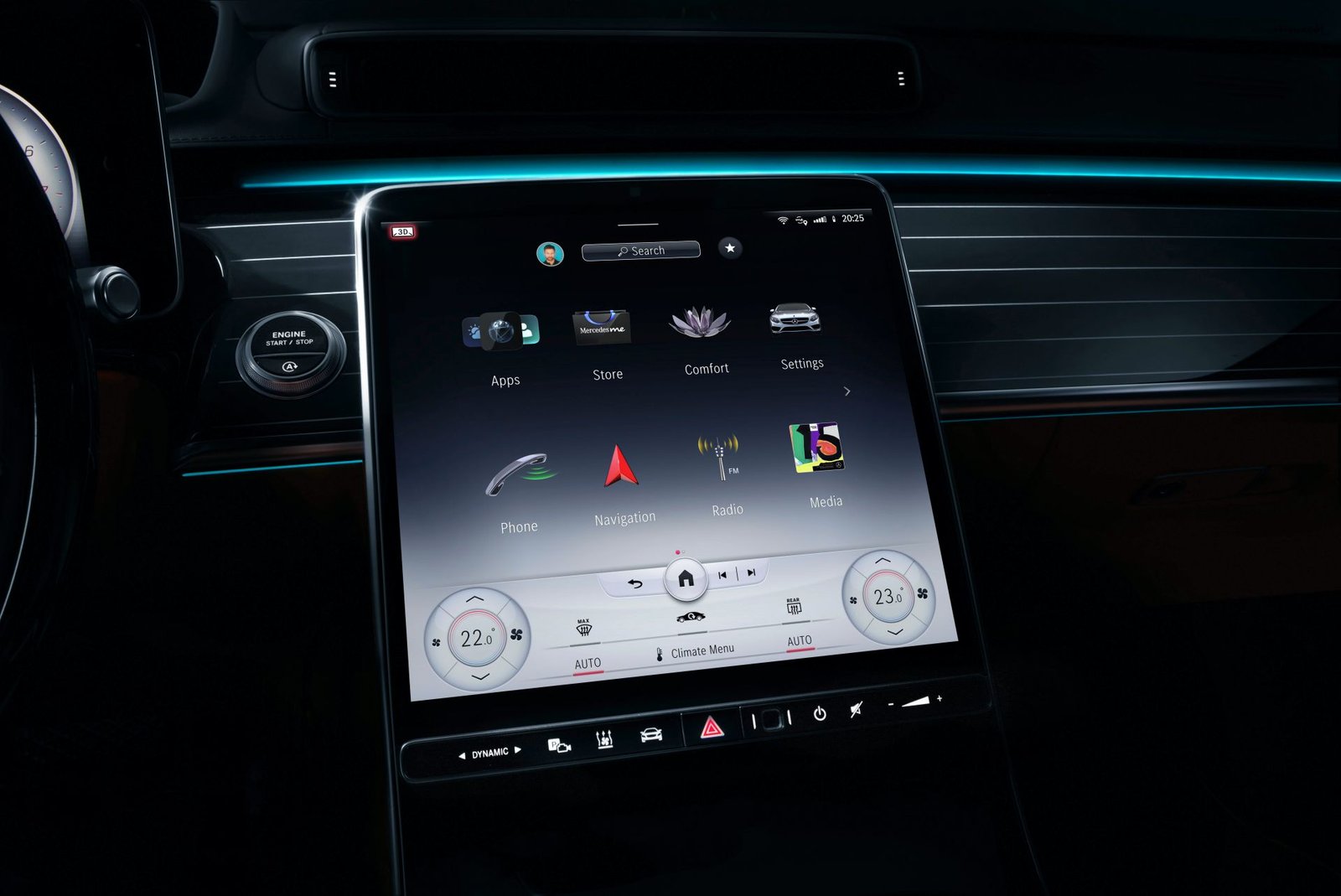
Tick the right boxes and the W223 interior carries five screens. The centrepiece is a 12.8-inch portrait display with OLED technology and haptic feedback, through which the climate, comfort and infotainment functions are controlled; Mercedes kept the climate panel permanently visible at the bottom edge of the screen so that basic adjustments never require a menu dive. In front of the driver sits a 12.3-inch digital instrument display that can produce a genuine three-dimensional effect without glasses. It uses an auto-stereoscopic panel and a stereo camera that tracks the driver’s eye position, so the left and right eyes see different pixels and perceive real depth. Four display styles (Discreet, Sporty, Exclusive and Classic) and three modes (Navigation, Assistance and Service) let the driver re-skin the instruments, and content can be shared from screen to screen, so a destination chosen in the back can be pushed to the front. It is the same screen-led thinking Mercedes previewed with the Vision AVTR concept, made production-real.
A head-up display the size of a television
The larger of the two available head-up displays is the party trick. Its image appears at a virtual distance of about ten metres ahead of the car, covers an aperture angle of 10 degrees horizontally and 5 degrees vertically, and corresponds to a monitor with a 77-inch diagonal. The image is formed by a digital mirror device with 1.3 million individual mirrors, technology borrowed from cinema projectors and used by Mercedes-Benz in a car for the first time. Because the picture is superimposed on the real road, navigation instructions can be drawn onto the surroundings themselves: animated arrows hover over the turning ahead, and information from the Active Distance Assist system is shown in the driver’s line of sight rather than on a distant screen.
The car watches, listens and learns
MBUX Interior Assist uses cameras in the overhead control panel to read the occupants’ movements and anticipate what they want. It recognises up to 20 control commands: the sliding sunroof answers to a hand gesture, the rear roller blind to a glance over the shoulder, and the driver’s seat and mirrors can pre-position themselves according to the driver’s body size, measured as they get in. The system also checks whether a child seat on the front passenger seat is correctly attached, and the exit warning has been woven into the cabin lighting: if a camera sees an occupant about to open a door while another road user approaches in the blind spot, the active ambient lighting flashes red. The voice assistant “Hey Mercedes” understands natural speech in 27 languages, accepts indirect requests such as “I am cold”, can be spoken to from the rear seats and no longer needs its wake word for simple commands such as answering a call. Say “I’m tired” and it starts an ENERGIZING comfort programme. Up to seven user profiles can be stored in the car, protected by a PIN and by fingerprint, face and voice recognition working together, and because the profiles also live in the Mercedes me cloud they can follow the driver into other cars with the same system.
| Generation | W223, seventh-generation S-Class; interior revealed 8 July 2020, world premiere 2 September 2020 |
|---|---|
| Central display | 12.8-inch OLED portrait touchscreen with haptic feedback |
| Driver display | 12.3-inch digital cluster, optional glasses-free 3D effect |
| Head-up display | Augmented-reality HUD, image equivalent to a 77-inch screen at a virtual 10 m distance |
| Rear screens | Up to three: two 11.6-inch displays and a removable 7-inch MBUX rear tablet |
| Profiles | Up to seven, secured by PIN plus fingerprint, face and voice recognition |
| Audio | Optional Burmester High-End 4D surround sound, 31 speakers, 1,750 watts, resonators in the seats |
| Ambient lighting | Active ambient lighting, 247 LEDs (263 in the long-wheelbase car), 64 colours, linked to the assistance systems |
| Plug-in hybrid | S 580 e: 367 hp petrol six-cylinder plus 150 hp electric motor, 510 hp system output, electric range up to 113 km (WLTP) |
The back seat is the point
Rear passengers were given the same digital rights as the driver. Up to three screens serve the back seat, destinations can be selected and amended from the rear, and the executive seats recline behind a front passenger seat that motors forward and folds its leg rest out to make room. The front seats alone are each adjusted by 19 electric motors and offer ten massage programmes, and the rear headrests can be heated. Sound is handled, at the top of the options list, by a Burmester High-End 4D system whose 31 speakers and 1,750 watts include resonators built into the seats, so bass is felt as well as heard. The active ambient lighting, a fibre-optic band of 247 LEDs in the standard car and 263 in the long-wheelbase version, changes colour with the driving situation and forms part of the warning systems. It is a very different philosophy of luxury from the one that died with the Bentley Mulsanne in the same year, all hand-stitched tradition, and Mercedes’ bet was that software, not veneer, was where the flagship fight would move next.
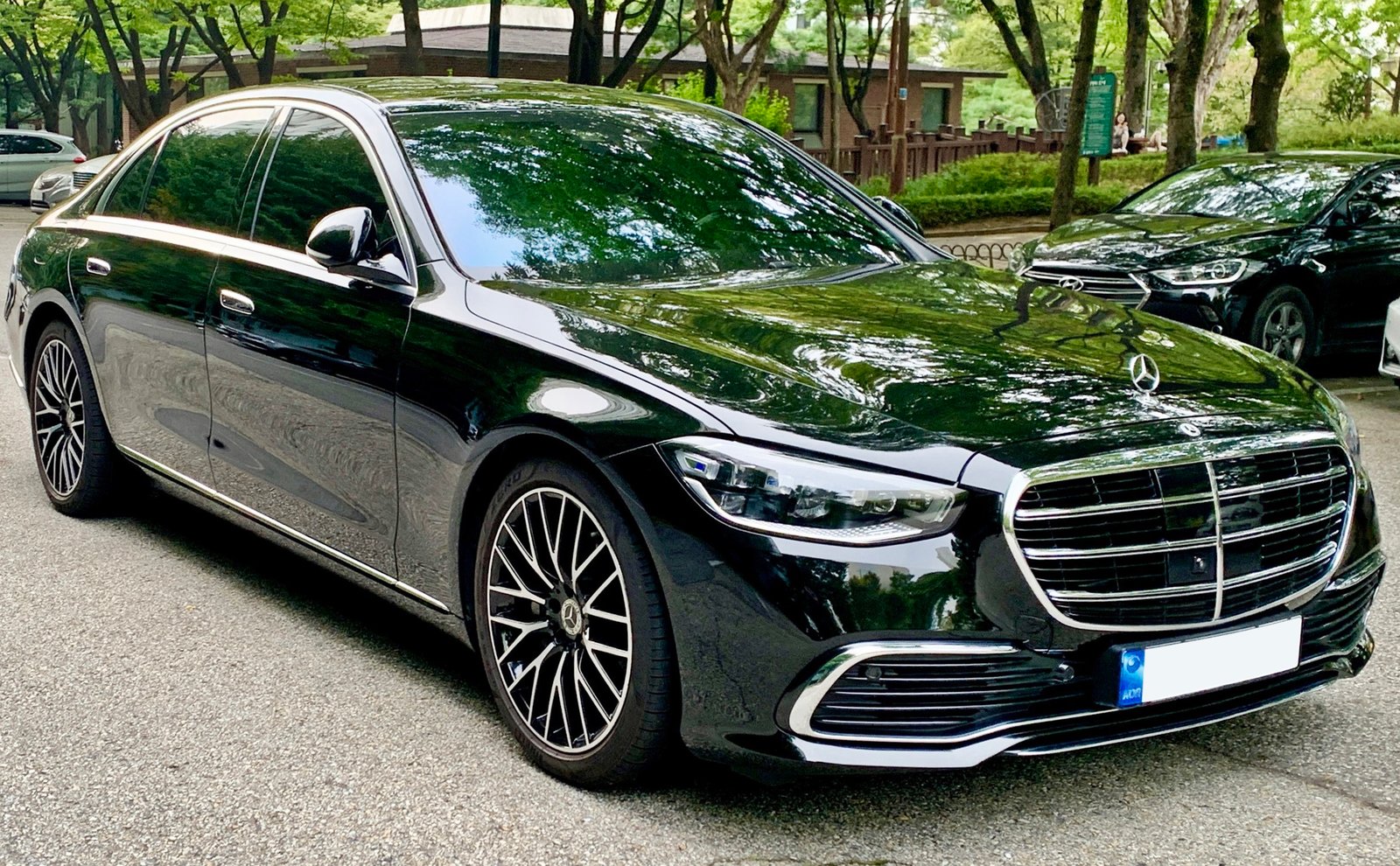
Digital first, with a hybrid flagship in the cabin’s image
The powertrain story caught up with the cabin a year later, when the S 580 e plug-in hybrid went on sale in Europe in July 2021. Its 3.0-litre six-cylinder engine produces 367 hp and the electric motor 150 hp, for a system output of 510 hp and an electric range of up to 113 km on the WLTP cycle, more than double the previous S-Class hybrid’s reach; German prices started at 123,736 euros. An owner covering the daily commute on electricity experiences the W223 exactly as its designers presented it in July 2020, as a quiet, screen-lit lounge that happens to move. Buyers weighing the S-Class against electric flagships such as the Porsche Taycan will find the same argument on both sides: the interior is the product now.
The W223 cabin was the boldest part of the car, and time has been kind to the gamble. The portrait OLED screen, the glasses-free 3D instruments and the 77-inch-equivalent augmented-reality display were not gimmicks; they set the template every luxury maker has since followed, and the rear-seat technology finally matches the S-Class’s chauffeur-driven reality. The loss of 27 buttons will still divide opinion among traditionalists, but as a piece of interior engineering the W223 remains the benchmark its rivals are measured against.

