
Lamborghini Huracán EVO RWD: 610 hp, Rear-Wheel Drive
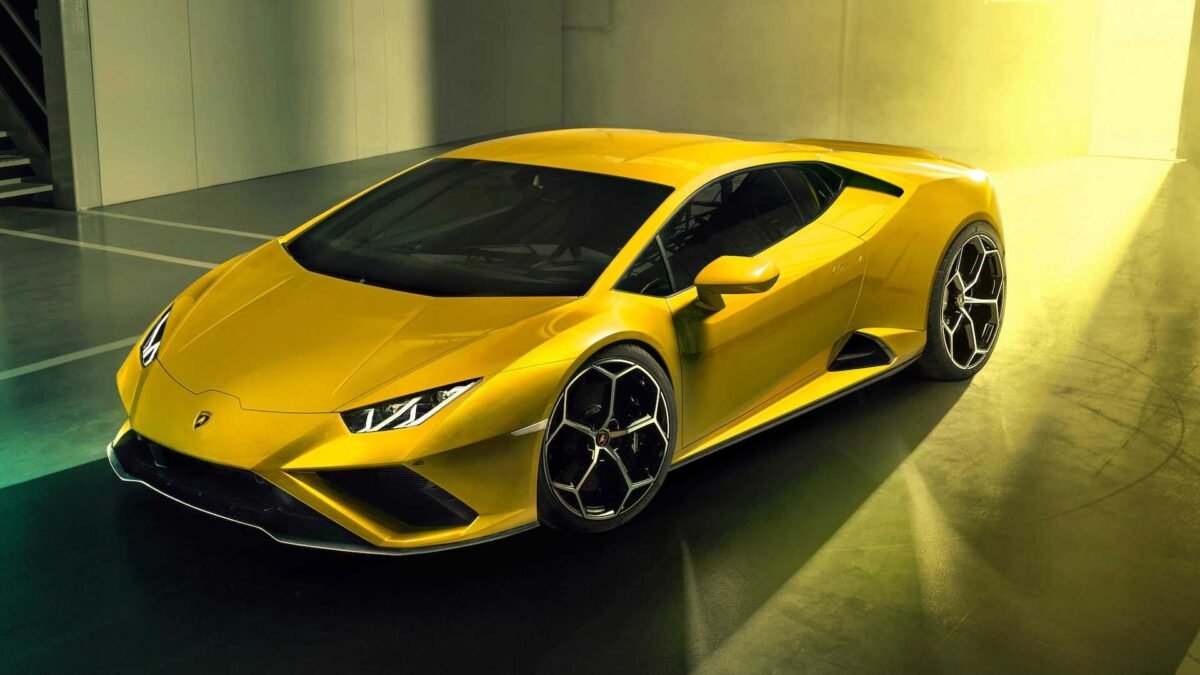
Lamborghini completed the Huracán EVO family on 4 January 2020, a year after the all-wheel-drive car, by taking drive away from the front axle. The Huracán EVO RWD keeps the 5.2-litre naturally aspirated V10 and the EVO’s electronic brain, but sends everything to the rear wheels through a traction control system tuned to play rather than to scold. It was also, at 159,443 euros before taxes in Europe, the least expensive car Lamborghini sold, a deliberate invitation to brand newcomers and to drivers who found the 640 hp all-wheel-drive EVO a little too serious.
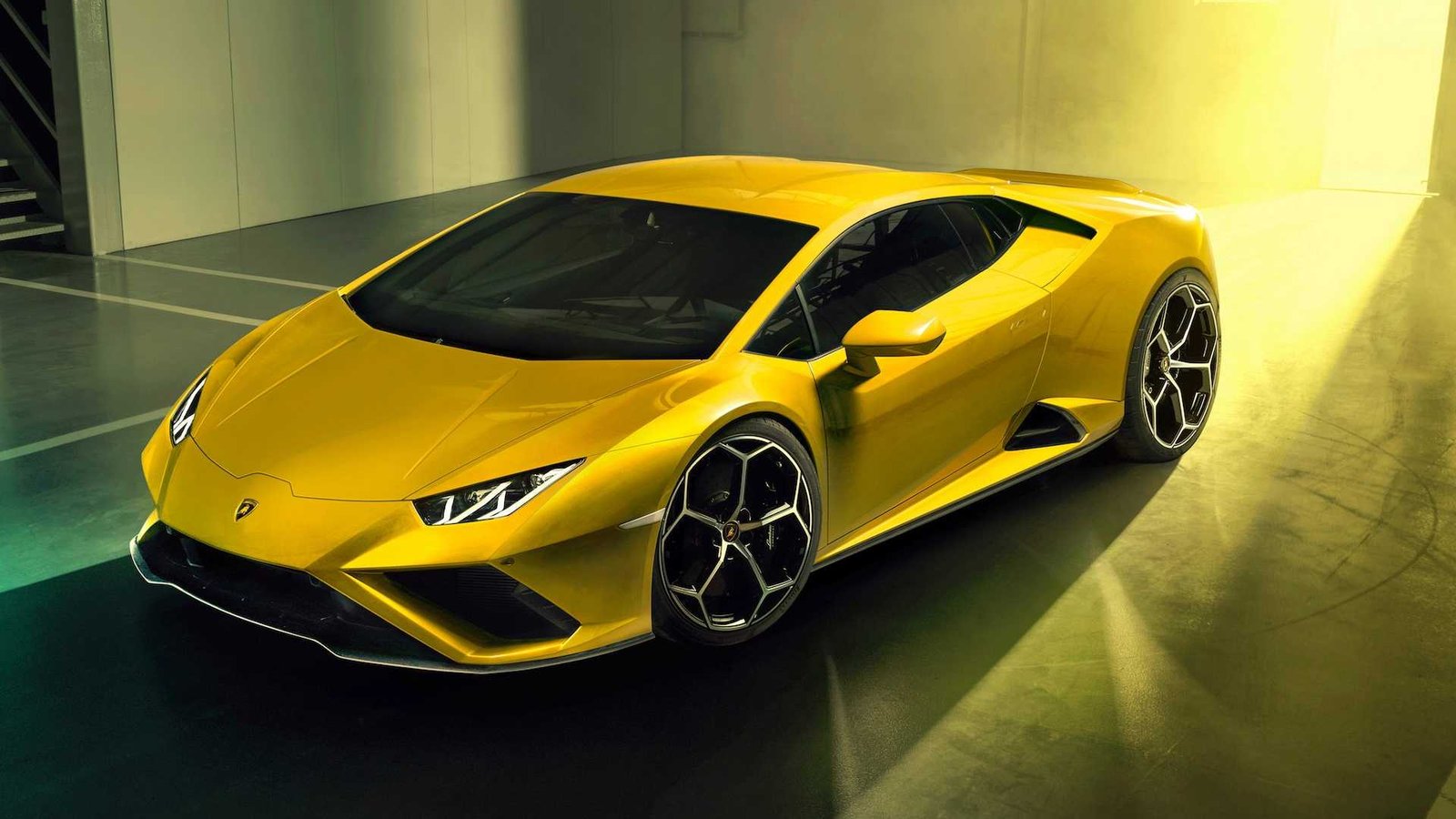
Less driven wheels, more driver
The V10 is detuned slightly from the all-wheel-drive EVO’s 640 hp, producing 610 hp at 8,000 rpm and 560 Nm of torque at 6,500 rpm. Against that, the RWD sheds the front differential and driveshafts, so its dry weight is just 1,389 kg, giving a weight-to-power ratio of 2.28 kg per horsepower with a 40/60 front-to-rear weight distribution. The seven-speed LDF dual-clutch gearbox is unchanged, as is the double-wishbone suspension, and the performance figures barely suffer for the missing traction: 0 to 100 km/h takes 3.3 seconds, 0 to 200 km/h takes 9.3 seconds, the top speed is 325 km/h, and the steel brakes (ventilated and cross-drilled, with eight-piston front calipers) haul it back from 100 km/h in 31.9 metres. Lamborghini Dynamic Steering is tuned specifically for this car, and the standard wheels are 19-inch Kari rims in specially developed Pirelli P Zero tyres, with 20-inch wheels and carbon-ceramic brakes on the options list.
A traction control system that lets go
The engineering heart of the RWD is its Performance Traction Control System, P-TCS, calibrated only for this car. A conventional system cuts torque sharply when the rear tyres break loose and waits for complete stability before giving it back. P-TCS instead feeds torque in advance, delivering drive while the car is still realigning from a slide, which avoids the harsh cut and keeps momentum on corner exit. Its behaviour follows the ANIMA driving modes chosen on the steering wheel. In Strada it minimises rear-wheel slip for stability on any surface. In Sport it deliberately allows the rear wheels to slide and skate under power, stepping in when the oversteer angle grows quickly so the driver can hold a drift and then stabilise the car. In Corsa it permits exactly the slip that maximises traction and agility out of corners. Compared with the previous rear-wheel-drive Huracán, Lamborghini claimed interventions 30 per cent smoother, corner-exit traction improved by 20 per cent and oversteer enhanced by 30 per cent, numbers that tell you everything about the car’s intended character.
| Engine | 5,204 cc V10, naturally aspirated, dry sump |
|---|---|
| Power | 610 hp (449 kW) at 8,000 rpm |
| Torque | 560 Nm at 6,500 rpm |
| Gearbox | 7-speed LDF dual-clutch |
| Drive | Rear-wheel drive, P-TCS traction control, Lamborghini Dynamic Steering |
| Weight | 1,389 kg dry; 2.28 kg/hp; 40/60 weight distribution |
| Performance | 0-100 km/h 3.3 s; 0-200 km/h 9.3 s; top speed 325 km/h; braking 100-0 km/h 31.9 m |
| Consumption | 13.8 l/100 km combined (WLTP), 330 g/km CO2 |
| Prices at launch | Europe 159,443 euros, UK 137,000 pounds, USA 208,571 dollars (all taxes excluded); deliveries from spring 2020 |
How you tell it apart
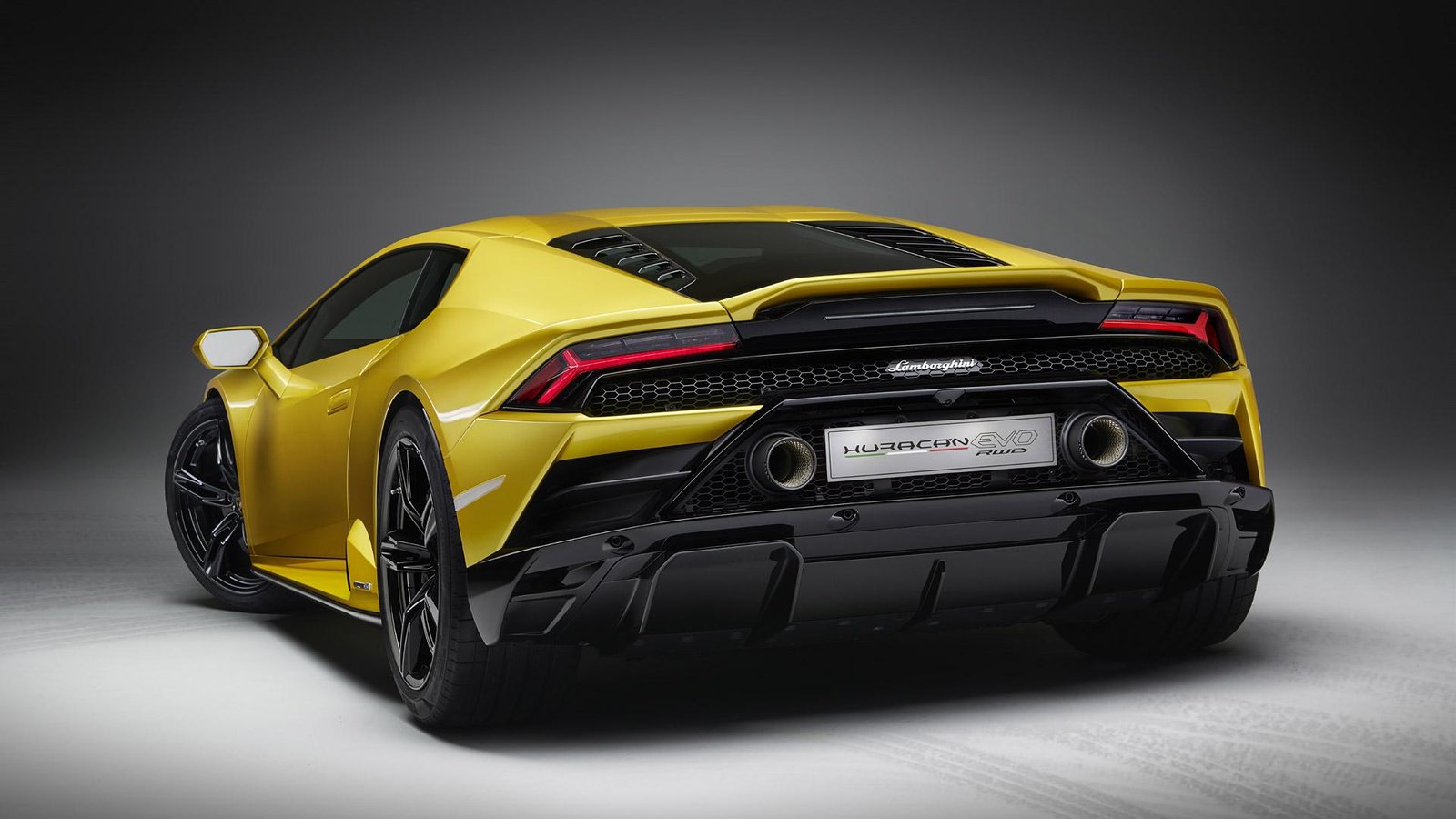
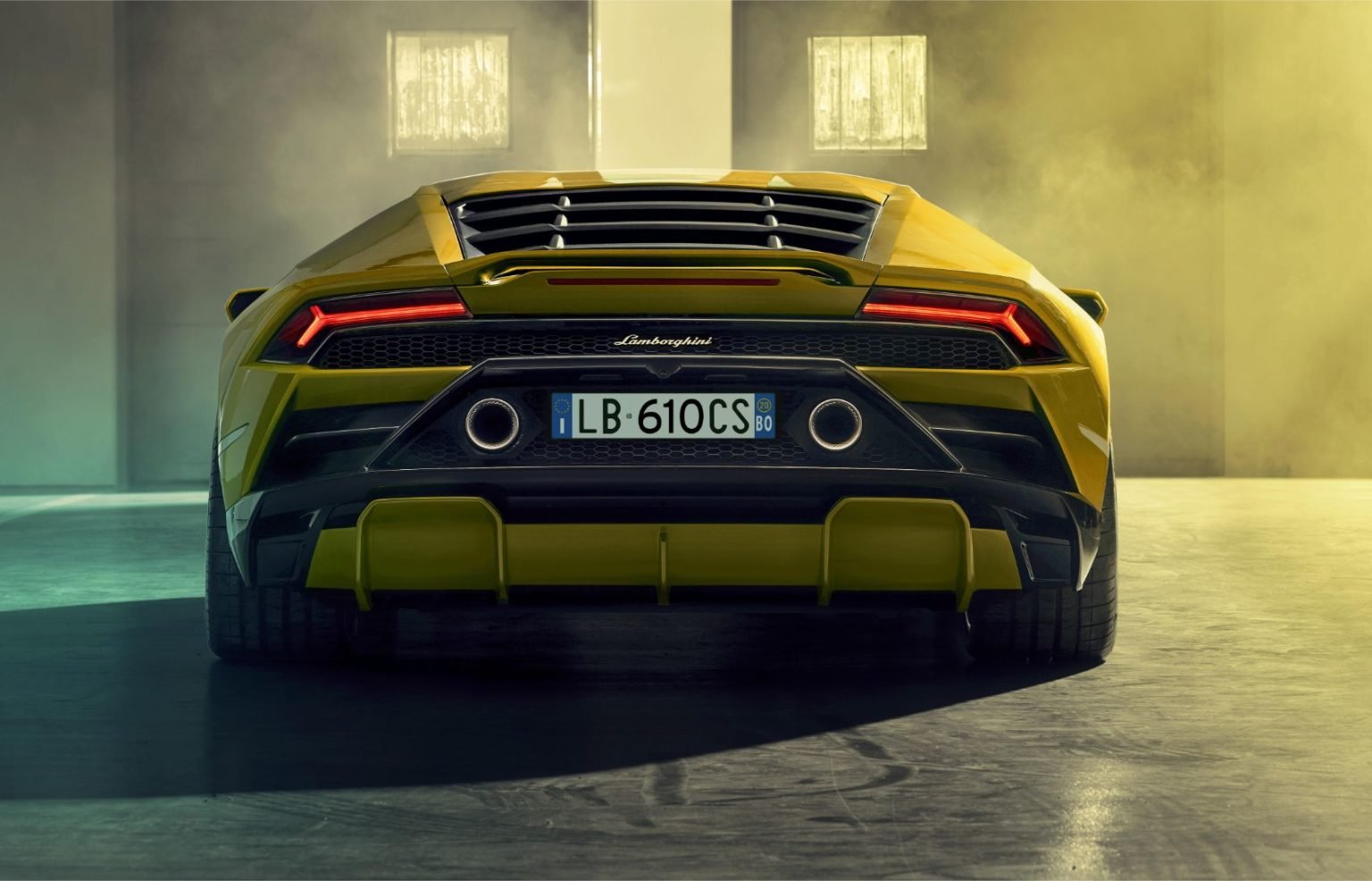
Lamborghini restyled both ends so the RWD would not be mistaken for its sibling. At the front there is a new splitter and vertical fins inside larger, framed air intakes; at the rear, the high-gloss black bumper carries a diffuser unique to this model, above the high-mounted twin exhausts. The launch colour, developed for the car, is the Giallo Belenus yellow of the press photographs, matched by a dedicated leather and Alcantara interior trim, and the Ad Personam programme offers the usual near-limitless palette beyond it. Inside, an 8.4-inch touchscreen in the centre console runs the car’s functions and connectivity, including Apple CarPlay, and the EVO’s predictive vehicle dynamics control continues to manage the chassis systems as one network.
The purist’s Huracán
The RWD arrived as the Huracán range settled into its mature phase, and it reframed the entry point of the whole Lamborghini line-up: for the price of the cheapest car in Sant’Agata you received the one many testers called the most entertaining. Its natural rivals were the other mid-engined cars that put the driver first, a philosophy Maserati would soon chase with the MC20, while at the extreme end of rear-wheel-drive theatre sat limited-run specials such as the Mercedes-AMG GT Black Series. Lamborghini’s own sense of fun, meanwhile, clearly was not confined to the road, as the Tecnomar for Lamborghini 63 yacht demonstrated in the same period.
The EVO RWD is the Huracán distilled: the same operatic V10 and electronic intelligence, with the front axle’s safety net removed and a traction control system programmed by people who clearly enjoy going sideways. It is four tenths slower to 100 km/h than the all-wheel-drive EVO and a five-figure sum cheaper in every market, and neither fact matters as much as the way it steers, slides and sounds. For driving pleasure per euro, it was the best car Lamborghini made.


