




10 Nov 2026
0
Cheapest New Cars Under $25,000 in 2026
The cheapest new car in America for 2026 is the Hyundai Venue, starting at $20,550. Ten new cars still start under $25,000 — and in a year when the average new car sold for $50,562 (Kelley Blue Book’s September 2026 average transaction price), every one of them costs less than half the average.
This guide ranks all 10 by base MSRP, using prices published by the manufacturers themselves and checked on November 10, 2026. One honesty note before the list: a base MSRP is not what you pay at the door. Every car also carries a mandatory destination charge, so the table below shows both numbers. The first seven cars on this list stay under $25,000 even after destination. The last three start under $25,000 but cross the line once destination is added — they are included because their MSRPs qualify, and each one is flagged where it appears.
The 10 cheapest new cars in 2026, at a glance
| Rank | Car (base trim) | Base MSRP | Destination | Price with destination | EPA combined MPG | Power | Body style |
|---|---|---|---|---|---|---|---|
| 1 | Hyundai Venue SE | $20,550 | $1,600 | $22,150 | 31 mpg | 121 hp | Small SUV |
| 2 | Chevrolet Trax LS | $21,700 | $1,795 | $23,495 | 30 mpg | 137 hp | Small SUV |
| 3 | Kia K4 LX | $22,290 | $1,245 | $23,535 | 33 mpg | 147 hp | Sedan |
| 4 | Nissan Sentra S | $22,600 | $1,245 | $23,845 | 33 mpg | 149 hp | Sedan |
| 5 | Nissan Kicks S FWD | $22,730 | $1,575 | $24,305 | 31 mpg | 141 hp | Small SUV |
| 6 | Hyundai Elantra SE | $22,825 | $1,295 | $24,120 | 35 mpg | 147 hp | Sedan |
| 7 | Toyota Corolla LE | $23,125 | $1,295 | $24,420 | 35 mpg | 169 hp | Sedan |
| 8 | Chevrolet Trailblazer LS FWD | $23,600 | $1,795 | $25,395 | 30 mpg | 137 hp | Small SUV |
| 9 | Honda Civic LX | $24,695 | $1,195 | $25,890 | 36 mpg | 150 hp | Sedan |
| 10 | Toyota Corolla Hybrid LE | $24,975 | $1,295 | $26,270 | 50 mpg | 138 hp | Hybrid sedan |
Prices are the manufacturers’ published base MSRPs as of November 10, 2026, and exclude taxes, title, registration and dealer fees. Fuel economy is the EPA combined rating for the base trim shown.
Three facts worth knowing before you shop:
- There is no new car under $20,000 anymore. The Nissan Versa and Kia Soul, the last sub-$20,000 cars, were both discontinued after 2025. The Venue’s $20,550 is the new floor for the entire US market.
- Destination charges run from $1,195 to $1,795 on this list — that is real money on a cheap car, and it is why ranking by MSRP alone misleads. GM charges the most here ($1,795 on both Chevrolets); Honda charges the least ($1,195).
- Every car on this list includes a full factory warranty and modern safety tech — automatic emergency braking, lane-keeping help and smartphone mirroring are standard on all ten. That is the core argument for buying one of these instead of a used car at the same money, and we return to it in the ownership section below.
1. Hyundai Venue SE — $20,550
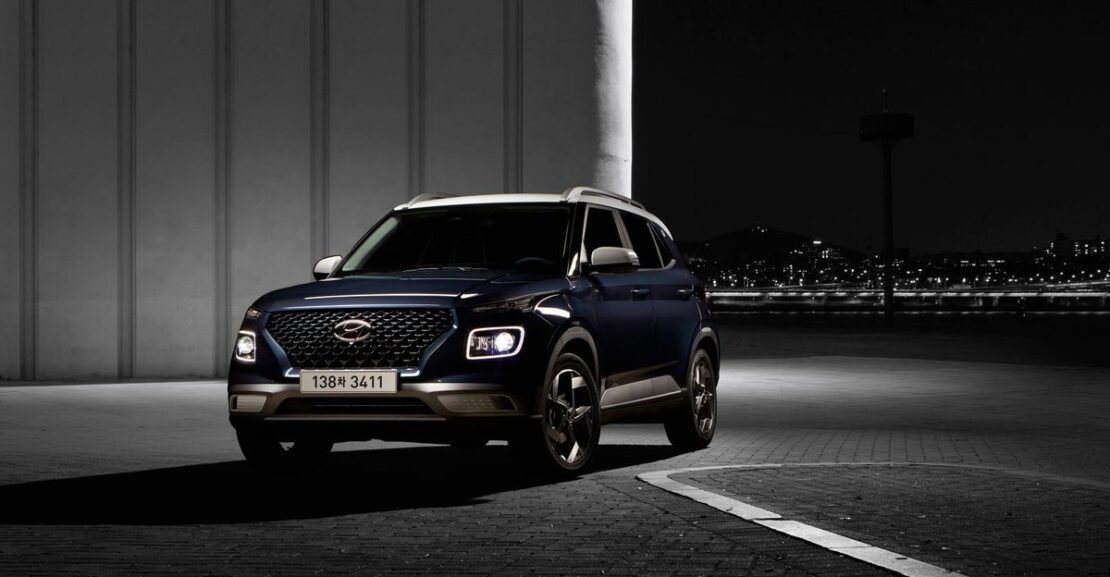
The Venue is the cheapest new car in America, and it is not especially close: at $20,550 it undercuts the next car on this list by $1,150. Hyundai sells it as a subcompact SUV with a 1.6-liter engine making 121 horsepower, an EPA rating of 29 city / 33 highway / 31 combined mpg, and standard wireless Apple CarPlay and Android Auto on an 8-inch touchscreen.
Why buy it? The price is only half the story. The Venue carries Hyundai’s 10-year/100,000-mile powertrain warranty — the longest coverage on this list, matched only by the Kia K4 — and standard safety tech that includes forward collision-avoidance assist with pedestrian detection, lane keeping assist and a driver attention warning. Cargo space is 18.7 cubic feet behind the rear seats and 31.9 with them folded, which is genuinely useful for a car this small.
What to consider: 121 horsepower is the least power here, and highway passing takes planning. There is no all-wheel-drive option at any price, and blind-spot warning is not available on the base SE — it starts on the SEL. The back seat is tight for adults.
Best for: City drivers, first-time buyers, and anyone cross-shopping 3- to 5-year-old used cars who would rather have a full warranty and zero repair surprises.
2. Chevrolet Trax LS — $21,700
The Trax is the roomiest cheap car in America. Chevrolet prices the LS at $21,700 with a turbocharged 1.2-liter three-cylinder (137 horsepower), an EPA rating of 30 mpg combined, and up to 54.1 cubic feet of cargo space with the rear seats folded — more than some SUVs costing twice as much.
Why buy it? Space and standard equipment. Even the base LS includes an 8-inch touchscreen with wireless Apple CarPlay and Android Auto, LED headlamps and the Chevy Safety Assist suite (automatic emergency braking, lane-keep assist, forward collision alert). It looks and feels like a $30,000 crossover from the driver’s seat.
What to consider: The Trax is front-wheel drive only — there is no AWD version. Chevrolet’s $1,795 destination charge is the joint-highest on this list. One more thing to know: a federal class action (Cook v. General Motors LLC, filed March 4, 2026) alleges bearing and connecting-rod failures in this 1.2-liter engine family. That is litigation, not a recall — but it is worth asking the dealer about warranty coverage before you sign, and checking the car’s VIN on NHTSA’s recall lookup either way.
Best for: Buyers who need maximum cargo room on the minimum budget — small families, dog owners, and anyone hauling gear in a car payment under $450 a month.
3. Kia K4 LX — $22,290
The K4 is the sedan that replaced the Kia Forte, and at $22,290 the LX is Kia’s cheapest new car now that the Soul is gone. Kia fits a 2.0-liter engine with 147 horsepower; the EPA rates the sedan at 33 mpg combined (29 city / 39 highway, per FuelEconomy.gov).
Why buy it? It feels a class above its price. The cabin is wide, the back seat is one of the roomiest in the compact class, and Kia backs it with the same 10-year/100,000-mile powertrain warranty as Hyundai. Kia also points to the K4 ranking highest in the compact car segment of the J.D. Power 2026 US Initial Quality Study — a useful signal for a budget buy.
What to consider: The continuously variable transmission (Kia calls it an IVT) is tuned for economy, not fun. If you want the hatchback version, it starts at $24,990 — $2,700 more than the sedan. Kia sedans have historically held their value less strongly than a comparable Toyota or Honda, which matters if you sell within five years.
Best for: Commuters who want sedan comfort, a long warranty and a low price, and who plan to keep the car rather than flip it.
4. Nissan Sentra S — $22,600
The Sentra is all-new for 2026, and Nissan held the price down anyway: the S starts at $22,600, per Nissan’s own pricing announcement. The 2.0-liter engine makes 149 horsepower, and the EPA estimates 30 city / 38 highway / 33 combined mpg for the S and SV trims.
Why buy it? You get a fresh redesign — sharper styling and a more premium-feeling cabin — at an old-car price, something that almost never happens in the year a model is replaced. Nissan Safety Shield 360 is standard across the range, and the S undercuts most rivals while it is at it.
What to consider: A CVT is the only transmission. First-year redesigns can carry early-production quirks, so check build dates and any early recalls on the exact car you buy. The sportier SR and SL trims drop to 32 mpg combined on their larger wheels.
Best for: Buyers who want the newest design and tech on this list without paying a redesign premium.
5. Nissan Kicks S FWD — $22,730
The Kicks is the tech bargain of the group. Nissan prices the S at $22,730 with a 141-horsepower 2.0-liter engine and an EPA rating of 28 city / 35 highway / 31 combined mpg.
Why buy it? The standard equipment list reads like a car $5,000 more expensive: a 12.3-inch touchscreen, wireless Apple CarPlay and Android Auto, intelligent cruise control and the full Safety Shield 360 suite. It is also one of only two vehicles on this list with available all-wheel drive — the Kicks S AWD starts at $24,230, making it the cheapest new AWD vehicle in America.
What to consider: Nissan’s destination charge is $1,575, second-highest here, which pushes the real starting price to $24,305. The engine and CVT deliver adequate, not lively, performance, and while the center screen is a generous 12.3 inches, the driver display in front of you is a smaller 7-inch unit.
Best for: City and suburban drivers who want a big screen, a high seating position and the option of cheap AWD for winter.
6. Hyundai Elantra SE — $22,825
The Elantra SE is the efficiency pick among the conventional sedans: $22,825 to start, and an EPA rating of 31 city / 40 highway / 35 combined mpg from its 147-horsepower 2.0-liter engine, per Hyundai.
Why buy it? Along with the Kia K4 it carries the 10-year/100,000-mile powertrain warranty, and the standard kit is generous: wireless Apple CarPlay and Android Auto, LED projector headlights and an 8-inch touchscreen. The sharp styling makes it the easiest car on this list to mistake for something more expensive.
What to consider: The base SE rides on 15-inch wheels and uses a simpler rear suspension than the hybrid models, so it is not the most refined ride here. Know too that Hyundai also sells the Elantra Hybrid Blue (54 mpg combined) starting at $25,650 — just above this list’s cutoff, and worth the stretch if you drive a lot of miles.
Best for: High-mileage commuters who want sedan efficiency and the longest warranty in the business at a $22,825 start.
7. Toyota Corolla LE — $23,125
The Corolla LE is the default safe choice, and the numbers explain why: $23,125 to start, 169 horsepower — the strongest standard engine on this list — and an EPA rating of 35 mpg combined, per Toyota.
Why buy it? Toyota’s reliability record and resale values are the strongest argument in this entire guide; our ranking of the most reliable car brands puts Toyota at the top, and a Corolla is the cheapest way to buy into that record brand-new. For 2026 the base LE also includes blind-spot monitoring with rear cross-traffic alert on top of Toyota Safety Sense 3.0 — equipment that used to cost extra.
What to consider: The interior is plain next to the K4 and Sentra, and the CVT drones under hard acceleration. The bigger question is the hybrid below: the Corolla Hybrid LE costs $1,850 more and nearly halves your fuel bill, so run your own mileage math before deciding the gas LE is the cheaper car.
Best for: Keep-it-for-a-decade buyers who value reliability, resale and a dealer in every town over cabin flair.
8. Chevrolet Trailblazer LS FWD — $23,600
The Trailblazer starts at $23,600, per Chevrolet — but read the fine print in the table above: with GM’s $1,795 destination charge, the real starting price is $25,395, the first car here that crosses $25,000 at the door. It makes the list on MSRP, and it earns its place on capability.
Why buy it? All-wheel drive is available on every trim — the LS AWD starts at $25,600 — and the standard 11-inch touchscreen is the biggest on this list. The fold-flat front passenger seat swallows items up to 8.5 feet long, and Chevy Safety Assist is standard. The 1.2-liter turbo makes 137 horsepower; Chevrolet quotes up to 31 mpg combined with the optional 1.3-liter engine, while the base 1.2 is EPA-rated at 30 mpg combined.
What to consider: That destination charge, again — and the fact that GM raised Trailblazer prices four times during 2026, so confirm the sticker on the exact car in front of you rather than any price you read online, including this one. The base engine is shared with the Trax, so the March 2026 class-action allegation noted in the Trax section applies to this engine family too.
Best for: Snow-belt buyers who need AWD and SUV practicality at the lowest possible entry price, and who go in with eyes open about the delivered price.
9. Honda Civic LX — $24,695
The Civic LX is the driver’s choice of the ten. Honda prices it at $24,695, with a 150-horsepower 2.0-liter engine and the best fuel economy of any non-hybrid here: 32 city / 41 highway / 36 combined mpg.
Why buy it? It is simply the most polished car on this list to drive — steering, ride and cabin quality all feel a segment up — and Honda Sensing (adaptive cruise control, lane-keeping, automatic emergency braking) is standard. Civics also hold their value well, which quietly repays part of the higher starting price when you sell.
What to consider: With destination, the Civic starts at $25,890 — the second-highest real starting price here despite ranking ninth by MSRP. The LX is also the only Civic trim without blind-spot monitoring, and Honda does not offer it as an option on this trim; you have to step up to the Sport at $26,695.
Best for: Buyers who care how a car drives, not just what it costs, and who plan to keep it long enough for resale value to matter.
10. Toyota Corolla Hybrid LE — $24,975
The Corolla Hybrid LE sneaks under the line by $25: a $24,975 base MSRP for a car the EPA rates at 50 mpg combined (53 city / 46 highway). With Toyota’s $1,295 delivery charge the real start is $26,270 — the highest delivered price on this list — and it still might be the cheapest car here to own.
Why buy it? Fuel math. At 12,000 miles a year, the hybrid burns about 240 gallons; the 30-mpg Trax burns about 400. At an assumed $3.00 a gallon that is roughly $480 a year saved, every year, before you count the hybrid’s gentler brake wear. Blind-spot monitoring is standard, all-wheel drive is available for about $1,400 more, and Toyota’s hybrid system has the longest proven track record in the industry.
What to consider: 138 horsepower is adequate rather than quick, and the hybrid premium only pays back if you actually drive the miles — low-mileage drivers should save the money and buy the gas LE. If your driving is mostly short city trips, also compare our guide to the cheapest electric cars, though be aware the cheapest new EVs start several thousand dollars above everything here.
Best for: High-mileage drivers — rideshare, long commutes, delivery work — where the fuel saving overwhelms the higher starting price within a couple of years.
The ones that just missed the cut
Three familiar names are missing from this list, and the reasons are part of the story of car prices in 2026:
- Kia Soul — discontinued. Kia ended Soul production in October 2025, and the last new stock sold during 2026. Its final base MSRP was $20,490. There is no 2026 Soul.
- Nissan Versa — discontinued. America’s cheapest sedan was dropped after 2025, which is exactly why the Venue — an SUV — now holds the “cheapest new car” title.
- Subaru Impreza — priced out. Subaru dropped the base trim for 2026, so the Impreza now starts at $26,595 despite standard all-wheel drive. A year ago it would have made this list comfortably.
If none of the ten fits, the honest alternative at this budget is a nearly-new used car — our guide to the best used electric cars under $25,000 covers the strongest of those — rather than stretching into a $30,000 loan you did not plan for.
What these cars actually cost to own
The sticker is the smallest part of the decision. Here is the math on the two costs that matter most, using the same rates as our auto loan calculator guide.
Worked example 1 — the payment. Buy the Venue at its $22,150 price with destination, put 10% down ($2,215) and finance the remaining $19,935 over 60 months at 6.35% APR — the average new-car rate Experian recorded for Q2 2026. The payment is $389 a month, and total interest is $3,384. Now run the average new car instead: $50,562 (the September 2026 average transaction price in our average car prices guide), same 10% down and same rate. The payment is $887 a month and interest is $7,725. Choosing the cheapest car in America over the average car saves about $498 a month and $4,341 in interest — real money, every month, for five years.
Worked example 2 — the fuel. At 12,000 miles a year and an assumed $3.00 per gallon (an assumption for clean math, not a price quote): the Corolla Hybrid costs about $720 a year in fuel, the Elantra about $1,029, the Venue about $1,161 and the Trax about $1,200. Over a five-year loan, the hybrid saves roughly $2,400 in fuel against the thirstiest cars here — more than its $1,850 price premium over the gas Corolla.
Two smaller costs also favor this end of the market. Insurance is generally cheaper on inexpensive cars with low replacement values — our guide to getting the cheapest car insurance quotes shows how to price it before you buy. And every car here is new, which means no repair bills beyond maintenance for at least the first three years, and a decade of powertrain cover from Hyundai and Kia. If your credit is a work in progress, read our bad credit car loans guide before you visit a dealer — and if you are weighing leasing instead, our lease vs buy comparison runs those numbers too.
How to choose among the ten
- Tightest possible budget: Venue. Nothing else is close, and the warranty removes the risk that makes people nervous about cheap cars.
- Need cargo room: Trax. 54.1 cubic feet is unmatched at this money.
- Need all-wheel drive: Kicks S AWD ($24,230) is the cheapest AWD vehicle in America; the Trailblazer LS AWD ($25,600) is the roomier alternative.
- Long highway commute: Elantra SE (35 mpg, huge warranty) or Corolla Hybrid if your miles are high enough to repay the premium — do the fuel math in the section above with your real annual mileage.
- Keeping it ten years: Corolla LE or Civic LX. Resale and reliability are where Toyota and Honda earn their higher prices back.
- Want the freshest design: Sentra. A full redesign at $22,600 is the anomaly on this list.
- One trim up is often the sweet spot: the Trax LT adds the 11-inch screen and more for $24,995 with destination, and the Venue SEL adds blind-spot warning and heated seats. Price the second trim before you commit to the base — just do not let the trim walk turn a $23,000 car into a $29,000 one.
Frequently asked questions
What is the cheapest new car in America in 2026?
The Hyundai Venue SE, at $20,550 MSRP ($22,150 with Hyundai’s $1,600 destination charge). It became the cheapest new car in the country after Nissan discontinued the Versa and Kia discontinued the Soul.
Is there any new car under $20,000 in 2026?
No. For the first time in decades, no manufacturer sells a new car with a base price under $20,000 in the US. The Venue’s $20,550 is the lowest starting MSRP in the market.
Which of these cars are actually under $25,000 out the door?
Seven of the ten stay under $25,000 after the mandatory destination charge: the Venue, Trax, K4, Sentra, Elantra, Kicks and gas Corolla. The Trailblazer ($25,395), Civic ($25,890) and Corolla Hybrid ($26,270) cross the line once destination is added — and taxes and fees push every car’s final price higher still.
What is the cheapest new car with all-wheel drive?
The Nissan Kicks S AWD, starting at $24,230 MSRP. The Chevrolet Trailblazer LS AWD, at $25,600, is the next cheapest way into a new AWD vehicle.
Which cheap car gets the best gas mileage?
The Toyota Corolla Hybrid LE, at an EPA-rated 50 mpg combined. Among non-hybrids, the Honda Civic LX leads at 36 mpg combined, followed by the Elantra and gas Corolla at 35.
How much is the monthly payment on a $25,000 car?
With 10% down, a 60-month term and the Q2 2026 average new-car APR of 6.35%, a $25,000 car (price including destination) finances $22,500 and costs about $439 a month, with about $3,821 in total interest. Shorter terms and better credit cut that interest sharply — our guide to financing a car walks through the levers.
Should I buy one of these or a used car for the same money?
A used car gets you more size and features for the same money; a new car here gets you a full warranty, the latest safety tech, a known history and usually a lower loan rate. If the used car is an out-of-warranty European luxury brand, the cheap new car wins on running costs almost every time.
Do cheap new cars hold their value?
Unevenly. The Corolla and Civic historically hold value best in this group; the Venue, K4 and Sentra depreciate faster, which makes them better buys for people who keep cars a long time than for people who trade every three years.
Bottom line
You do not need $50,000 to buy a good new car in 2026 — you need about $22,000 and the discipline to buy the car at the top of this list instead of the car the average buyer is financing. The Venue is the price champion, the Trax the space champion, the Corolla Hybrid the running-cost champion, and the Civic the one that feels like it costs more than it does. Pick the one that matches how you actually drive, confirm the destination-inclusive price on the window sticker, and let the warranty do the worrying.
Sources & pricing note
All MSRPs and destination charges were taken from the manufacturers’ own US websites and pricing announcements — Hyundai, Chevrolet, Kia, Nissan, Toyota and Honda — and checked on November 10, 2026. Fuel economy figures are EPA ratings via the manufacturers and FuelEconomy.gov. The $50,562 average transaction price is Kelley Blue Book’s September 2026 figure; the 6.35% APR is Experian’s Q2 2026 average for new-car loans. MSRPs exclude destination (shown separately throughout), taxes, title, registration, options and dealer fees, and manufacturers can and do change prices mid-year — GM raised Trailblazer prices four times in 2026 alone, and several other cars on this list also launched at slightly lower prices before rising. The figures here are the current ones; note that some manufacturer pages linked above may already display 2027 models. Always confirm the price on the window sticker of the exact car you are buying.
Last updated: November 2026
About the Author
Written by William, founder and editor of MotorAmaze, who tracks US new-car pricing and running costs across the market. Read more about MotorAmaze.