
Mercedes-Benz Vision AVTR: The Avatar Concept
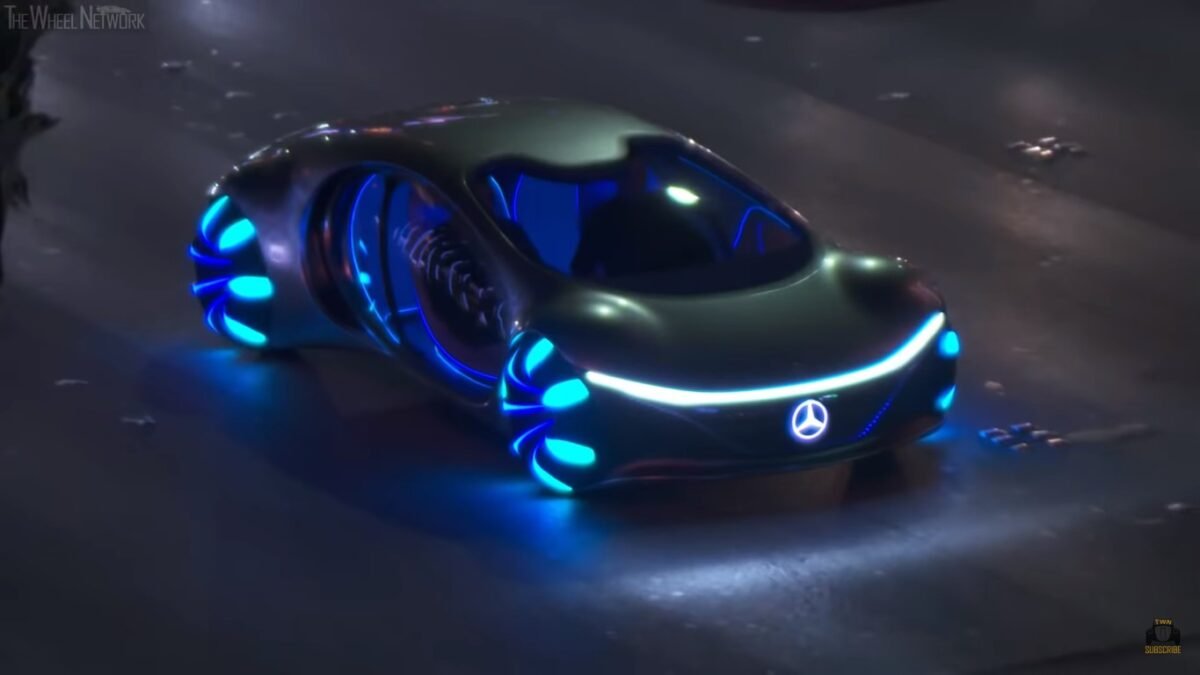
Most concept cars are styling exercises with a motor show deadline. The Mercedes-Benz Vision AVTR, unveiled during Ola Källenius’s keynote at CES in Las Vegas in January 2020, was something stranger: a working manifesto for what Mercedes thought a car should become in the distant future, developed together with the team behind James Cameron’s Avatar films. The name does double duty. AVTR nods to the film, but Mercedes spells it out as Advanced Vehicle Transformation, and transformation was the point. This was a car designed to merge with its driver, run on a battery that could be composted, and wear its technology on its back like the scales of a creature from Pandora.

A car with no steering wheel
The first thing to understand about the Vision AVTR is what is missing. There is no steering wheel, no pedals in the conventional sense and no dashboard of buttons. Instead, a single control element sits in the centre console, shaped to fit a human hand. Place your palm on it and the car wakes up; Mercedes said the AVTR could recognise its driver by heartbeat and breathing, and the control unit rises and pulses like a heartbeat of its own. Driving inputs are made through that one interface, an idea borrowed directly from the film, in which the Na’vi bond with the creatures of Pandora through a neural link. It is theatre, but it is theatre with an argument behind it: that the next interface revolution in cars is biometric, not touch-based.
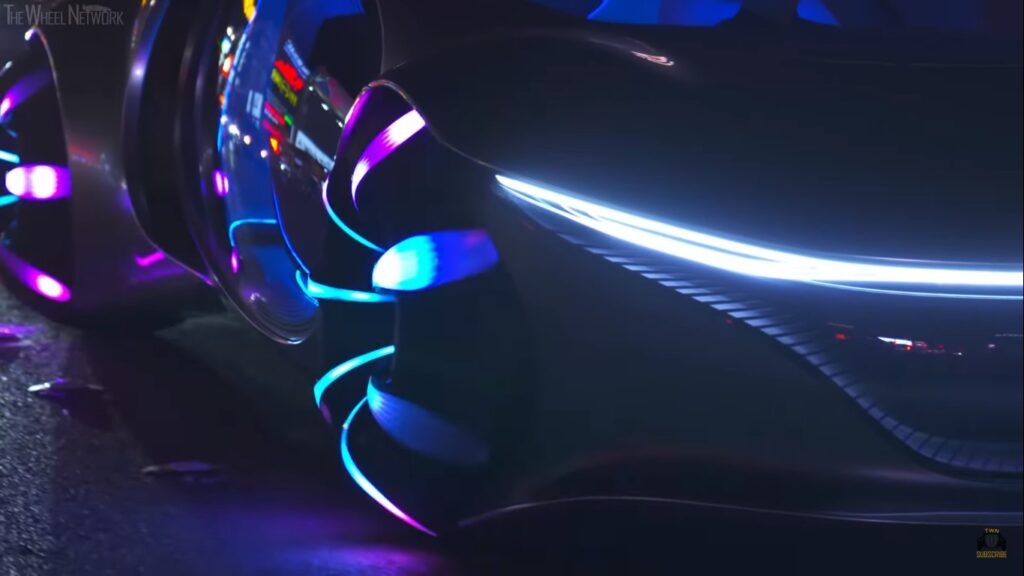
The exterior pushes the same idea. The body is one continuous bow from nose to tail, the wheels are spherical and can steer so that the front and rear axles move in opposite directions, allowing the car to crab sideways at about 30 degrees. Along the rear sit 33 so-called bionic flaps, small movable scales modelled on the skin of Pandora’s reptiles. They shift in flowing gestures as the car moves and can communicate with the world around the car. Whether any of this reaches production is beside the point; as a piece of design communication, it was the most talked-about object at CES 2020.
| Powertrain | Four near-wheel electric motors, combined output over 350 kW (476 PS, about 469 hp) |
|---|---|
| Battery | Around 110 kWh, graphene-based organic cell chemistry, free of rare earths and metals |
| Range | More than 700 km (Mercedes figure) |
| Charging | Full charge in under 15 minutes via automated conductive charging (claimed) |
| Energy density | Up to 1,200 Wh per litre, roughly double contemporary lithium-ion |
| Drive | All-wheel drive, fully variable, with torque vectoring |
| Debut | CES, Las Vegas, January 2020 |
| Status | Concept only; no production version planned |
The battery was the real headline
Strip away the film tie-in and the AVTR’s most serious claim was chemical. Its battery used graphene-based organic cells, built without rare earths or metals, and Mercedes described the pack as compostable and fully recyclable at end of life. With a capacity of around 110 kWh, energy density of up to 1,200 Wh per litre and the ability to recharge completely in under 15 minutes, it promised to answer the three standard objections to electric cars, range, charging time and resource use, in a single stroke. None of it was production-ready in 2020, and Mercedes never pretended otherwise, but the direction of travel was deliberate: the concept was a rolling argument for the company’s Ambition 2039 pledge of a carbon-neutral new-car fleet.
The cabin followed the same logic. The seats and trim used DINAMICA microfibre made from recycled materials, the floor was karuun, a rattan-based wood alternative that grows far faster than conventional timber, and animal leather was nowhere to be found. Set against the production flagships that followed, cars such as the Mercedes S-Class, the AVTR reads as the laboratory version of ideas Stuttgart was already feeding into its showrooms. Rivals were running their own experiments in the same years, from the Porsche Taycan at the performance end to the Polestar 2 in the premium mainstream, but none wrapped the technology in anything like this much science fiction.
Why it still gets searched
The Vision AVTR never appeared in an Avatar film and never turned a wheel in anger beyond demonstration runs, yet it refuses to fade. Part of that is timing: it landed weeks before the world shut down in 2020, the last great motor-show spectacle of the old era. Part of it is that the car keeps being wheeled out, driven on camera and photographed, long after most concepts are quietly scrapped. And part of it is that its central questions, what a car is made of, how it knows its driver, and how little it should take from the planet, have only become more pointed since.
As transport, the Vision AVTR is a fantasy: no wheel, no production plan, a battery that exists as chemistry rather than hardware. As a statement, it is one of the most complete concept cars ever built, because every flourish, the bionic flaps, the heartbeat recognition, the compostable battery, argues the same thesis about where luxury motoring has to go. Judge it as a design study rather than a car and it earns its fame. The tragedy of most concepts is that they promise nothing; this one promised a philosophy, and Mercedes is still, slowly, delivering on it.


