
Nissan Leaf e-4ORCE: The Twin-Motor Test Car That Previewed the Ariya
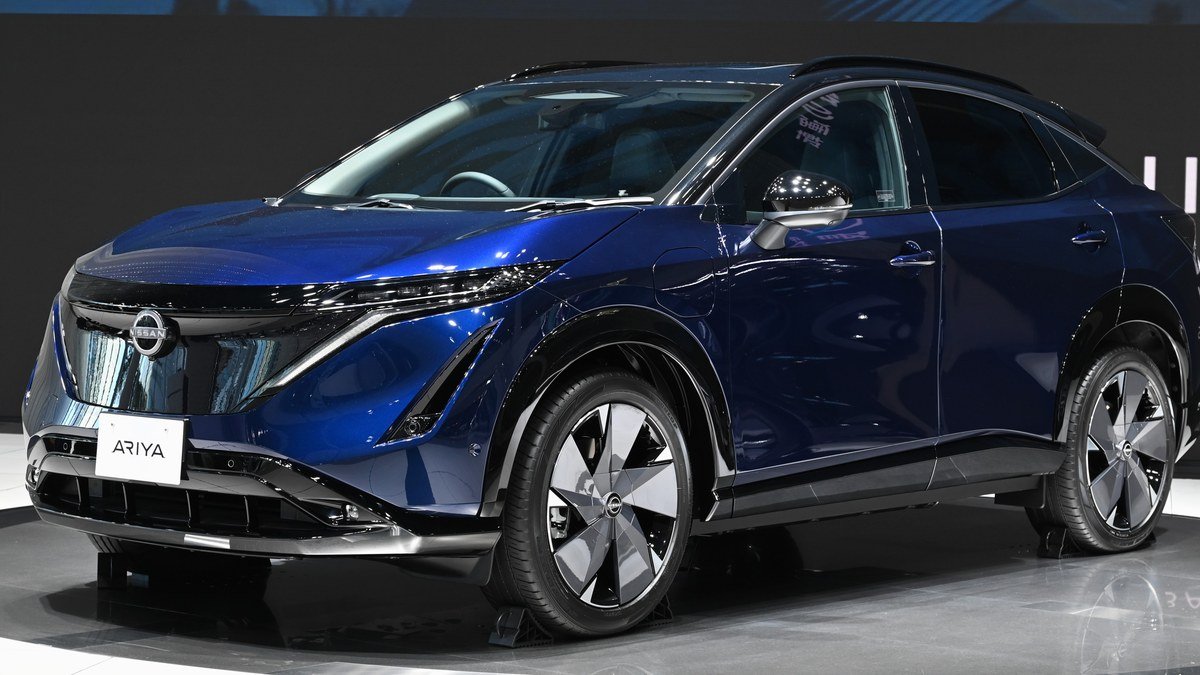
The Nissan Leaf e-4ORCE was the most powerful Leaf Nissan ever built — and it was never for sale. In October 2019, Nissan revealed a test car based on the Leaf e+ with two electric motors, one on each axle, making 227 kW (304 hp) and 680 Nm (501 lb-ft) of torque. That is about 42% more power than the 214-hp Leaf e+. Nissan built the car to prove out a new all-wheel-drive system, then called e-4ORCE, and the system reached production in 2022 — not in the Leaf, but in the Ariya SUV.
This page now tells the whole story: what e-4ORCE is, how it works, the test car’s verified specs, and where the system ended up. It also covers the part that matters if you are shopping today. The Ariya is the only production all-electric Nissan with e-4ORCE, US production has ended (2025 was the final year), and it is still on sale in the UK. The Leaf itself never got all-wheel drive — not even the all-new 2026 Leaf, which is front-wheel drive only.
A note on this page’s history
This post was first published in June 2020, when the Ariya had not yet reached showrooms. It reported on Nissan’s twin-motor Leaf test car and guessed at what might follow. Some of its details were garbled in translation: it called the rear motor “another engine,” misspelled Nissan’s ATTESA E-TS torque-split system, and left the story hanging in 2020. The page has been rewritten with the test car’s actual specs from Nissan’s own releases, and with what actually happened next.
Was the Leaf e-4ORCE ever sold?
No. The Leaf e-4ORCE was a technology test car, and no production Leaf has ever offered all-wheel drive. Nissan said from the start that the car existed to develop technology for its next generation of EVs. The production debut for e-4ORCE came in the Ariya crossover, which reached US showrooms for the 2023 model year. When Nissan redesigned the Leaf for 2026, it kept a single front motor. If you want Nissan’s twin-motor electric AWD, the Ariya — new in the UK, used or leftover in the US — is the car. Our best electric cars guide covers the wider field it competes in.
The test car vs the production Ariya e-4ORCE
| Leaf e-4ORCE test car (2019) | Ariya e-4ORCE (2023–2025 US / current UK) | |
|---|---|---|
| Motors | 2 × EM57 (front + rear) | 2 (front + rear) |
| Output | 227 kW / 304 hp | 335 hp (63 kWh) / 389 hp (87 kWh) US; 302 hp UK |
| Torque | 680 Nm / 501 lb-ft | 413 lb-ft (63 kWh) / 442 lb-ft (87 kWh) US |
| Battery | 62 kWh (Leaf e+) | 63 or 87 kWh usable |
| Range | Never published | EPA up to 272 miles (US); WLTP up to 314 miles (UK) |
| 0–60 mph | Never published | 4.8 s (389 hp, Nissan-claimed) |
| For sale? | Never — test car only | US: out of production (2025 final year). UK: on sale now |
The comparison shows what production did to the idea. The US 87 kWh e-4ORCE version makes more power than the test car (389 hp vs 304 hp) but less torque (442 lb-ft vs 501 lb-ft), likely because a family SUV is tuned for smooth delivery, not for a headline number. The test car also had no range figure: Nissan never published one. Anyone quoting a 0–60 time or a range for the test car is guessing.
How e-4ORCE works
e-4ORCE puts one electric motor on each axle and controls them as a single system. The name breaks down simply: “e” for Nissan’s 100% electric motor drive, and “4ORCE” — pronounced “force” — for all-wheel control. Four things set it apart from a basic dual-motor setup:
- Torque split. The default distribution is 50:50 front to rear. The system can send up to 100% of torque to the front axle or up to 100% to the rear, and any mix in between, as grip and cornering demand.
- Regenerative braking on both axles. Nissan’s pitch was that most EVs slow mainly with the front motor; e-4ORCE adds rear-motor regen and blends it with the front, which cuts the nose-dive you feel when slowing down. Nissan pitched the system as a comfort feature as much as an efficiency one.
- Brake control at each wheel. Alongside the torque split, Nissan says the system brakes individual wheels to help the car follow the driver’s line through a corner.
- AWD bloodline. Nissan says the control logic was born from lessons learned in the GT-R’s ATTESA E-TS torque-split system and the Patrol’s intelligent 4×4 system. It is software heritage, not shared hardware — but it explains why Nissan tuned the system for body control, not just traction.
In the Ariya, e-4ORCE continuously controls both motors and blends in rear-motor regenerative braking, so the pitch and dive control works in everyday driving, not just when the road turns slippery. Snow mode is included on e-4ORCE models for low-grip starts.
The production cars: Ariya e-4ORCE versions
Ariya Engage e-4ORCE (63 kWh) — the entry point
Why buy it? It is the cheapest way into the twin-motor system: 335 hp and 413 lb-ft, with the same all-weather traction and body control as the faster versions.
What to consider. The small battery caps EPA range at 205 miles. That is fine for a cold-climate commuter who charges at home, but tight for regular long trips — and cold weather cuts it further, as our EV range in winter guide explains.
Best for: US used buyers who want AWD security on a budget and drive modest daily miles.
Ariya Engage+ / Evolve+ e-4ORCE (87 kWh) — the sweet spot
Why buy it? The big battery lifts EPA range to 272 miles and output to 389 hp, with a Nissan-claimed 0–60 mph time of 4.8 seconds. This is the version that best matches the test car’s promise: real pace, real range.
What to consider. In the US these listed at $46,760–$49,760 when new (2025 prices including destination, per KBB). DC fast charging peaks at 130 kW (10–80% in about 40 minutes).
Best for: most buyers — the balance of range, pace and price in the e-4ORCE range.
Ariya Platinum+ e-4ORCE (87 kWh) — the luxury trim
Why buy it? Same 389 hp drivetrain, plus the full equipment list: Nappa leather, ventilated front seats and a hands-free liftgate in US spec.
What to consider. Weight trims EPA range to 267 miles, or 257 miles with the optional 20-inch wheels. You are paying for equipment, not extra performance.
Best for: buyers who want the top trim and can accept a small range penalty.
In the UK: e-4ORCE today
British buyers can still order the system new (UK prices and availability checked November 2026). The current UK Ariya e-4ORCE uses the 87 kWh battery with 302 hp, a 0–62 mph time of 5.7 seconds and WLTP range of up to 314 miles, priced from £45,500 (Advance) and £50,500 (Evolve) on Nissan UK’s current price list. The range-topping Ariya Nismo e-4ORCE (£56,630) raises output to 429 hp and cuts the 0–62 mph time to 5.0 seconds. Unlike the front-wheel-drive versions, the e-4ORCE models do not qualify for the UK’s £1,500 Electric Car Grant.
What it costs to own: a worked example
Fuel is where the Ariya e-4ORCE makes its case, even with two motors. Take a used Evolve+ e-4ORCE driven 12,000 miles a year and charged at home:
- The Ariya. Its EPA combined rating is 92 MPGe, which works out to about 0.366 kWh per mile. Over 12,000 miles that is roughly 4,397 kWh. At the US average residential electricity price of 18.16 cents per kWh (EIA, August 2026), the year costs about $799 — 6.7 cents a mile.
- A gasoline crossover. Assume a comparable gas SUV averaging 25 mpg combined (a stated assumption, not a rating for a specific model). That is 480 gallons a year; at AAA’s national average of $3.5476 a gallon (November 27, 2026), it costs about $1,703 — 14.2 cents a mile.
- The gap: about $900 a year in fuel alone. Public fast charging costs more per kWh than home charging, so the saving shrinks if you rely on it. Our cheapest electric cars guide runs the same math across the wider EV market.
Two ownership checks matter more than fuel on a used Ariya. First, recalls: NHTSA campaign 24V-391 covers certain 2023 Ariyas for damaged O-rings inside the front traction motor that can leak oil and cause a loss of drive power; the free remedy is a replacement front motor assembly. Campaign 23V-131 covers certain 2023 Ariyas for a steering wheel bolt that may have been tightened incorrectly or not installed at all, which could let the wheel work loose; dealers replace the bolt free (1,063 vehicles). The 2023 cars also had inverter software campaigns. Run any car’s VIN through the NHTSA recall lookup before you buy and confirm the work is done. Second, support: Nissan says parts, service and warranty coverage continue for US cars now that US production has ended — get the car’s remaining warranty status in writing from a dealer.
Timeline: from test car to today
- October 2019 — Nissan reveals the twin-motor Leaf e+ test car at Oppama, Japan, and shows it privately at the Tokyo Motor Show: 227 kW, 680 Nm, all-wheel control.
- January 2020 — At CES in Las Vegas, the system gets its name: e-4ORCE. Nissan said the system would reach production.
- July 2020 — The production Ariya is unveiled, with e-4ORCE as its flagship drivetrain.
- 2022–2023 — Ariya goes on sale in Japan, Europe and the US (2023 model year in the US), Nissan’s first all-electric production model with e-4ORCE.
- 2022 (UK) — The X-Trail e-POWER brings a second flavor of e-4ORCE to Britain: a series hybrid whose gasoline engine only generates electricity while twin motors drive the wheels. It is still on sale at Nissan UK today, with 213 hp and an optional third row.
- September 2025 — Nissan pauses Ariya production for the US 2026 model year. The UK car stays on sale.
- 2026 — The third-generation Leaf arrives — front-wheel drive only. The Leaf line ends where it began: one motor, front axle. The twin-motor system it previewed lives on in the Ariya and X-Trail.
How to choose
- Decide whether you need AWD at all. e-4ORCE earns its keep in snow, on steep wet driveways, and for its calmer body control. If none of that applies, a front-wheel-drive Ariya or the new Leaf is cheaper to buy and goes further per charge.
- Pick the battery by your longest regular trip. The 63 kWh Ariya’s 205-mile EPA rating suits short commutes. The 87 kWh car’s 272 miles (US) or up to 314 miles WLTP (UK) is the one to have for mixed use.
- In the US, shop 2023–2025 cars carefully. There is no 2026 US Ariya. Check the VIN for open recalls (24V-391 above all), confirm remaining battery warranty, and ask whether a NACS adapter is included for Supercharger access.
- In the UK, price the grant honestly. Front-wheel-drive Ariyas can be £33,500 after the £1,500 Electric Car Grant; e-4ORCE versions get no grant, so the real gap between them is wider than the list prices suggest.
- Compare against the class, not the badge. Dual-motor versions of the Tesla Model Y, Hyundai Ioniq 5 and Kia EV6 are the Ariya’s real rivals; our best electric cars for 2027 guide tracks where the segment is heading.
Frequently Asked Questions
Was the Nissan Leaf e-4ORCE ever sold to the public?
No. It was a technology test car built on the Leaf e+, shown in 2019–2020 to preview Nissan’s e-4ORCE all-wheel-drive system. Nissan never offered it, or any all-wheel-drive Leaf, for sale.
How much power did the Leaf e-4ORCE test car make?
227 kW (304 hp) and 680 Nm (501 lb-ft) of torque, from two EM57 motors — one on each axle — fed by the Leaf e+’s 62 kWh battery. Nissan never published a 0–60 time or a range figure for it.
Which Nissan models have e-4ORCE?
The Ariya electric SUV is the main one: on sale new in the UK, and sold in the US for the 2023–2025 model years, with 2025 the final year of US production. In the UK, the X-Trail e-POWER hybrid also offers e-4ORCE, with a gasoline engine acting only as a generator.
Does the 2026 Nissan Leaf have all-wheel drive?
No. The third-generation Leaf is front-wheel drive only, with a single motor making up to 214 hp and up to 303 miles of EPA-estimated range. Nissan offers no AWD or e-4ORCE version of the Leaf.
How much does the Ariya e-4ORCE cost?
In the US, the final 2025 model year ran from $41,160 (Engage front-wheel drive, including destination) to $55,760 (Platinum+ e-4ORCE), per KBB’s spec listings; used prices vary by car and market. In the UK, new e-4ORCE versions currently run from £45,500 (Advance) to £56,630 (Nismo).
Is the Nissan Ariya discontinued?
The Ariya is no longer in Nissan’s US production lineup; 2025 was its final US production year. Nissan has not announced a US return, and it says support, parts and warranty coverage continue. Remaining dealer inventory and used or certified pre-owned examples may still be available. The Ariya remains on sale new in the UK.
What recalls should I check on a used Ariya?
Start with NHTSA campaign 24V-391: certain 2023 Ariyas had damaged O-rings inside the front traction motor that can leak oil and cut drive power; dealers replace the front motor free. Also check 23V-131: certain 2023 Ariyas had a steering wheel bolt that may have been tightened incorrectly or not installed; dealers replace the bolt free. The 2023 cars also had inverter software campaigns. Enter the car’s VIN in the NHTSA recall lookup to see its exact status.
The Bottom Line
The Leaf e-4ORCE matters because of where its technology went, not because anyone could buy it. As a test car it proved that two motors, blended regen and fast torque control could make an electric car calmer as well as quicker — and the production Ariya e-4ORCE delivered exactly that, with up to 389 hp and 272 miles of EPA range in US spec. If you are in the UK, you can still buy that system new, in the Ariya or the X-Trail hybrid. If you are in the US, the Ariya is now primarily a used or certified pre-owned buy, although remaining dealer inventory may still be available — and a good buy, provided you check the recalls and the warranty before you sign. Just do not hold out for an all-wheel-drive Leaf: seven years on from the test car, Nissan has never built one.
Sources & Pricing Note
Test-car output, torque, motors and braking details are from Nissan’s October 24, 2019 release on the twin-motor test car; the e-4ORCE name, torque-split behavior and ATTESA E-TS / Patrol lineage are from Nissan’s CES 2020 release. The production Ariya was unveiled in Nissan’s July 15, 2020 release, and the UK X-Trail launch is from Nissan UK’s September 6, 2022 release. Ariya outputs, battery sizes and EPA ranges are Nissan’s published US figures; Ariya equipment and charging details are from Nissan US trim and spec data; 2025 US prices are KBB’s spec listings including destination, and are final-model-year references, not live quotes. UK prices and WLTP figures are from Nissan UK’s current range and its September 2026 revised price list as reported; the £1,500 Electric Car Grant applies only to eligible front-wheel-drive versions. The US status is Nissan USA’s current position: its Ariya page states the car is no longer in production and that 2025 was the final US production year. Recall details are from NHTSA’s Part 573 report for campaign 24V-391, NHTSA’s campaign record and Nissan’s service bulletin PC956 for 23V-131, and NHTSA recall records for the 23V-657 and 24V-560 inverter software campaigns. The running-cost example uses the EPA’s 92 MPGe combined rating for the Ariya Evolve+ e-4ORCE, the EIA’s August 2026 average residential electricity price (18.16¢/kWh) and AAA’s November 27, 2026 national average gasoline price ($3.5476/gal); the 25 mpg gasoline figure is a stated comparison assumption. Prices exclude taxes and fees unless stated; verify any specific car’s price, equipment and recall status before buying.
Last updated: November 2026
About the Author
Written by William, founder and editor of MotorAmaze. William covers car buying, ownership costs and electric vehicles to help American and British drivers and businesses make cheaper, better decisions about their vehicles — with every price checked against a published source before it goes on the page.


