
Ford GT/109: The Only GT Roadster to Race at Le Mans
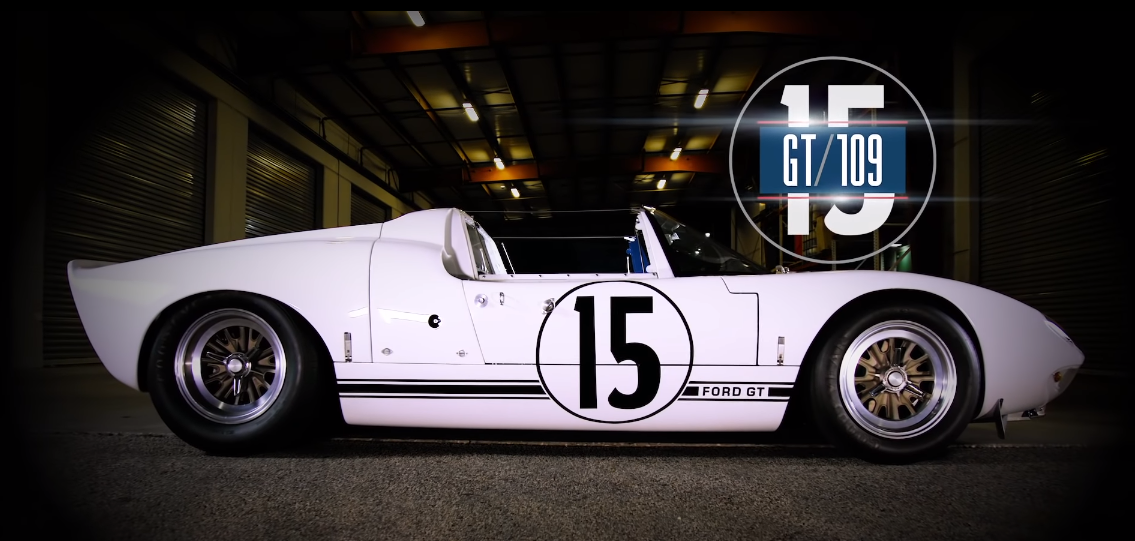
Some prototypes are footnotes. Chassis GT/109 is the opposite: a car that raced at Le Mans, vanished into a warehouse, spent 45 years with one of Hollywood’s best-known customizers and now anchors auction catalogues. Completed by Ford Advanced Vehicles in Slough, England, in March 1965, it was one of twelve GT prototypes Ford built between January 1964 and April 1965, one of just five roadsters among them, and the only Ford GT Roadster ever to compete in the 24 Hours of Le Mans. Of the five roadsters, only GT/109 and its sister car GT/108 survive.

A special-order chassis
The bare chassis arrived at FAV in October 1964, documented as a special-order Dearborn Experimental car with a three-inch-longer chassis. GT/109 looked virtually identical to GT/108, but closer study revealed its removable rollover section, a feature that made it the natural choice when Ford wanted a roadster prepared for Le Mans. In March 1965 the car was supplied to Shelby American, where a work order opened on 19 May covered the necessary repairs and modifications. The work was completed on 9 June, days before the race, and it borrowed heavily from the Daytona-winning coupe of Ken Miles and Lloyd Ruby: Halibrand magnesium wheels in place of the factory Borrani wires, front corner air dams, and a Cobra-spec 289 cubic-inch V8 connected to a ZF five-speed gearbox. GT/109 also received the first side-mounted engine oil radiators used on the programme, rear body exit vents, a higher rear spoiler to balance the front splitters, centre-section electric fuel pumps and four quick-release Dzus fasteners on the rollover cover.
Eleven laps at Le Mans
In France the car ran in Ford of France colours, white with a dark blue centre stripe bordered in red, and its race number was changed from 9 to 15. Testing was handled by André Simon and Jo Schlesser. At 2,350 pounds, the roadster was the lightest of the six Ford GTs entered at Le Mans that year. The race itself was given to two French stars: Maurice Trintignant, a former Monaco Grand Prix winner, and Guy Ligier, later a Formula 1 driver and constructor. Trintignant started, but on the eleventh lap the gearbox failed and the car was out, so early that Ligier never got to drive it in the race. There is a footnote that captures the chaos of Ford’s 1965 campaign: when another Ford GT lost a door during the race, GT/109’s driver door was borrowed for a couple of hours. None of the six Fords finished, but the programme the roadster helped develop went on to win Le Mans four years running from 1966.
| Chassis | GT/109, completed March 1965 by Ford Advanced Vehicles, Slough |
|---|---|
| Engine | Cobra-spec 289 cu in (4.7-litre) V8, Weber carburettors |
| Gearbox | ZF five-speed manual (5DS-25/0) |
| Weight | 2,350 lb in Le Mans trim |
| Le Mans 1965 | Ford France entry, no. 15; Trintignant / Ligier; retired lap 11, gearbox |
| Rarity | One of five GT roadster prototypes; one of two survivors |
Development mule, then a warehouse find
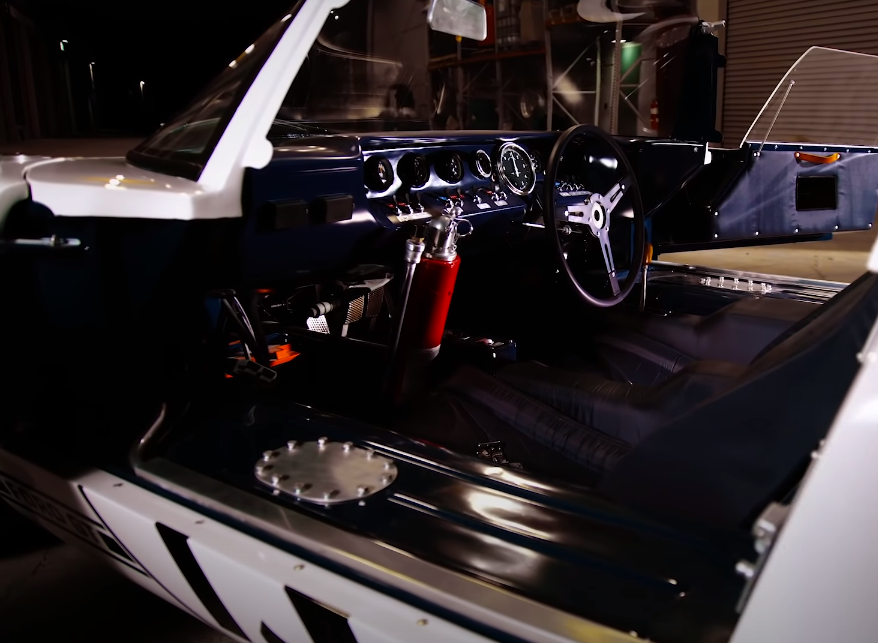
After Le Mans, Shelby American rebuilt the car under a work order dated 28 June, and GT/109 was sent to Kar Kraft to serve as a development vehicle for the J-Car project, testing an automatic transmission, Ford’s Weber-carburetted four-cam Indianapolis engine and brake systems. It was then rebuilt again, stored for about two years and transferred to a Ford warehouse in Detroit. There, in 1968, Hollywood stuntman and customizer Dean Jeffries found it while visiting with A.J. Foyt. Jeffries, the man who painted “Little Bastard” on James Dean’s Porsche 550 Spyder and who had painted Carroll Shelby’s first Cobra prototype, asked Ford racing director Jacque Passino if he could buy it. The answer became legend: “No problem, you can have it. We’re done with the GT Roadster program.” Jeffries kept the car for the rest of his life, at one point fitting a Shelby-supplied 289 racing engine Shelby told him had been used at Le Mans in the car, and showed it at Ford’s 100 Years of Racing celebration at Laguna Seca in 2003. Ford’s modern Mustang Mach 1 trades on this era’s reputation, but GT/109 is the era itself.
Restored, decorated and offered for sale
Jeffries died in 2013, and his son sold GT/109 to Dana Mecum, founder of Mecum Auctions, who commissioned Harley Cluxton III of GTC Mirage Racing to restore it to its original Le Mans configuration. The original Shelby HiPo 289 engine was rebuilt and refitted with its Weber 48 IDA carburettors and “Bundle of Snakes” exhaust. The concours career that followed justifies the work: second in class at Pebble Beach in 2016, runner-up only to the 1966 Le Mans-winning Mk II, Best of Show at the Milwaukee Concours a week later, and a class win at The Amelia in 2024. The market has struggled to price it. At Mecum’s Kissimmee sale in January 2019 the car was bid to $10 million but failed to meet its reserve and did not sell; its sister car GT/108 made $7.65 million at RM Sotheby’s Monterey sale later that year. Mecum consigned GT/109 again for its Indy sale in May 2025. Whatever it eventually brings, it sits near the top of any list of the best sports cars ever to come out of America, and Ford’s current Bronco revival shows how carefully the company now guards the heritage this car helped create.
GT/109 is not the most successful Ford GT prototype, but it may be the most interesting: the only roadster to race at Le Mans, a J-Car test mule, a warehouse find bought on a handshake and a concours winner restored to its eleven laps of glory. Two surviving roadsters, one Le Mans start and three owners from new make it a cornerstone of Ford’s racing history, and its value will be set by that story as much as by the car itself.


