
Skoda Octavia RS Mk4: Petrol, Diesel or Plug-in Hybrid
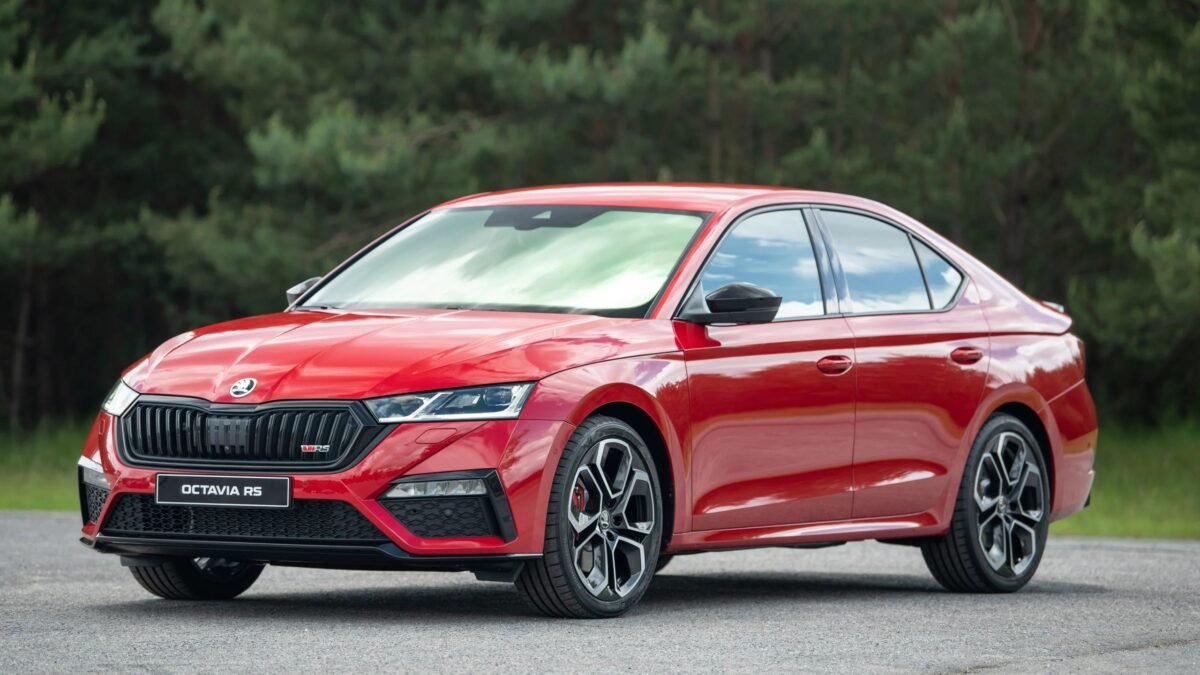
The fourth-generation Skoda Octavia RS arrived in 2020 with something no previous RS had offered: a choice of three powertrains. The plug-in hybrid RS iV was shown first, in March 2020, and the petrol and diesel versions followed in the summer, which is where the original version of this post came in. All three produce similar headline power, all three were sold as a liftback or a Combi estate, and together they turned the RS from a single fast Octavia into a small range of its own, sitting at the top of Skoda’s bestseller line-up.
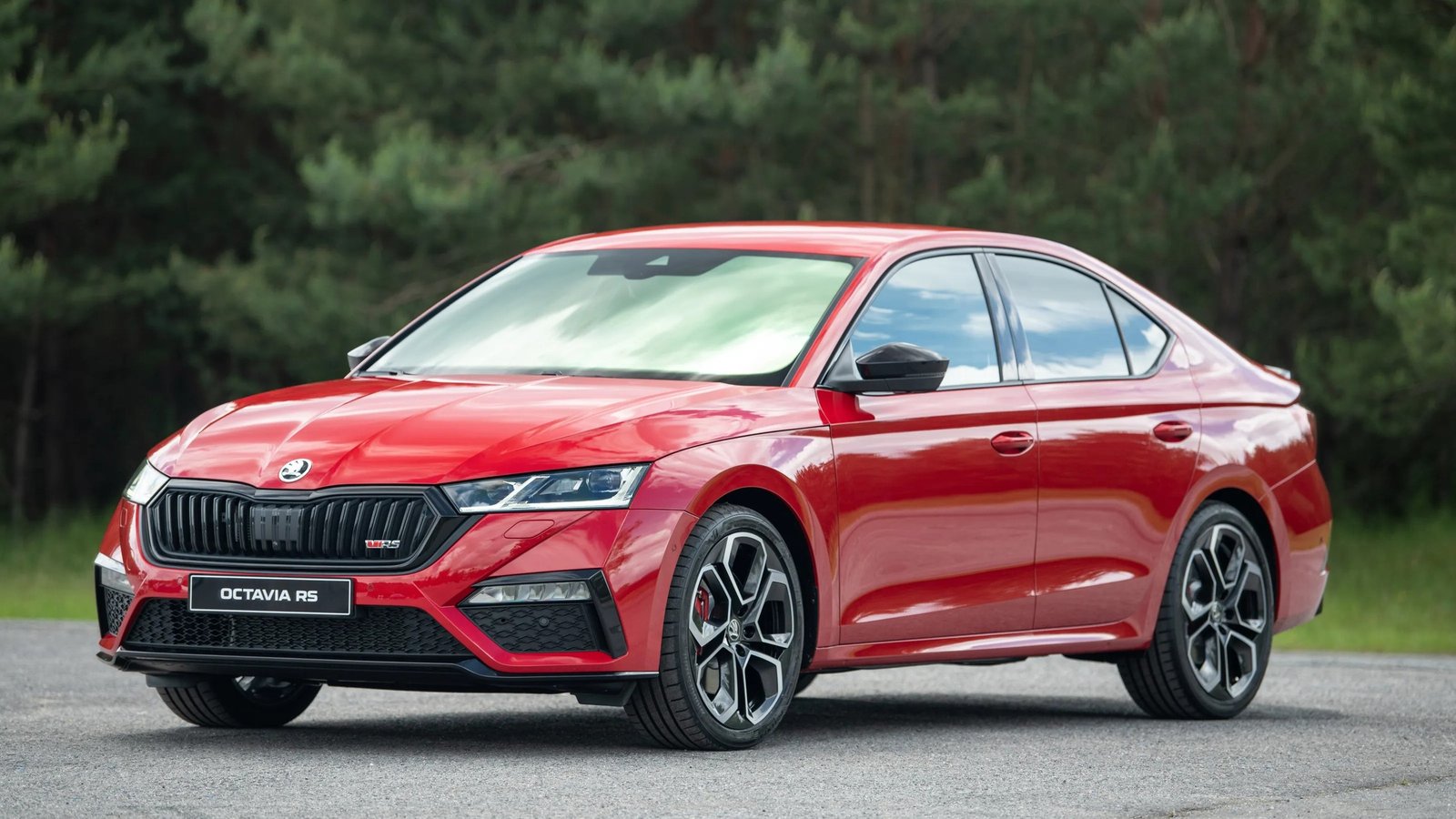
Petrol or diesel: the conventional pair
The petrol car uses the Volkswagen Group’s 2.0-litre TSI turbocharged four in its latest EVO form, producing 180 kW (245 PS) and 370 Nm of torque, driving the front wheels. Buyers could choose a six-speed manual gearbox, a combination few rivals still offered, or a seven-speed DSG dual-clutch automatic. The manual car reaches 100 km/h in 6.8 seconds and the DSG in 6.7, and both run to an electronically limited 250 km/h. An electronic limited-slip differential is standard, and Skoda quotes 17-inch front brakes for the TSI car.
The diesel is the most powerful diesel in the Octavia range: a 2.0-litre TDI with 147 kW (200 PS) and 400 Nm, paired exclusively with the seven-speed DSG. Front-wheel-drive cars reach 100 km/h in 7.4 seconds and 249 km/h, while the optional all-wheel-drive version, using a new sixth-generation multi-plate clutch, cuts the sprint to 6.8 seconds and can tow a braked trailer of up to 2,000 kg. The Combi estate is a fraction slower and a few km/h down on top speed in both cases. It is a line-up philosophy the wider industry has mostly abandoned, and it stands in interesting contrast to the electric-only direction taken by group stablemates such as the Volkswagen ID.3 GTX.
The hybrid that came first
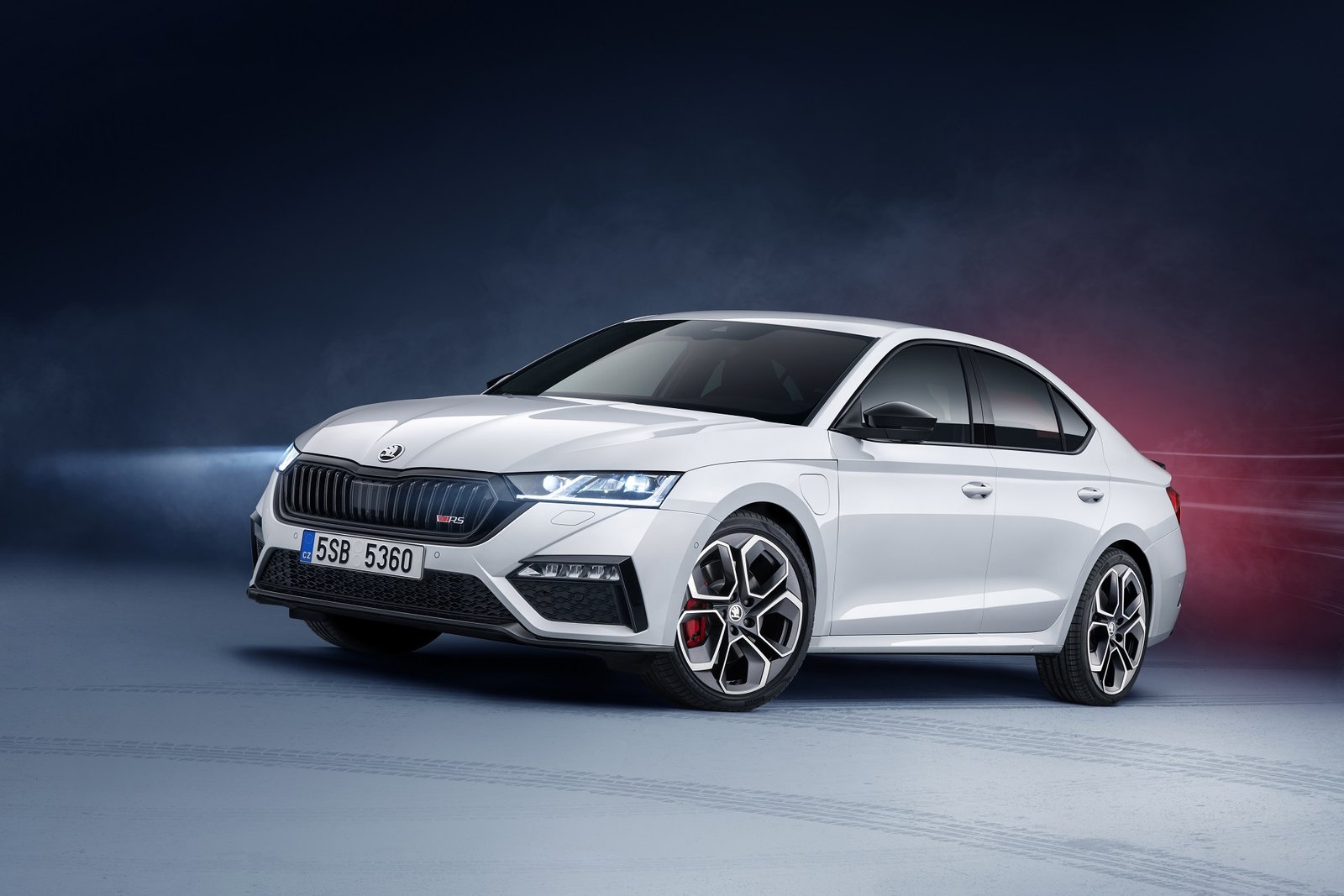
The RS iV broke cover in March 2020 as the first electrified RS model in Skoda’s history. It pairs a 1.4-litre TSI petrol engine of 110 kW (150 PS) with an 85 kW electric motor for a combined 180 kW (245 PS), exactly matching the petrol car, and a maximum torque of 400 Nm, which is 30 Nm more than the TSI manages alone. The motor itself contributes 330 Nm of that total and delivers it instantly, which is why the hybrid feels alert away from the line despite its extra weight. Power goes to the front wheels through a six-speed DSG; there is no manual option.
A lithium-ion battery of 13 kWh gives an all-electric range of up to 60 km on the WLTP cycle, and Skoda quoted CO2 emissions of approximately 30 g/km. In Sport mode the RS iV reaches 100 km/h in 7.3 seconds and a top speed of 225 km/h, figures that concede a little to the petrol car in exchange for silent running in town and company-car-friendly emissions. Against a conventional hot hatch such as the Hyundai i20 N, the RS iV was the thinking driver’s compromise: nearly as quick, far cheaper to run, and still a five-door family car underneath.
Chassis, cabin and everyday use
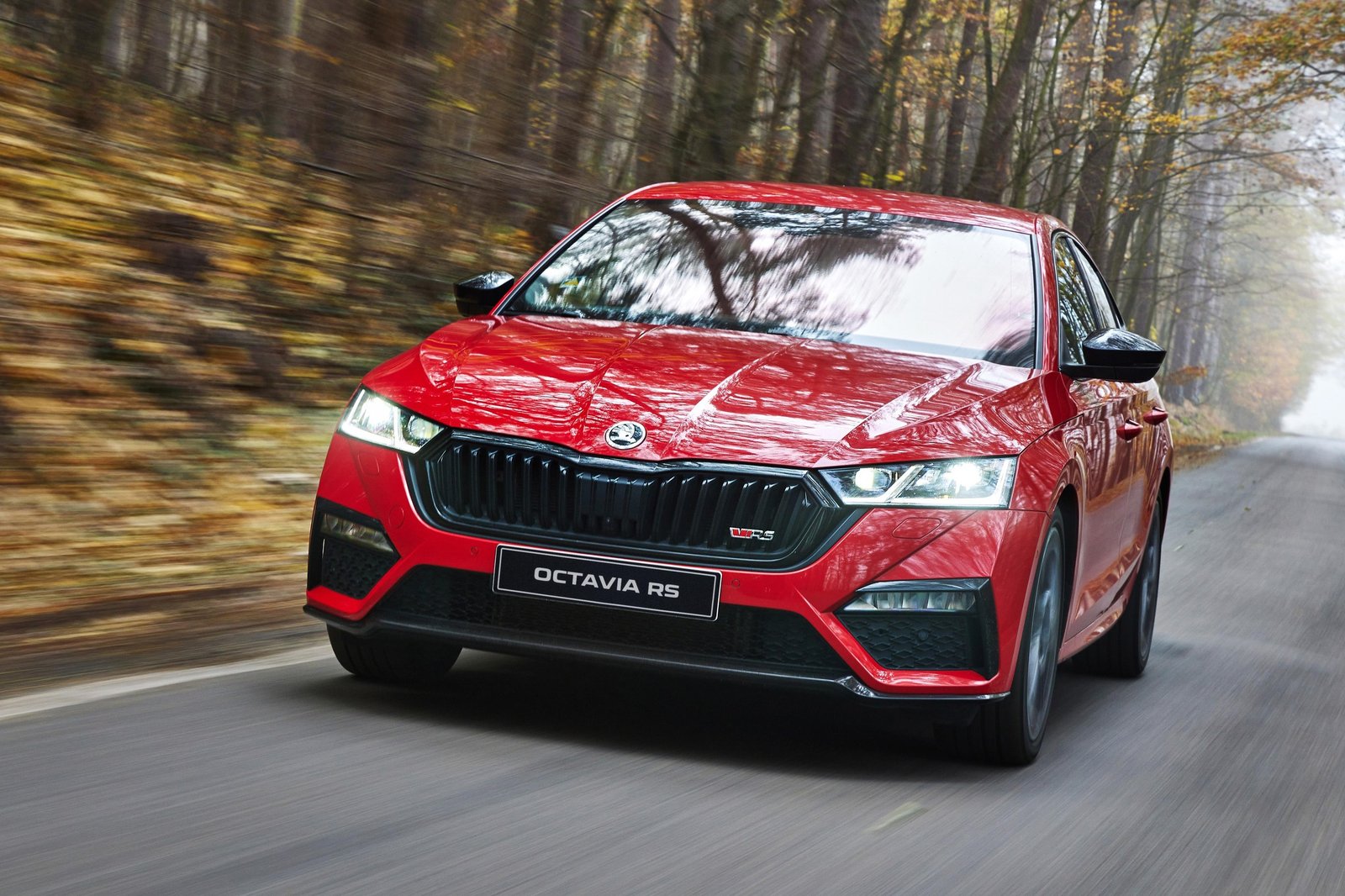
Every RS sits 15 mm lower than a standard Octavia on its sports chassis, and adaptive Dynamic Chassis Control was available as an option. Skoda made a point of the DCC’s adjustability: damping, steering weight and DSG behaviour can be fine-tuned with slider controls on the 10-inch central touchscreen, a first for the brand. A multi-link rear axle is standard, and the black grille, black exterior trim and red brake calipers mark the cars out, alongside the vRS badge that British-market cars carry in place of the RS lettering used elsewhere.
The practical case remains the Octavia’s strongest suit. The liftback and Combi share the standard car’s enormous load bay and rear legroom, the fuel tank grows to 50 litres (55 in the all-wheel-drive diesel) against 45 in a regular Octavia, and the range sits comfortably alongside family cars such as the Peugeot 308 while outrunning most of them. Buyers cross-shopping SUVs like the Volkswagen Tiguan were the target: RS performance without giving up the family-car brief.
| Petrol | 2.0 TSI, 180 kW (245 PS), 370 Nm; front-wheel drive |
|---|---|
| Diesel | 2.0 TDI, 147 kW (200 PS), 400 Nm; front or all-wheel drive |
| Plug-in hybrid | RS iV: 1.4 TSI plus 85 kW motor, 180 kW (245 PS) combined, 400 Nm |
| Gearboxes | Petrol: 6-speed manual or 7-speed DSG; diesel: 7-speed DSG; RS iV: 6-speed DSG |
| 0 to 100 km/h | 6.7 s (petrol DSG); 6.8 s (diesel AWD); 7.3 s (RS iV) |
| Top speed | 250 km/h (petrol); 249 km/h (diesel FWD); 225 km/h (RS iV) |
| Battery and range | RS iV: 13 kWh; up to 60 km electric range (WLTP) |
| Bodies | Liftback and Combi estate; sports chassis 15 mm lower |
Three powertrains, one badge, and no bad answer. The petrol RS is the enthusiast’s pick and the last of its kind to offer a manual gearbox, the diesel is the long-distance torque machine, and the RS iV pointed at the future without giving up the pace. All three keep the Octavia’s space and value intact, which is precisely the RS formula: a family car that happens to be quick, rather than a quick car that happens to have seats.

