
Lamborghini Miura SVJ: The Rarest Miura Returns to Paris
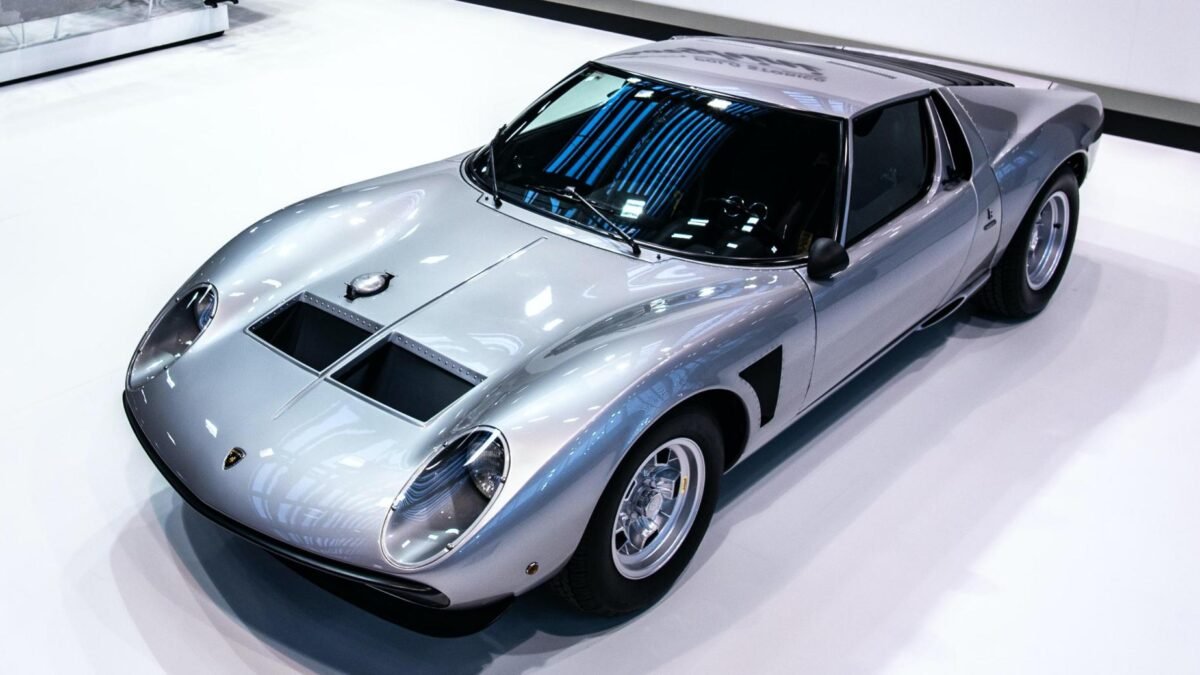
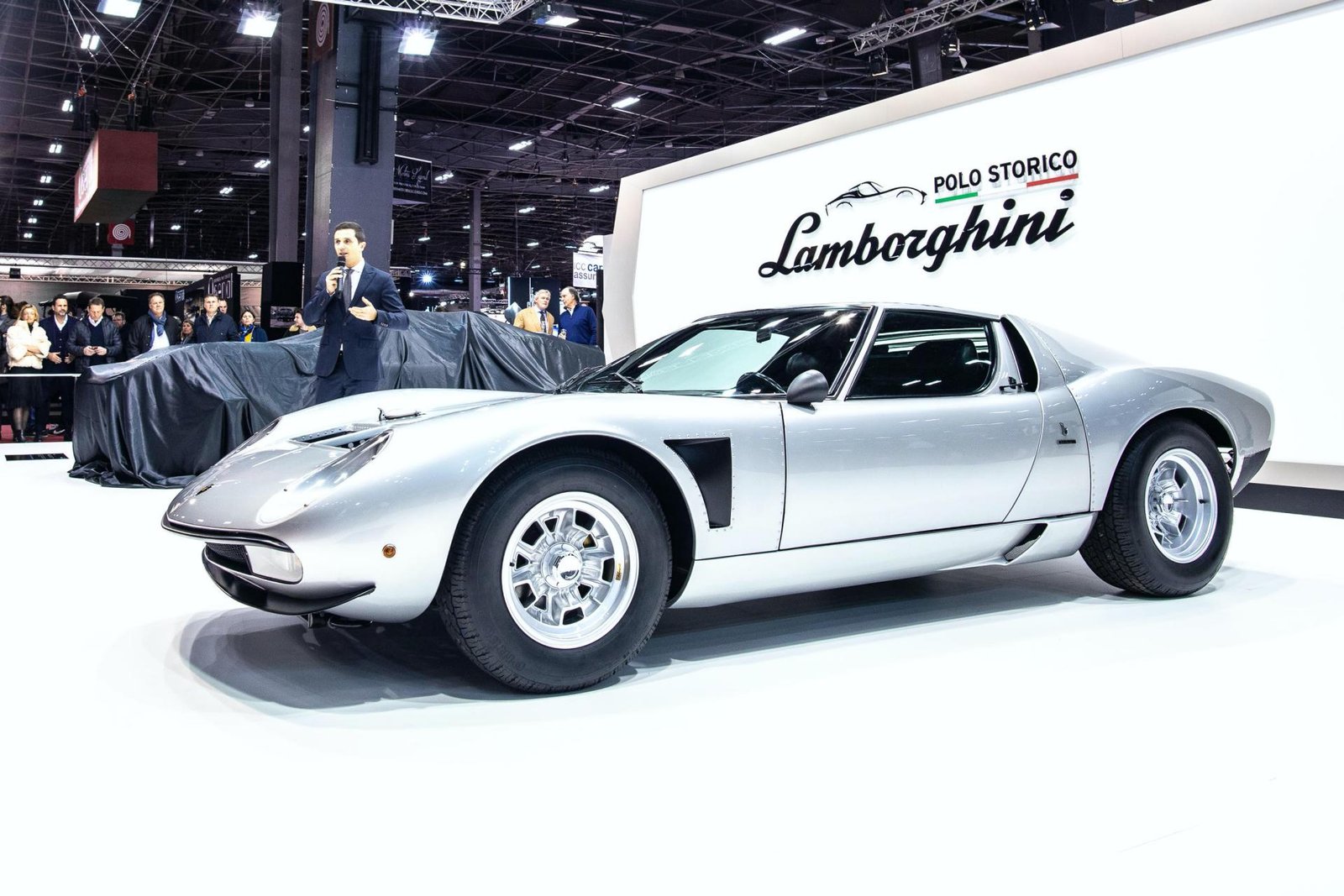
Paris, February 2020. On a white platform at Rétromobile, beneath a Lamborghini Polo Storico banner, sat a silver Miura that almost nobody in the hall had ever seen in the metal. It was chassis number 4860, a Miura SVJ, and it had not been exhibited in public since the early 2000s, when it left Germany for a private collection in Japan. Polo Storico, the factory’s own heritage department, had just finished a restoration for conservation purposes on the car, rebuilding its story from the company archives and from accounts gathered from the period when it was built. Of all the Miuras, the SVJ is the rarest and the most argued about, and this was the factory itself presenting one.
One Jota, built by hand
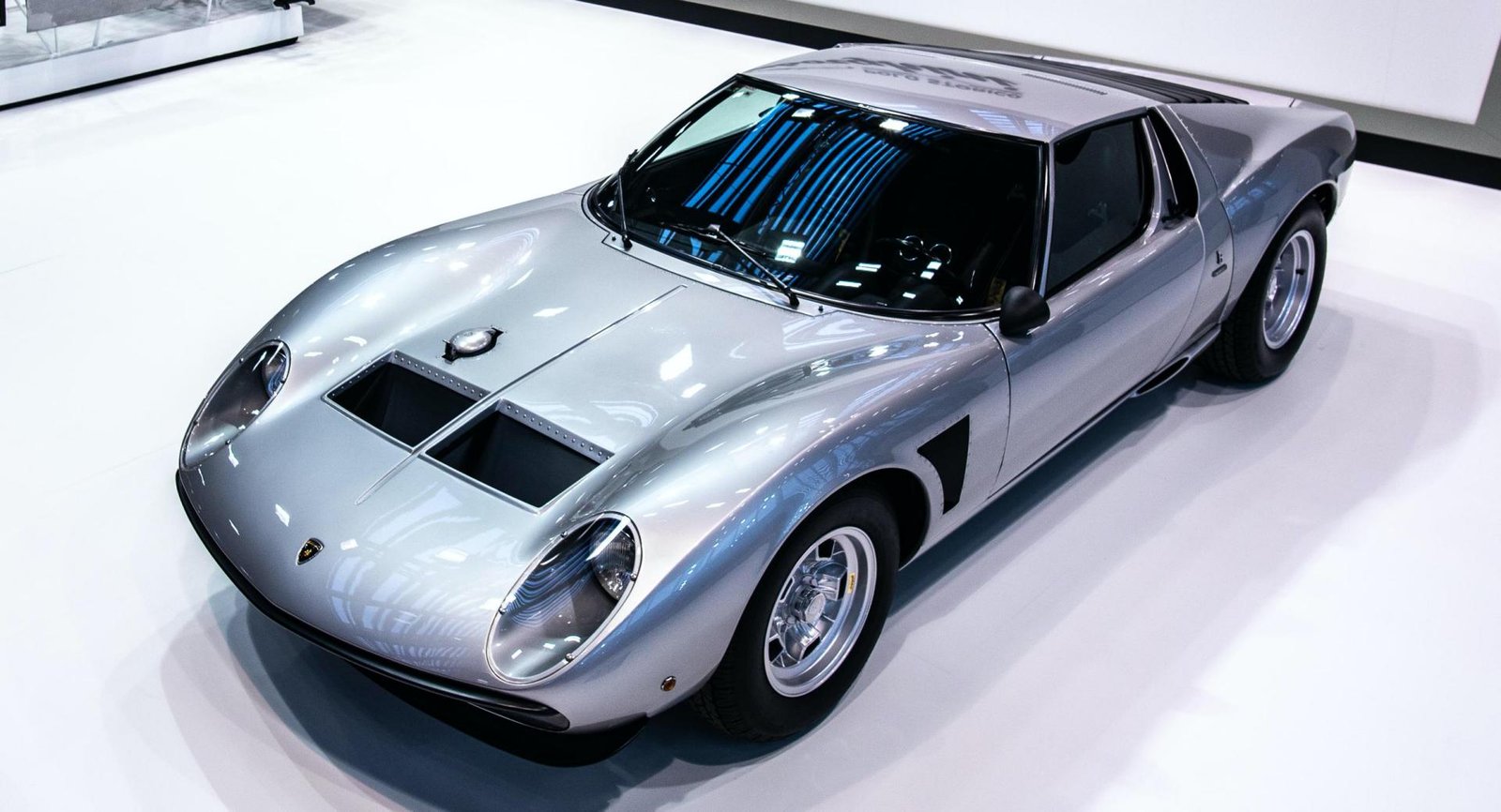
Every SVJ exists because of a single car that no longer does. In 1970 Lamborghini’s chief test driver, Bob Wallace, built a one-off Miura to the FIA’s Appendix J competition rules, working from the standard car’s principles but adding lightness everywhere: riveted panels in Avional, the aluminium alloy of the aircraft industry, a stripped interior, fixed headlamps that had lost the standard car’s eyelashes, and wide hand-formed arches over racing tyres. The engine was carefully built and blueprinted, and Wallace’s own dyno testing gave a reported reading of about 418 hp at 8,800 rpm. Wallace later described the car, chassis 5084, as half a toy and half a development mule. It never raced, and there was never a second one. Sold out of the factory, it was destroyed in a high-speed road accident outside Brescia on 28 April 1971, before it could even be delivered to its buyer, Dr Alfredo Belponer. The Jota was gone, but the idea of it was not.
How many SVJs are there, really?
Wealthy customers who had seen or heard about the Jota asked Lamborghini for cars like it, and the factory obliged a handful of them, working on the SV, the final and most developed Miura, of which just 150 were built between 1971 and 1973. The result was never a catalogued model, and no official specification for it exists. Lamborghini today counts four original SVJs, with 4860 among them. Marque historians, applying the strictest test, count three cars that left Sant’Agata brand-new as SVJs and survive unaltered: chassis 4934, built first, for the Shah of Iran; chassis 4990, for the Haitian hotelier Albert Silvera; and chassis 5090, built for the Paris property developer Paul Ferrandi and known ever since as the Corsican Car. The remaining works cars, 4860 included, began life as SVs and were converted by the factory in period. Chassis 4860 was re-delivered to its owner in April 1973 and is regarded as the last of the works SVJs. Beyond that small circle, more Miuras were converted later, a few by the factory after production had ended and many more by independent specialists. Some are excellent cars, but they are not original SVJs, and in a market where a one-off prototype like the Ford GT/109 roadster is defined entirely by its paperwork, that distinction is the whole ballgame.
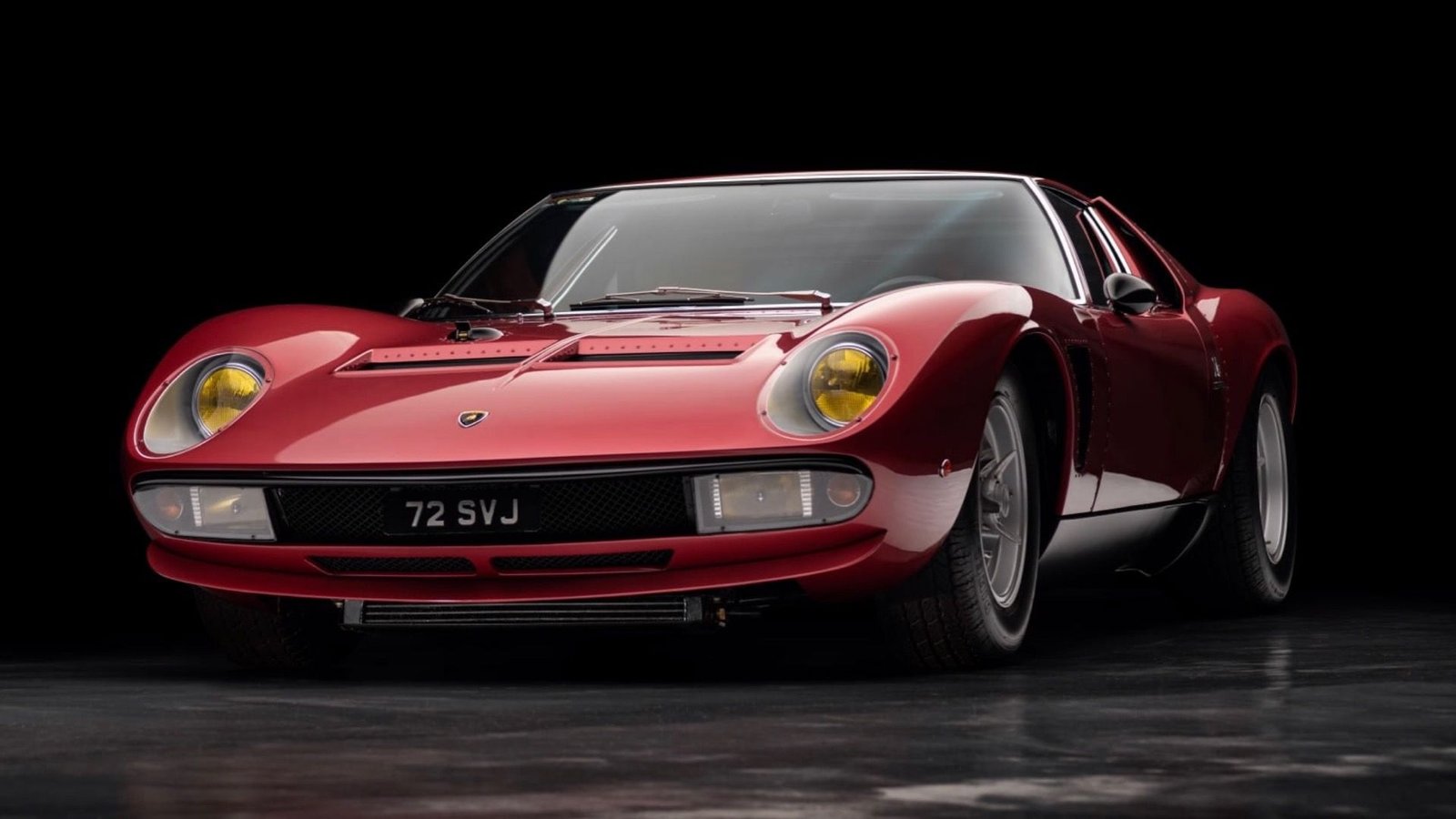
The recipe varied from car to car, because each was built to a customer’s order. The bodywork was modified to resemble the Jota: fixed headlamps behind Perspex covers, a chin spoiler, vents riveted into the front and rear wings, plain riveted bonnet vents instead of the SV’s slats, and a quick-release fuel filler cap on the nose. Under the skin, the factory record for the first car lists carburettors with competition trumpets, quickly removable air filters, a front oil radiator, racing fuel pumps and a competition exhaust with three-into-one manifolds ending in four tailpipes. Pete Coltrin, the journalist closest to the factory at the time, reported engines boosted by 20 to 30 hp over the SV’s 385 hp according to customer preference, with a crankshaft balanced to racing tolerances, polished connecting rods and enlarged inlet ports, plus revised anti-roll bar settings and a lower ride height. No two SVJs are exactly alike, and Lamborghini never published a power figure for any of them.
| Car | Lamborghini Miura SVJ, chassis 4860 (1973), based on the Miura P400 SV |
|---|---|
| Engine | 3,929 cc V12, transverse mid-mounted, naturally aspirated |
| Power | No official SVJ figure published; SV engine 385 hp (283 kW) at 7,000 rpm, period reports suggest 20-30 hp more in SVJ tune |
| Torque | 400 Nm (SV specification) |
| Gearbox | 5-speed manual |
| Layout | Rear-wheel drive, steel chassis, aluminium bodywork with riveted Jota-style panels |
| Production | Lamborghini counts four original SVJs; three built new as SVJs (4934, 4990, 5090), the rest factory-converted in period |
The Hahne car
Chassis 4860 was built in 1973 for Hubert Hahne, a racing driver who had won the Spa 24 Hours alongside Jacky Ickx and who was Lamborghini’s importer for Germany at the time. The car was painted black, with a white and black leather interior. In 1977 Hahne had Lamborghini repaint it silver, keeping the black interior, and it has worn that combination ever since. It stayed in Germany until the early 2000s, then disappeared into the Japanese collection from which Polo Storico retrieved its story. The restoration that followed was deliberately conservative: the department began with an in-depth analysis of the documents in the archives and a search for period sources and first-hand accounts, so that the car’s original condition could be preserved rather than reinvented. Beside the SVJ in Paris stood a second silver Miura, a P400 S assembled entirely from genuine spare parts, bodywork, engine and suspension included, as a demonstration of Polo Storico’s Certified Lines programme of remanufactured components.
The rarest Miura, with the factory’s signature
The SVJ matters because it is where the Miura legend meets its paperwork. The shape still stops a hall fifty years on, and the Jota’s rivets, vents and megaphone exhausts give it a menace the elegant SV never had. But with so few cars and so many later imitations, from factory-sanctioned conversions to coachbuilt tributes such as Touring’s Disco Volante in another marque’s world, an SVJ is only ever as good as its documentation. That is what made Paris significant: not the unveiling of a pretty car, but the manufacturer standing behind one, chassis by chassis and document by document. Lamborghini has been in the business of selling drama ever since, whether it is the driver-first Huracán EVO RWD or the Sián-inspired Tecnomar for Lamborghini 63 yacht, but the silver car on that white platform is the one the modern machines are ultimately descended from.
Count the SVJs however strictly you like, three, four or a few more, and the conclusion does not change: the SVJ is the rarest Miura of all, a road car built in the image of a one-off that survived barely a year. Chassis 4860’s return to Paris in 2020 was the model in miniature, a black car turned silver by its first owner, hidden for two decades, and brought back by the one organisation whose archives can settle the arguments. A Jota in spirit, an SV in the metal, and unrepeatable either way.


