
Ford Mustang Mach-E (2021–2026): Used Prices, Charging & What to Check
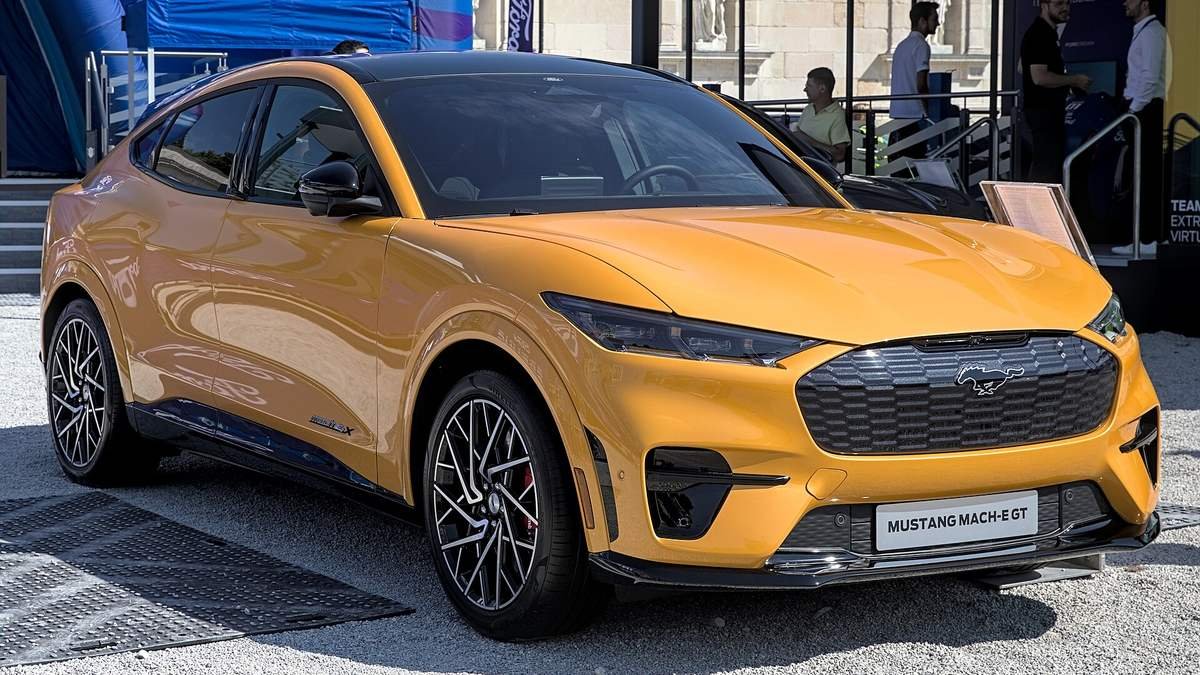
When Ford revealed the Mustang Mach-E in 2020, the charging claims were the headline: a 10–80% fast charge in about 45 minutes and up to 370 miles of range were promised for the longest-range version. The production car told a more specific story. Depending on the battery under the floor and the model year, a Mach-E fast-charges in about 33 to 45 minutes, peaks at 115 or 150 kW, and covers 211 to 320 EPA miles.
Six years on, that detail matters more than the launch claims, because the Mach-E has become one of the cheapest ways into a long-range electric SUV. KBB’s November 2026 snapshot values a 2021 Select at $20,900 — a car that cost $43,995 new. This guide covers what a used one costs, how it actually charges in 2026, which battery a given car has, and the recalls to verify before you buy.
The Mach-E range at a glance
| 2021 model | Battery | EPA range when new | Original price | KBB value, Nov 2026 |
|---|---|---|---|---|
| Select | Standard Range (68 kWh usable) | 230 miles (RWD) | $43,995 | $20,900 |
| Premium | Standard or Extended Range | 230–300 miles | $51,400 | $22,300 |
| California Route 1 | Extended Range (88 kWh usable) | 305 miles (RWD) | $51,500 | $22,800 |
| First Edition | Extended Range | 270 miles (AWD) | $60,000 | $22,300 |
| GT | Extended Range | 270 miles | $61,000 | $25,800 |
Original prices and used values are from KBB’s 2021 Mustang Mach-E model page, checked 26 November 2026; KBB updates values weekly, so treat them as a dated snapshot. Range figures are the EPA ratings from FuelEconomy.gov.
Two things stand out. First, the expensive launch trims have fallen furthest: the First Edition has lost about 63% of its price, and the GT about 58%. Second, the price gap between trims has narrowed sharply. A Premium or California Route 1 with the big battery costs barely $2,000 more than a base Select. That makes the Extended Range cars the sweet spot of the used market.
Charging in 2026: three batteries, three different cars
“Mustang Mach-E charging” has no single answer, because Ford has fitted three different battery setups since 2021. As a result, the battery a used car has changes its charging speed, its peak rate and even how full you should charge it.
| Battery | Years | Usable capacity | DC peak | 10–80% (Ford figure) | Daily charge guidance |
|---|---|---|---|---|---|
| Standard Range, NCM | 2021–mid-2023 | 68 kWh (70 from 2022) | 115 kW | ~38 minutes | Charge to 90% |
| Extended Range, NCM | 2021–today | 88 kWh (91 from 2022) | 150 kW | ~45 minutes (2021 cars as launched); ~36 minutes (later cars) | Charge to 90% |
| Standard Range, LFP | Mid-2023–today | 72–73 kWh | 150 kW | ~33 minutes | 100% is fine — reach it monthly |
The standard-range trap in early cars
Early standard-range cars (2021 to mid-2023) use a nickel-cobalt-manganese (NCM) pack and peak at 115 kW on a DC fast charger — not the 150 kW figure often quoted for the model. Their 10–80% time of about 38 minutes is respectable, but a seller advertising “150 kW fast charging” for a 2021 Select is describing a different car. Therefore, check the build date and battery type, not the listing headline.
The LFP change (mid-2023)
From mid-2023, standard-range cars switched to a lithium-iron-phosphate (LFP) battery. The change raised the DC peak to 150 kW, cut the 10–80% time to about 33 minutes, and lifted EPA range to 250 miles (RWD). LFP also tolerates full charges well. In particular, Ford tells LFP owners to charge to 100% regularly and to reach 100% at least once a month, where NCM cars are happier with a 90% daily limit. For a used buyer who charges at home and keeps cars a long time, the LFP cars are arguably the best of the range. Our guide to EV range in winter explains the trade-off to know about: LFP’s cold-weather behavior.
Home charging
Every version charges on AC at up to about 11 kW. On a 48-amp, 240-volt Level 2 charger, EPA figures put a full charge at roughly 7.4 to 11.4 hours, depending on the battery and year. Ford’s own 2025 figures, for example, are about 7.8 hours for a standard-range RWD car and 9.6 hours for an Extended Range RWD. A lower-amp home setup takes longer. In practice, any version refills overnight. Above all, what matters for a used buyer is what comes with the car: check that the mobile charging cord is in the trunk, because replacements are not cheap, and a missing cord is a fair negotiating point.
Tesla Superchargers and the adapter
Since February 29, 2024, the Mach-E can use Tesla Superchargers (V3 and later) through a NACS-to-CCS adapter — Ford was the first automaker to open that access, adding more than 15,000 chargers. Ford supplied one adapter free per vehicle until June 30, 2024. After that, it cost $230. No Mach-E has a built-in NACS port, so the adapter is essential equipment. Ask whether it is included in the sale. A car without one is $230 away from the largest fast-charging network in North America, and the adapter works only for DC fast charging, not Tesla’s AC destination chargers.
Range: what the EPA says by year
Over the years, range improved steadily as Ford revised the packs. The key configurations:
| Configuration | 2021 | 2023 | 2025 | 2026 |
|---|---|---|---|---|
| Standard Range RWD | 230 miles | 250 miles (LFP) | 260 miles | 260 miles |
| Standard Range AWD | 211 miles | 226 miles (LFP) | 240 miles | 240 miles |
| Extended Range RWD | 300 miles | 310 miles | 320 miles | 320 miles |
| Extended Range AWD | 270 miles | 290 miles | 300 miles | 300 miles |
| GT | 270 miles | 270 miles | 280 miles | 280 miles |
EPA ratings from the FuelEconomy.gov dataset. Overall, expect a used car’s real range to sit below its when-new rating; battery state of health, tires and temperature all move the number.
The original 2020 post on this page quoted a total range of “595 kilometers” (370 miles). In fact, no production Mach-E was ever EPA-rated that high — the figure was a pre-launch estimate for the European test cycle. The honest ceiling is 320 miles, on the 2024–2026 Extended Range RWD cars.
Used prices in 2026
The KBB snapshot above puts 2021 cars between $20,900 and $25,800 depending on trim. That is serious depreciation: the Select has lost about $23,100 (53%) in five years, and even the GT — the most desirable version — has fallen about 58%. Indeed, our car depreciation guide explains why EVs fall faster than gas cars. The Mach-E is a textbook case, helped by Ford’s own price cuts on new cars. A new 2025 Select started at $36,495 before destination, which drags used values down with it.
What moves the price
Prices vary with the usual factors, plus two EV-specific ones:
- Battery size. Extended Range cars are worth the small premium they command — the extra 70–90 miles of range is the thing owners actually use.
- The adapter and charging cord. Both included is the full package; either missing is worth money off.
- Mileage against the battery warranty. The battery is covered for 8 years or 100,000 miles (see below), so a 70,000-mile car has a very different risk profile from a 105,000-mile one.
Meanwhile, shoppers cross-shopping new will find our guide to the cheapest electric cars useful context; shoppers set on used should also read the used EVs under $25,000 guide, where the Mach-E now competes directly.
What it costs to run
Take a 2021 Extended Range RWD car, rated by the EPA at 34.6 kWh per 100 miles. Over 12,000 miles a year it uses about 4,152 kWh:
- Charged at home at the EIA residential average of 18.16 cents per kWh: about $754 a year.
- Charged entirely on public DC fast chargers at an illustrative 45 cents per kWh: about $1,868 a year — more than the gasoline for a comparable gas SUV.
- The gas comparison: a 30-mpg crossover on AAA’s November 22, 2026 regular average of $3.64 a gallon burns 400 gallons, about $1,458 a year.
In short, the lesson is the same one in our average cost of owning a car guide: an EV’s running-cost advantage lives in home charging. Bought for $21,000–$23,000 and charged at home, a used Mach-E is genuinely cheap family transport. If you depend on DC fast charging, however, much of the advantage disappears.
Battery warranty
Ford covers the battery for 8 years or 100,000 miles, with capacity guaranteed to at least 70%. A 2021 car is therefore covered until 2029 on time — but a high-mileage car can run out on miles first. Confirm the in-service date and odometer before assuming cover remains.
What to check before you buy one
Recall checks
- Open and completed recalls — run the VIN, and have a dealer verify remedy status in Ford’s system. These are the important campaigns to ask about, not a complete recall list. Small follow-up campaigns exist too: 25V-513 covers just 8 cars whose earlier brake-recall repair was itself faulty. That is exactly why the VIN check matters. Campaign 22V-412 (2021–2022, 48,924 cars) addressed high-voltage battery contactors that could overheat during DC fast charging; the follow-up 23V-687 (2021–2022 Extended Range cars, 34,762 vehicles) replaced the high-voltage battery junction box itself. On an Extended Range car, ask for paperwork proving the junction-box replacement, not just the earlier software update. A follow-up campaign, 25V-130, covers 633 cars whose 22V-412 remedy was repaired or recorded incorrectly. Have a dealer verify the remedy status in Ford’s own system, not just rely on a seller’s old recall receipt.
- Door latches and glass. Campaign 25V-404 (2021–2025, 197,432 cars) covers the electronic door latches: if the 12-volt battery discharges, the doors can stay locked — the fix is a software update, and a healthy 12-volt battery is part of prevention. Early 2021 cars also had glass campaigns 21V-711 (windshield bonding, 17,692 cars) and 21V-712 (panoramic roof bonding, 13,544 cars). Check every campaign by VIN at NHTSA’s recall checker and ask the seller for completion records.
Charging and battery checks
- Charge it during the test drive. Plug into a DC fast charger at a low state of charge. On a warm battery, on a charger that can deliver the power, an Extended Range or LFP car should pull well over 100 kW initially; an early standard-range car’s ceiling is 115 kW. A cold battery, a high state of charge or a shared charger will all show lower numbers. Judge the test in fair conditions. A car that charges far below its ceiling in those conditions may have a battery or thermal problem.
- Battery health. Moreover, ask a Ford dealer to read the battery state of health, and compare the car’s displayed range at 100% (or 90%) against its EPA rating when new. Some loss is normal. Even so, a big gap is a price argument or a walk-away.
- The 12-volt battery. It powers the door latches, the screens and the contactors. On a 2021–2022 car it may be near the end of its life; budget for replacement and treat a fresh one as a plus.
Equipment, software and tires
- Adapter and cord. In addition, confirm the NACS adapter (for Superchargers) and the mobile charging cord are included, as covered above.
- Software and features. Check the car is up to date on over-the-air updates, and verify any BlueCruise subscription status — it does not always transfer the way sellers imply.
- Tires. Finally, the Mach-E is heavy and quick; check for even wear and matching tires, and price a set before you negotiate — our used car buying checklist covers the wider inspection routine.
How it compares with its rivals
The Mach-E’s used rivals are the Tesla Model Y, Hyundai Ioniq 5 and Kia EV6. The Korean cars hold the charging advantage. Their 800-volt systems take them from 10–80% in about 18 minutes in the right conditions — roughly half the Ford’s time. In contrast, the Model Y charges at up to 250 kW on a native Tesla port, with no adapter needed.
Against that, the Mach-E counters with a lower used price than a comparable Model Y, a calmer ride than the Model Y, and a Ford dealer in most towns. So buyers who road-trip weekly should weight charging speed heavily. Buyers who charge at home, by contrast, will barely notice the gap. Our Hyundai Ioniq 5 vs Tesla Model Y comparison covers two of the three rivals in depth.
How to choose yours
In short, match the battery to how you will actually use the car:
- Best value: a 2022–2023 Extended Range RWD or AWD with the junction-box recall completed — 290–310 miles of range for the mid-$20,000s or less.
- Best for easy charging: a mid-2023-onward LFP standard-range car — LFP is designed to be charged to 100% regularly (follow Ford’s charge-limit guidance for the specific model year), with a 150 kW peak. The chemistry tolerates full charges well, but any individual car’s health still depends on its history, so verify it the same way you would an NCM car.
- Best performance: the GT (480 hp), now from about $25,800 for a 2021 — but check tire costs and the contactor recalls carefully.
- Avoid: any car with an open 23V-687 recall and no dealer booking, a missing charging cord and adapter at full asking price, or a battery-health reading the seller will not let you verify.
FAQ
Charging and prices
How long does a Mustang Mach-E take to charge?
On a DC fast charger, Ford quotes 10–80% in about 36 minutes for later Extended Range cars. The earliest Extended Range cars were quoted at about 45 minutes at launch. Early standard-range cars take about 38 minutes. The LFP standard-range cars from mid-2023 take about 33 minutes. At home on a 48-amp Level 2 charger, a full charge takes roughly 7.4 to 11.4 hours depending on the battery.
How much is a used Mustang Mach-E in 2026?
KBB’s November 2026 snapshot values 2021 cars from $20,900 (Select) to $25,800 (GT), with Premium and California Route 1 cars around $22,300–$22,800. Newer cars cost more; a new 2025 Select started at $36,495 before destination.
Can a Mustang Mach-E use Tesla Superchargers?
Yes — since February 29, 2024, with a NACS-to-CCS adapter, at V3 and later Superchargers. Ford supplied the adapter free until June 30, 2024 and sold it for $230 after that. No Mach-E has a built-in NACS port, so check the adapter is included when buying used.
Battery, recalls and warranty
Which battery does a used Mach-E have?
Cars built before mid-2023 have nickel-cobalt-manganese (NCM) batteries: 68–70 kWh usable in standard-range cars and 88–91 kWh in Extended Range cars. Standard-range cars from mid-2023 use a 72–73 kWh lithium-iron-phosphate (LFP) pack. The build date and window sticker tell you which one a car has.
What recalls should I check on a used Mach-E?
The big ones are 22V-412 and 23V-687 (battery contactors and the junction box, 2021–2022 cars), 25V-404 (electronic door latches, 2021–2025) and, on early 2021 cars, 21V-711 and 21V-712 (windshield and roof glass bonding). Run the VIN through NHTSA’s recall checker and ask for proof of completion.
How much range does a 2021 Mach-E have now?
When new, 2021 cars were EPA-rated at 211 to 305 miles depending on battery and drive layout. A used car’s real range depends on its battery state of health; compare the range shown at a full charge with the original rating, and have a dealer read the battery health if the gap looks large.
Is the battery still under warranty on a 2021 Mach-E?
Usually, yes on time: Ford’s battery warranty runs 8 years or 100,000 miles from the in-service date, with capacity covered down to 70%. A 2021 car is covered until 2029 unless it passes 100,000 miles first.
Bottom line
The Mach-E’s launch story was charging speed. The honest 2026 version of that story is better than the 2020 claims: three well-understood battery options, 33–45-minute fast charges, Supercharger access, and used prices that start near $21,000. Buy the battery that fits your life — Extended Range for distance, LFP for easier regular 100% charging. Verify the recall history by VIN, and make sure the adapter and charging cord come with the car. Do that, and it is one of the best-value used EVs in America. Our guide to negotiating a car price will help you close the deal.
Sources & Pricing Note
Used prices and original prices are from KBB’s 2021 Mustang Mach-E model page, checked 26 November 2026 (KBB updates values weekly; treat them as a dated snapshot, and note KBB values vary by location, mileage and condition). EPA range and consumption figures are from the FuelEconomy.gov vehicle dataset (2021–2026 model years).
Battery capacities, charge times and charge-limit guidance are Ford’s published figures. Usable capacity rose from 68 to 70 kWh (standard range) and 88 to 91 kWh (Extended Range) for 2022. The LFP standard-range pack (72–73 kWh usable) arrived mid-2023. Ford quotes its 10–80% time at 33 minutes, against about 38 minutes for the NCM standard-range pack and about 36 minutes for later Extended Range cars. At launch, by contrast, Ford quoted about 45 minutes for the earliest Extended Range cars.
Similarly, Supercharger access dates and adapter pricing are from Ford’s February 2024 announcement coverage. Recall information is from NHTSA campaign records (22V-412, Ford 22S41; 23V-687; 25V-130, Ford 25S14; 25V-404, Ford 25S65; 21V-711, Ford 21C22; 21V-712, Ford 21S42).
The electricity price is the EIA residential average of 18.16 cents per kWh. The gasoline price is AAA’s regular average of $3.6448, recorded 22 November 2026. The 45-cents-per-kWh DC fast-charging figure is an example only, and actual network prices vary. The 2025 new-car starting price ($36,495) is Ford’s MSRP before destination and fees.
Last updated: November 2026
About the Author
Written by William, founder and editor of MotorAmaze. William covers car buying, financing and ownership costs for American drivers, and every guide on this site is checked against manufacturer, government and industry sources before publication. Read more at MotorAmaze.


