
EV Range in Winter: How Much Range You Lose and How to Get It Back
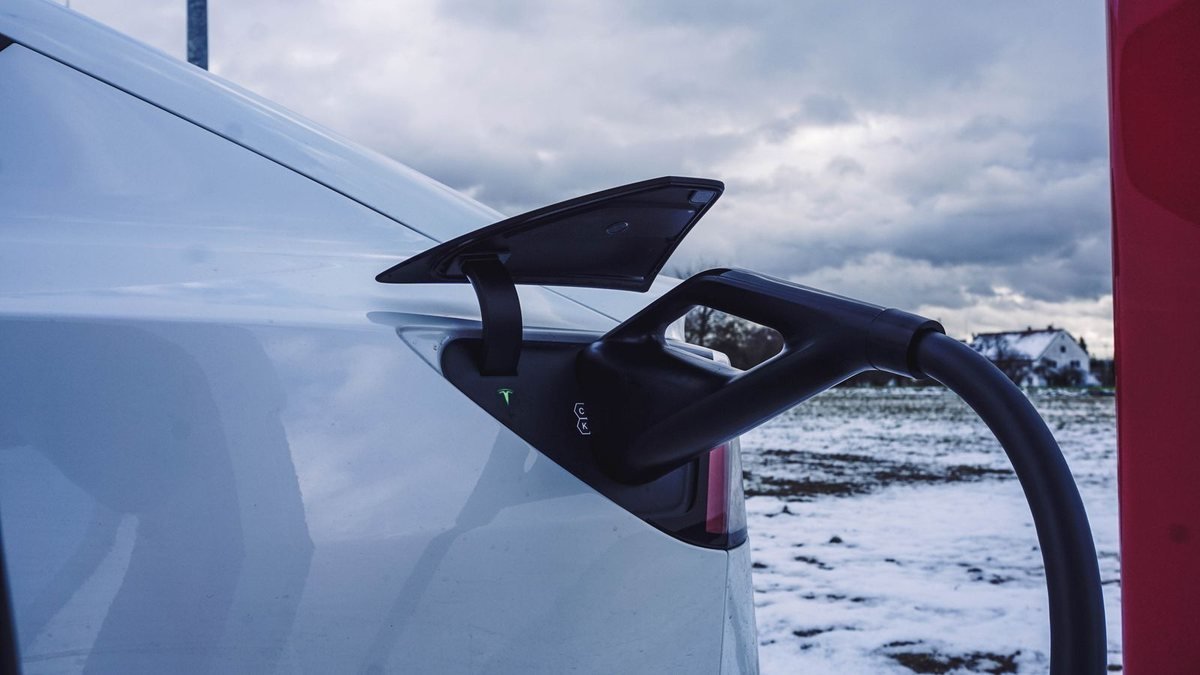
EV range in winter falls by about 22% at freezing and about 30% at 20°F, on average across the cars on American roads. That is the finding of Recurrent’s November 2025 study of more than 30,000 real US electric cars. The average EV keeps roughly 78% of its range at 32°F and roughly 70% at 20°F. A car rated at 300 miles is a roughly 210-mile car on a 20°F day. And the spread between models is wide, from 88% retained by the best to 69% by the worst. Nothing is broken when the number on your dash drops in January. Every EV does this, including the ones parked in Norway, where most new cars sold are already electric.
The reason the loss is bigger than most buyers expect is that two things go wrong at once. Cold slows the chemistry inside the battery, so less of its stored energy is usable. And then there is the bigger thief: keeping the cabin warm. An electric car has no engine waste heat to borrow, so every degree of cabin warmth comes straight out of the battery. The US Department of Energy’s own site, FuelEconomy.gov, puts it plainly. About two-thirds of the extra energy an EV uses in the cold goes to heating the cabin. This guide gives you the verified numbers by model, explains why the cold bites, and shows six ways to win range back. It also shows what winter actually costs you in dollars.
EV Winter Range by Model: What Your Car Really Does at 20°F
| Model (base trim) | EPA range | Keeps at 32°F | Keeps at 20°F | Winter miles at 20°F |
|---|---|---|---|---|
| Tesla Model Y RWD | 321 mi | 81% | 73% | 234 mi |
| Tesla Model 3 Standard | 321 mi | 81% | 73% | 234 mi |
| Ford F-150 Lightning | 240–320 mi | 80% | 73% | 175–234 mi |
| Hyundai Ioniq 5 SE Standard Range | 245 mi | 79% | 72% | 176 mi |
| Kia EV6 Light Standard Range | 237 mi | 78% | 70% | 166 mi |
| Ford Mustang Mach-E Select | ~320 mi (2026) | 77% | 69% | ~221 mi |
| Chevrolet Equinox EV LT FWD | 319 mi | 73% | 63% | 201 mi |
| Chevrolet Blazer EV LT FWD | 312 mi | 69% | 57% | 178 mi |
Retention percentages are from Recurrent’s November 2025 study of US owner data, as published in its winter-range chart; figures come from earlier model years. EPA ranges are base-trim figures verified against manufacturer sites in November 2026. Winter miles are the base EPA figure multiplied by the 20°F retention rate. Your car will do better on a mild winter day and worse on a bitter one. The Lightning’s EPA span covers its standard-range (240 mi) and extended-range (320 mi) batteries. The Mach-E’s 2027 EPA rating had not been published when this guide was written. Ford says it will be comparable to the 2026 car’s roughly 320 miles. The winter-miles figure therefore uses the 2026 number and is marked as approximate. The long-range versions of the Ioniq 5 (318 mi) and EV6 (319 mi) do considerably better in absolute miles: about 229 and 223 miles at 20°F respectively.
Two things jump out of this table. First, the percentage and the miles tell different stories. The Blazer EV keeps the smallest share of its range. But because it starts with 312 miles, it still goes further at 20°F (178 miles) than the base Ioniq 5 (176 miles) or the base EV6 (166 miles). Buy on the winter miles, not the percentage. Second, the best performers are not the most expensive cars — they are the cars with the best thermal management. The Tesla Cybertruck kept 88% of its range at freezing in Recurrent’s study, the best result of any car tested, and the Model S kept 87%.
Why Cold Weather Cuts EV Range
Cold weather cuts EV range for two reasons. The battery itself delivers less energy when cold, and heating the cabin consumes a large share of the battery. Cold slows the chemical reactions inside lithium-ion cells and raises their internal resistance, so less stored energy is usable. Regenerative braking is also limited until the pack warms up. That costs you the free energy you normally recover when slowing down. But the battery is the smaller half of the problem.
The clearest proof comes from AAA’s cold-weather testing. At 20°F, compared with 75°F, the five cars AAA tested lost 12% of their range with the climate system off — and 41% with the heat on. Switching the heater off cut the loss from 41% to about 12%. That is why FuelEconomy.gov attributes roughly two-thirds of the extra cold-weather energy use to cabin heating. The worst car in AAA’s test, the Chevrolet Bolt, lost 47% of its range with the heat on — falling from 238 miles to 126. The Tesla Model S 75D lost 38%, from 239 miles to 148. AAA repeated the exercise with newer cars and found much the same thing: cold cut range by 39% on average, while hot weather cost only 8.5%.
Short trips suffer most. Every cold start means warming a cold battery and a cold cabin from scratch. If your commute is 15 minutes, the warm-up can cost more energy than the driving. That is also why the loss feels worse than the averages suggest. The averages describe a full charge driven steadily, not five short errands with the car cooling down between each one.
How Much Range EVs Lose at Each Temperature
| Temperature | Range kept (average EV) | What it means for a 300-mile EV |
|---|---|---|
| 50°F | ~95% (mild, minimal heating) | ~285 miles |
| 32°F (freezing) | 78% — Recurrent, 30,000+ cars | ~234 miles |
| 20°F, heater on | 70% — Recurrent real-world; 59% in AAA’s lab test | ~210 miles (lab: ~177) |
| 0°F | ~50% — fleet-data estimate | ~150 miles |
The gap between Recurrent’s 70% and AAA’s 59% at 20°F is not a contradiction. It is the difference between real-world driving, where owners turn the heat down and use seat heaters, and a lab test with the cabin heater running at full strength. Treat 70% as the planning number for a normal winter day and 59% as the number for a bitter day with the heat blasting. At 0°F the figure is a fleet-data estimate rather than a lab result, because so few controlled tests run that cold. Plan on half your rated range and you will not be caught out. Norway’s motoring association ran the hardest real test available: 24 new EVs driven in January 2026 at -7°C to -32°C (about 19°F to -26°F). The field averaged 38% below its WLTP ratings. Note that WLTP ratings run higher than EPA ratings, so those percentages do not transfer directly to US window stickers.
The Best and Worst EVs for Winter Range
The best EVs for winter range are the Teslas and the Rivian R1S. The worst are the Chevrolet Blazer EV and Equinox EV, despite both having heat pumps. Recurrent’s ranking, best to worst by range retained at freezing: Tesla Cybertruck (88%), Tesla Model S (87%), Tesla Model X (86%), Rivian R1S (83%), Tesla Model Y and Model 3 (81%), Ford F-150 Lightning (80%). Then come the Hyundai Ioniq 5 and Ioniq 6, Audi e-tron and BMW iX (79%), Kia EV6 (78%), and the Ford Mustang Mach-E (77%). At the bottom sit the Equinox EV (73%) and the Blazer EV (69%).
The GM result is the surprise of the study, because the Equinox EV and Blazer EV do have heat pumps. That is the technology that is supposed to fix this. Recurrent’s working theory — which it labels a suspicion rather than a finding — is that GM’s software calls on the backup resistive heater at warmer temperatures than other brands do. That throws away the heat pump’s advantage. It is a reminder that a heat pump on the spec sheet is not a guarantee. How the car manages heat matters as much as having the hardware. If you are shopping for a cold-climate EV, ask the dealer how the car preconditions its battery and whether the heat pump is standard on the trim you are actually buying. On some models it is an option or a higher-trim feature.
Do Heat Pumps Really Help in Winter?
Yes — a heat pump is the single most useful cold-weather feature on an EV, worth about 10% more range at freezing. A resistive heater turns one unit of electricity into one unit of heat. A heat pump moves heat instead of making it, delivering three to four units of heat for each unit of electricity in mild cold, according to Recurrent. In Recurrent’s data, cars with heat pumps retained about 83% of their range at 32°F, against about 75% for cars with resistive heaters. The advantage shrinks as temperatures fall toward 0°F, where a heat pump works about as hard as a plain heater. So it is a big help in a Seattle or New York winter, and a smaller one in a Minnesota January.
Heat pumps are now standard on most 2024-and-newer EVs, including every Tesla, the Hyundai Ioniq 5 and Kia EV6, and the Chevrolet Equinox EV and Blazer EV. The notable exception in Recurrent’s study was the Volkswagen ID.4, which had no heat pump on US models. It kept 75% of its range at freezing in the latest study. In Recurrent’s earlier study it finished last of all, at 63%. If you live where it freezes and you are choosing between two otherwise similar EVs, pick the one with the heat pump. It is worth more in January than an extra 20 miles of EPA range on paper. For the full ranking of current models, see our best electric cars guide.
Is EV Charging Slower in Winter?
Yes. A cold battery cannot take a fast charge safely, so the car limits charging speed until the pack warms up. Recurrent’s analysis of more than 200,000 Tesla Model 3 fast-charging sessions found that at 0°F, a DC fast charge took about 9 minutes longer on average. Cars with LFP batteries tend to feel this more, because LFP cells are slower to accept charge when cold. These lithium-iron-phosphate packs are common in standard-range models. Tesla has said its LFP packs charge more slowly in the cold, which is why it added direct battery heating at Superchargers.
The fix is built into most modern EVs. Set the fast charger as your destination in the car’s own navigation, and it will warm the battery on the way there. Norway’s motoring association found that cars which preconditioned before charging came close to their claimed charging times even in deep cold. Home charging is barely affected — at 6 to 12 kW, the rate is low enough that even a cold pack usually accepts it. The practical rule is simple. On a winter road trip, navigate to the charger instead of just driving to it. Budget an extra 10 minutes per fast-charging stop. Our electric car charging costs guide explains home versus public charging prices in detail.
Gas Cars Lose Range in Winter Too
Cold weather is not only an EV problem. But it hits EVs harder. According to FuelEconomy.gov, a conventional gasoline car’s city mileage is roughly 15% lower at 20°F than at 77°F. A cold engine runs rich, the oil is thicker, and short trips never reach efficient operating temperature. AAA’s updated testing found hybrids lose about 23% of their fuel economy at 20°F. The difference is the starting point. A gas car starts with a 400-mile tank and a five-minute refill, so a 15% loss is an annoyance. An EV starts with 250–320 miles and a 30-minute fast charge, so a 30% loss changes how you plan a trip.
Winter range loss is also temporary. It is caused by temperature and cabin heating, and your range returns as the weather warms. Long-term battery degradation is a separate, much slower process — see our car depreciation guide for how EVs hold value over time. Cold does not damage the battery the way heat does; the car’s battery management system limits charging and discharging precisely to protect the pack. If you get stranded in a snowstorm, an EV can actually be the safer car to wait in. With no exhaust, you can keep the heat running without carbon-monoxide risk. And Argonne National Laboratory found an EV with a 60 kWh battery can hold a 72°F cabin for over a day at 20°F.
6 Ways to Get Winter Range Back
Preconditioning while plugged in is the single best thing you can do. It is free range, every morning. Here are the six habits that actually move the number, in order of impact.
1. Precondition while plugged in. Warm the cabin and battery from the wall, not from the pack. Set a departure time in the car’s app or schedule preconditioning the night before, so the energy comes from your home electricity instead of your driving range. Consumer Reports measured efficiency gains from scheduled preconditioning on single-digit January days: 5% on a Kia EV9, 6% on an Acura ZDX and 7% on a Tesla Model 3 Long Range.
2. Use the seat and steering-wheel heaters first. Heating your body takes far less energy than heating every cubic foot of air in the cabin. Turn the cabin temperature down a few degrees and let the seat do the work. FuelEconomy.gov specifically recommends seat warmers instead of the cabin heater to save energy and extend range.
3. Leave it plugged in at home. A car on the charger can keep its battery warm from the grid, and it wakes up ready rather than cold. Recurrent suggests a 70–80% charge limit for daily use, so the car has room to manage the pack. For a long trip or extreme cold, the Department of Energy says charging to between 80% and 100% makes sense. That is the exception, not the daily habit.
4. Check tire pressure. Michelin says tires lose about 1 psi for every 10°F drop, so a fall cold snap can leave you 4 or 5 psi low without a single leak. Underinflated tires add rolling resistance and cost range as well as grip. Fill to the number on the door-jamb sticker, measured cold.
5. Ease off on the highway. Speed and cold stack. Consumer Reports found that at about 16°F, range at a steady 70 mph was roughly 25% lower than in mild weather. Dropping to 65 mph on a winter highway trip can be worth more than any other single habit after preconditioning.
6. Precondition before fast charging. Navigate to the charger in the car’s own map so the battery arrives warm. Nine minutes saved is nine minutes not standing in the wind. And on a cold battery, the difference between a warm and a cold arrival can be the difference between a 20-minute stop and a 40-minute one.
What Winter Really Costs: A Worked Example
Winter costs the average EV driver about $100 extra a year in electricity. It is real money, but small next to what the EV saves. Here is the math, using the figures from our own charging-costs guide and average cost of owning a car guide.
Take a driver doing 12,000 miles a year in an EV that uses 30 kWh per 100 miles. They charge at home at the US average residential rate of 18.16 cents per kWh (EIA, August 2026). In mild weather, that is 3,600 kWh a year, or $654 in electricity. Now add winter: say 4,000 of those miles are driven at around 20°F with the heat on. AAA found that heating at 20°F adds almost $25 per 1,000 miles compared with driving at 75°F — so those 4,000 winter miles cost about $100 extra. Total EV energy cost for the year: about $754.
Now the same 12,000 miles in a gas car doing 30 mpg. At the AAA national average of $3.75 a gallon for regular (November 18, 2026), that is 400 gallons, or $1,500 a year. And the gas car is not exempt from winter either. Its city mileage falls about 15% in the cold, adding roughly another $88 on those same 4,000 winter miles, for about $1,588. Even after winter, the EV saves about $834 a year on fuel alone.
That is the honest shape of the problem. Winter does not make an EV expensive to run — it makes it slightly less cheap, and slightly less convenient. The cost that matters is not the $100 of extra electricity. It is the time spent planning charging stops and the miles you cannot use on the coldest days. Size the car for that, and the money takes care of itself.
How to Choose an EV for Winter Driving
Size your car to your longest regular winter day, not your average summer one. Take the EPA range and multiply by 0.7. Then check that the result still covers your worst-case round trip with a margin. If your longest regular day is 150 miles, you need an EV rated at about 215 miles or more. That rules out the shortest-range base trims and points you at the long-range versions. If you mostly charge at home, a standard-range LFP battery’s slower cold charging matters less than it would for a road-tripper. If you fast-charge weekly in January, it matters a lot.
Put a heat pump high on your must-have list, and check that it is standard on the trim you are buying rather than optional. Look at the winter-range data, not just the EPA number. A car that keeps 81% of its range (Model Y) is a better cold-climate buy than a car with a bigger EPA number that keeps 69% (Blazer EV). And think about where you live. In Seattle or New York, a heat pump and preconditioning cover almost everything. In Minneapolis or Fargo, you also want a bigger battery, a garage or at least a plug at home, and winter tires. Insurance costs vary by state too — our car insurance by state guide shows what drivers actually pay where you live. And if your winters are severe and your trips are long, a hybrid is the honest alternative — our best hybrid SUVs guide ranks the current options. And if your budget is tight, our cheapest electric cars guide ranks the lowest-priced EVs, several of which appear in the winter table above.
EV Range in Winter: FAQ
How much range does an EV lose in winter?
About 22% at 32°F on average, and about 30% at 20°F, based on Recurrent’s data from more than 30,000 US cars. In a lab test at 20°F with the heater running, AAA measured a 41% loss. In extreme cold, like Norway’s -32°C test, losses of 30–46% are normal.
Is winter range loss permanent?
No. It is caused by temperature and cabin heating, and your range returns as the weather warms. Long-term battery degradation is a separate, much slower process, and cold is far less damaging to a battery over its life than sustained heat.
Does a heat pump really make a difference?
Yes — about 10% more range at freezing in Recurrent’s data, because a heat pump moves heat instead of making it. The benefit shrinks as temperatures approach 0°F, where a heat pump works about as hard as a plain resistive heater.
Which EV is best in cold weather?
In Recurrent’s US data, Tesla models and the heat-pump version of the Rivian R1S held their range best — the Cybertruck kept 88% at freezing. In Norway’s 2026 winter test, the Hyundai Inster and MG S6 EV had the smallest percentage losses, and the Lucid Air drove the farthest at 323 miles.
Does cold weather damage an EV battery?
No, not in the way heat does. The battery management system limits charging and discharging when the pack is cold precisely to protect it. Range loss in winter is temporary; the capacity comes back when the battery warms up.
Is EV charging slower in winter?
Yes, DC fast charging is slower on a cold battery — about 9 minutes longer on average at 0°F in Recurrent’s study of Model 3 charging sessions. Home charging is barely affected. Navigating to the charger so the car preconditions the battery on the way largely fixes it.
Should I charge to 100% in winter?
For daily driving, no — keep the usual 70–80% limit so the car can manage the battery. For a long trip or extreme cold, the Department of Energy says charging to 80–100% makes sense, because you want the extra buffer when range is already reduced.
Are gas cars affected by cold weather too?
Yes. A gas car’s city mileage is about 15% lower at 20°F than at 77°F, according to FuelEconomy.gov. Hybrids lose about 23% of their fuel economy in AAA’s testing. The difference is that a gas car has a 400-mile tank and a five-minute refill, so the loss rarely changes anyone’s plans.
Bottom Line
EV range in winter is a real, measurable penalty — about 22% at freezing and about 30% at 20°F on average — and it is mostly the cost of staying warm, not a weakness in the battery. The cars that handle it best are the ones with good thermal management and a heat pump. The drivers who handle it best precondition while plugged in, lean on seat heaters, and plan around 70% of the EPA number instead of 100%. Winter costs the average EV driver about $100 extra a year in electricity, and the EV still saves roughly $800 a year over a comparable gas car. Buy the range you need for your coldest regular day, not your mildest one, and winter stops being a reason not to go electric.
Sources & Pricing Note
Range-retention figures are from Recurrent’s November 2025 winter EV range study of more than 30,000 US vehicles, as published in its winter-range chart (via Electric Future’s transcription). Lab-test figures are from AAA’s 2019 electric-vehicle range testing and its updated testing, as summarized by FuelEconomy.gov and AAA. Norwegian test results are from the NAF/Motor El Prix winter 2026 test (Oslo–Folldal, January 2026). Preconditioning and highway-speed figures are from Consumer Reports’ cold-weather testing. Tire-pressure guidance is from Michelin. Electricity prices are from the US Energy Information Administration (18.16 cents per kWh, residential average, August 2026). Gasoline prices are the AAA national average for regular ($3.75 per gallon, November 18, 2026). EPA range figures are base-trim manufacturer figures verified in November 2026; the Mustang Mach-E’s 2027 EPA rating was not yet published and its figure is the 2026 car. Prices exclude destination, taxes and fees unless stated otherwise, and change without notice. Verify the current price and range on the manufacturer’s site on the day you order. And check your own car’s energy screen rather than trusting any single average.
Last updated: November 2026
About the Author
Written by William, founder and editor of MotorAmaze, where he covers electric cars, running costs and car buying for American and British drivers. Read more about him at MotorAmaze About.


